Tuesday, June 20, 2023

Lost Lantern Celebrates "Summer of Bourbon"


Lost Lantern's 2023 Summer of Bourbon Collection.

The 21st century has witnessed two dramatic changes in the distilled spirits landscape. First is the revival of American straight whiskey, especially bourbon and rye. Second is the explosion of craft distilling.

Because of both trends bourbon, until recently produced almost exclusively in Kentucky, is now made across the United States, "from Nevada's arid deserts to Texas' sprawling plains, from the snowbelt of Ohio, to the rugged mountains of Colorado," according to the folks at Lost Lantern, the independent bottler of American Whiskey founded by Nora Ganley-Roper and Adam Polonski, who have declared this "The Summer of Bourbon."

"We have never devoted such a large release entirely to one single style of whiskey," commented Polonski. "We want to showcase the incredible quality and ingenuity coming from all over the country."

Lost Lantern’s Summer of Bourbon collection features eight bourbons across three product lines: the Blend Series (blends of whiskeys from multiple distilleries), the Single Distillery Series (blends of multiple casks from a single distillery that showcase a unique side of that distillery), and the Single Cask Series (whiskeys from a single barrel from a single distillery).

The blend is called Far-Flung Bourbon (582 Bottles | 136.8 Proof) SRP: $110

The single distillery bourbon is Soaring Spice Frey Ranch Distillery Nevada Straight Bourbon Whiskey (900 Btls | 127.6 Proof) SRP: $100

The bourbons from the single cask series are: 

Frey Ranch Distillery Nevada Straight Bourbon Single Cask (217 Btls | 137.2 Proof) SRP: $110

Boulder Spirits Colorado Straight Bourbon Single Cask (151 Btls | 142.6 Proof) SRP: $120

Ironroot Republic Texas Straight Bourbon Single Cask (167 Btls | 137.3 Proof) SRP: $120

Still Austin Texas Straight Bourbon Single Cask (167 Btls | 103.8 Proof) SRP: $80

Tom's Foolery Ohio Straight Bourbon Single Cask (171 Btls | 113.8 Proof) SRP: $120

New Riff Kentucky Straight Bourbon Single Cask (214 Btls | 114.2 Proof) SRP: $90

The Summer of Bourbon releases are non-chill-filtered, bottled at natural cask strength, and transparently labeled with the source distillery or distilleries on the label.

On the subject of dramatic changes in the American distilled spirits landscape, the recent emergence of independent blender-bottlers such as Lost Lantern is another one. You pay for curation, of course, but with nearly 3,000 distilleries operating in the USA right now, it's hard to know what to try. A curator can help. They research and taste a lot of stuff so you don't have to.

“The Summer of Bourbon shows that great bourbon can take many different forms,” says Ganley-Roper. “It can be made in many different ways in climates and aging conditions that are utterly different from each other, having a huge impact on flavor. This incredible diversity of styles and flavors is part of what makes the bourbon world so exciting.” 


Thursday, June 15, 2023

In the United States, We Take Our Whiskey Personally

"A conversation with Mr. Van Winkle."

The question was one of those clickbait things on social media. "To whom do you turn when the going gets rough?" More than one person answered, "Jack Daniel's."

Americans like that about our whiskey. In Scotland and Ireland, whiskies are named after places, with a few notable exceptions. (Yes, Mr. Walker. We see you.) In the U.S., the most popular whiskeys are mostly named after people.

We have Jack and Jim, of course, Elijah, Ezra, Evan, Elmer, Issac, Jimmy, Parker, George, Abraham, Augustus, Cyrus, and Pappy. I'm sure I missed a couple. Back in 1989, George Jones sang, "Last night, I broke the seal on a Jim Beam decanter that looks like Elvis. I soaked the label off a Flintstone Jelly Bean jar." I worked on the Jim Beam account at the time. Beam never made an Elvis decanter (that was McCormick), but the folks at Beam sure did love that song.

When the bourbon category was dying, it seemed like any brand with "Old" in its name was declining fastest, even though most of those were people's names too, e.g., Crow, Taylor, Fitzgerald, Weller, Pepper. If you had a round bottle with "Old" in the name, you were screwed. Square bottle with a full name on it, you were okay. I worked on Early Times. They couldn't change the name but did switch to a square bottle.

When sales are crashing, you try anything.

My dad, who enjoyed Van Winkle Rye, would say he looked forward to "a conversation with Mr. Van Winkle" after an especially taxing day.

Back then, it wasn't hard to get Van Winkle Rye, but it was one of the most expensive American whiskeys on the market. Dad and I would talk about whiskey from time to time and he said he remembered rye from his youth (the 1940s) tasting like rye bread, so I got in the habit of bringing him different ryes to try, to see if we could find one that scratched that itch for him.

I went through almost everything before I got to the Van Winkle, not so much because of the cost as because I thought it very bourbon-like, which was what I liked about it, but it certainly did not taste like a traditional rye. This was about 15 years ago, when there weren't as many ryes as there are now. After he'd had the Van Winkle a few times, he commented, "It doesn't taste like rye bread, but I sure do like it." 

That ended our quest for a rye-bread rye but I kept him supplied with Van Winkle Rye thereafter. When he died, there was about a third-of-a-bottle in his cabinet. I finished it for him.


Friday, May 26, 2023

Who Makes America's Whiskey Now?


A photo from the American Craft Spirits Association to represent craft spirits.

Seven years ago, it struck me that for all the sound and fury about new brands and new distilleries, things had not changed very much since I made a similar survey two years before. In my 2014 book, Bourbon, Strange, I wrote that just eight companies distilled all of America’s whiskey at just thirteen distilleries. Two years later, it was ten companies and fifteen distilleries. Today, well, it’s a lot more of both.

I was looking at it in 2016 because so many new distilleries were debuting later that year or in 2017. We had folks such as Angel’s Envy who were underway but still ramping up. This is always a moving target.

The ”all” in both statements is more properly “virtually all.” Of the 2,500 or so distilleries now operating in the U.S., most produce very little, a drop in the bucket of total U.S. whiskey production. Even all put together they don't amount to much. That’s not a knock, just a fact. As the American Craft Spirits Association (ACSA) puts it: 

“The U.S. craft spirits market is fairly concentrated with larger producers making up only 1.6% of the total number of craft producers, but are responsible for 56.6% of the cases sold. 90.1% of U.S. craft producers are classified as small producers. They are responsible for just 10.3% of the cases sold annually.” 

The ACSA does not even count producers who make more than 750,000 proof gallons annually. For my list, I put the cut-off a bit lower, at 500,000. If I hadn’t, the number would not have changed at all.

The ACSA figures are also for all spirits, they don’t break out whiskey. 

Overall, the data is not there for the picking. You have to suss it out. With whiskey, it’s hard to know what to count, since the product the companies are selling now was distilled four to ten years ago. Do you count how much they’re selling or how much they’re making? 

Neither number is readily available, but since distillery output is forward-looking, let’s stick with that. Only one of the four biggest companies, Brown-Forman, is public so they have to disclose that sort of thing. The other three—Beam Suntory, Sazerac, and Heaven Hill—only disclose what they want to disclose. So, the results of this exercise should be considered as falling somewhere between a rough estimate and an educated guess. Feel free to improve it if you can.

In 2016, the two companies not on the 2014 list were New Riff and Michter’s. For 2023, you can add Lux Row (now part of MGP), Bardstown Bourbon Company (including Green River), Wilderness Trail, Jackson Purchase, and Angel’s Envy, all in Kentucky. In Tennessee, there is Tennessee Distilling Group. In Texas, Firestone and Robertson. 

Meanwhile, the majors have all gotten bigger, both by adding distilleries and expanding their current ones. Brown-Forman and Sazerac each added one. Diageo added two. Four Roses essentially cloned itself, doubling capacity, but all at one location. The other majors from the original lists, Wild Turkey (Campari) and Ross & Squibb (MGP), have gotten bigger too. 

I'm not counting demonstration distilleries, like Michter's Fort Nelson and the Evan Williams Experience, as distilleries in these counts.

That brings us to 16 companies operating 28 distilleries of varying sizes. Most of the new guys are in the contract distilling and bulk whiskey business to a greater or lesser extent and are at the lower end of the volume scale, but the combine of Bardstown Bourbon and Green River is putting up some big numbers, as are Wilderness Trail and Tennessee Distilling Group.

And we’re not finished. If we double the threshold, to one million proof gallons per year, we can probably stop here, and maybe even lose one or two. But if we keep the cut-off where it was in 2016, at 500,000 gallons, we have a few more names to add: Willett, Castle & Key, Rabbit Hole, and Sagamore Spirits all appear to be in that range. They are all about the same size and have a few years under their belts. I may be missing a couple of others.

Then there are the folks just getting started, such as Log Still in Kentucky and Nearest Green in Tennessee. Nearest has an 18-inch column still. So do Driftless Glenn and Dancing Goat (Wisconsin), Wyoming Whiskey, and Southern Distilling (North Carolina), and probably a bunch more I don’t know about. Still size tells us maximum capacity, they have to tell us how much they're actually producing.

So, yeah, the needle has moved, bigly. It's hard to keep up. And there are more coming.

The big four are still the big four, by the way, and if the newcomers have made a dent in their combined 75 percent share of overall capacity, it isn't by much. Maybe now it's more like 70 percent. 

What does it all mean? That's a question for another time.

UPDATE: (10/16/23) I just ran the numbers. The big four's share of industry production capacity, with all known current and scheduled new capacity factored in, is 65 percent.


Friday, May 19, 2023

Do Taylor Swift Fans Appreciate Having Their Own Cocktails?


Bad Blood Sangria, Starlight Pear Lemonade, and French 1989.

Kristen wrote: "Hi Charles K., Taylor Swift is taking the world by storm, and plenty of Swifites (sic), including the staff at Omni Boston Hotel at the Seaport, are drawing inspiration from her record-breaking Era’s tour! Below are some cocktail recipes Omni Boston Hotel at the Seaport’s rooftop restaurant Lifted, is serving from May 19-21 in honor of Taylor’s Boston shows that can also be enjoyed at home!"

This caught my eye because I like being called "Charles K." Looking further, the whole package (an email press release I received because I'm apparently on some lists) fascinated me from a pop culture perspective. I confess that while I am aware of Taylor Swift, I am not a participant, so I genuinely don't know what to make of any of this. I suspect most of you, dear readers, are in the same boat. I present it for our mutual cultural edification.

Although American whiskey, like Taylor Swift, is taking the world by storm, none of these drinks contain whiskey. 

Here are the recipes:

Bad Blood Sangria. Combine 4 oz Pinot Noir, 1 oz Blood Orange Purée, 1 oz Orange Juice, and 0.75 oz Lemon Juice. Shake and strain into a wine glass. Top with 1 oz Sprite.  

French 1989. Combine 2 oz Bombay Sapphire Gin, 1 oz Lemon Juice, and 1 oz Strawberry Rose Syrup with ice. Shake and strain into a coupe. Top with 2 oz Prosecco.  

Starlight Pear Lemonade. Combine 2 oz Malfi Lemon Gin, 1 oz Lemon Juice, 0.5 oz Lavender Syrup, and 0.75 oz Desert Pear Syrup with ice. Shake and strain into a rocks glass. Top with a splash of club soda.


Friday, May 12, 2023

Green River, the Whiskey Without Regrets, Launches Flagship Bourbons


A maturation warehouse at Green River Distillery in Owensboro, Kentucky.

Green River is just a name. But, oh, what a name.

As for the river itself, there is a Green River in just about every U.S. state, and elsewhere, but the one in Kentucky is the Green River John Prine sings about in his song, “Paradise.” Three-hundred-eighty-four miles long, all of it in Kentucky, the Green flows through Muhlenberg County and is still an important waterway for coal and aluminum producers in Western Kentucky.

The Green enters the Ohio between Owensboro and Henderson. In 1885, John W. McCulloch bought a small distillery on the Green called Green River. A few years later, he took the name and built a new distillery in Owensboro, along a rail line. His original slogan, “The Whiskey Without a Headache,” was banned by government regulators. He changed it to, “The Whiskey Without Regrets.” It was a huge success.

After Prohibition, the Green River Distillery became Medley Brothers. No one picked up the brand. Medley stopped distilling in 1992. Revived in 2016, it was rechristened Green River in 2020 with the McCulloch family’s involvement. About this time last year, Green River was acquired by Bardstown Bourbon Company. Both are now owned by Chicago's Pritzker Group.

We review all that history, and Green River’s recently-released flagship bourbons, in the new issue of The Bourbon Country Reader.

Other headlines in this issue: “Wyoming Whiskey Releases 10-Year Anniversary Edition Bourbon,” “Jeptha Creed, Kentucky Farmer-Distillers for the 21st Century,” “MGP/Luxco Acquires Penelope Bourbon Brand for $105M,” and we remember the late distiller, John Lunn.

Click here to subscribe via PayPal (PayPal account or any major credit card) or for more information. 

Launched in 1994, The Bourbon Country Reader is the oldest publication devoted entirely to American whiskey. It is a charming mix of news, history, analysis, and product reviews. Do you worry that advertising spending influences coverage in other publications? No chance of that here since The Bourbon Country Reader is 100 percent reader-supported. It accepts no advertising.

To experience The Bourbon Country Reader for yourself, you need to subscribe. Honoring history, The Bourbon Country Reader still comes to you exclusively on paper, in an envelope, via the USPS. Doing our part to keep the USPS solvent, we use only First Class Mail.

Nevertheless, a subscription to The Bourbon Country Reader is a mere $25 per year for addresses in the USA, $32 USD for everyone else. The Bourbon Country Reader is published six times a year, more-or-less (this one is a little late), but your subscription always includes six issues no matter how long it takes. For those of you keeping track, this new one is Volume 21, Number 5. 


If you want to catch up on what you've missed, bound back issue volumes are available for $25 each, or three for $60. That's here too

If you prefer to pay by check, make it payable to Made and Bottled in Kentucky, and mail it to Made and Bottled in Kentucky, 3712 N. Broadway, PMB 298, Chicago, IL 60613-4198. Checks drawn on U.S. banks only, please.

Saturday, April 22, 2023

The Owsleys of Kentucky


Augustus Owsley Stanley III (1935-2011)

For a teenager in the late 1960s, the name "Owsley" meant just one thing. It was synonymous with the drug LSD, which Owsley Stanley manufactured in his clandestine California lab. Owsley Stanley was also famous as audio engineer for The Grateful Dead. He was as important in that field as he was as an underground chemist. The Dead had the most advanced sound system of any touring band and, no doubt, the best acid.

The name "Owsley" also sticks out to me because it shows up frequently in the history of Brown-Forman, America's top whiskey company. During one of Brown-Forman's periodic image re-dos, one internal wag suggested as their new company slogan, "We're the only company with two Owsleys." 

Augustus Owsley Stanley (1867-1958)

Although he had no direct connection to the Brown-Forman Owsleys, the Dead’s Owsley Stanley, also known as ‘Bear,’ was a Kentucky Owsley and got his name the same way they did. His full name was Augustus Owsley Stanley III. He was named for his grandfather (1867-1958), who was Governor of Kentucky (1915-1919) and then represented Kentucky in the United States Senate (1919-1925). 

When a prominent surname appears as a first or middle name, it usually is because your mother’s family is too important not to claim. Such was the case with both sets of Kentucky Owsleys. The link between them was the 16th Governor of Kentucky, William Owsley. 

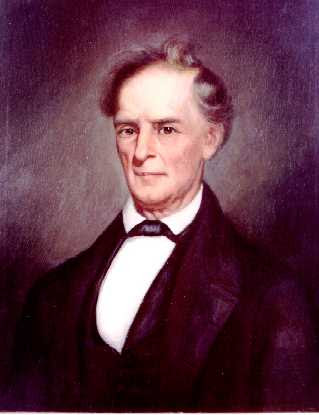
William Owsley (1783-1862)

Born in Virginia, William Owsley’s parents brought him to Kentucky as an infant in 1783. He was well-educated and worked as a teacher, surveyor, and deputy sheriff before studying law. He was elected to the Kentucky House of Representatives in 1809 and later became a judge on the Court of Appeals. Elected to the Kentucky Senate in 1832, he left that job to become Kentucky Secretary of State. He served four years as governor beginning in 1844, after which he retired to his farm near Danville, age 66. He lived there happily for another 14 years.

Governor Owsley had an older brother, Nudigate (sometimes spelled ‘Nudeget’), who also came to Kentucky. The name Nudigate was itself a surname converted into a given name. Nudigate Owsley had a daughter named Amanda, making her the governor’s niece. Amanda and her husband, Reverend William Stanley, named their first-born Augustus but gave him his mother's prestigious surname as a middle name. He became the governor after whom the famous chemist/audio tech was named. 

As for the Brown-Forman connection, Governor William Owsley had a son, Erasmus, who had a daughter, Amelia. In 1869, the governor’s granddaughter was a 21-year-old widow with a baby daughter. George Garvin Brown, 23 and unmarried, snapped her up. George went on to found and lead Brown-Forman. A son was born to George and Amelia, and they named him Owsley after his notable great-grandfather. He joined the company in 1904 and became president when his father died in 1917, just three years before the whiskey-making business was shut down due to Prohibition. Owsley obtained a medicinal whiskey license and kept the business going that way. 

Owsley Brown (1879-1952)

Owsley married Laura Lee Lyons and they had three children, two sons and a daughter. Two of them named one of their sons Owsley (Owsley Brown II and Owsley Brown Frazier), hence the “two Owsleys” employed at Brown-Forman in the late 20th century were first cousins. Their company prospered and both Owsleys became billionaires. 

When the original Owsley Brown wanted to restart Brown-Forman after Prohibition, he invited his brothers and sisters to invest before he sought outside money. Only one, his younger brother Robinson Swearingen Brown, responded, creating a cadet branch of the Brown family within the company, one that continues to this day, and is notable for its lack of Owsleys.


Wednesday, April 19, 2023

Baudoinia: the Fungus and Me


Fun with fungi.

This is a personal epilogue to the nine-part series just concluded about Baudoinia compniacensis, the whiskey fungus. If you have not read it and are interested, the series starts here.

I became aware of Baudoinia about 30 years ago, when I began to spend a lot of time at distilleries. I noticed it first at Jim Beam in Clermont. The black-trunked trees caught my attention. I had never seen bark that black. I thought it might be some Kentucky tree species with which I was unfamiliar. So I asked, which got a laugh.

They called it "the whiskey fungus." I never heard any other name for it until I dug into the research. Baudoinia is its new name, as mentioned in the series. The name I first encountered was Torula compniacensis, at which point I decided to keep calling it "the whiskey fungus."

Only after my inquiry about the trees did I begin to notice it on the sides of warehouses and other buildings. It usually appears darkest at ground level and gets lighter the higher on the wall it goes. It looks like dirt. Most people think it is dirt. I did. Most people don't like dirt, but they aren't afraid of it.

I had a friend back then who lived next to the Barton 1792 Distillery in Bardstown. Her house was literally the first one outside the old main gate. She had some on her garage. She said a couple times a year she called the Barton office and they sent someone over with a power washer, no charge. 

These days it's not so simple. "Cleaning assistance, which we did, is more complicated than it appears," a retired bourbon company executive told me. "We had serious concerns that some of the houses would fall over from pressure washing. We had people sic their dogs on the cleaning crews," he said. "Just getting releases signed was a nightmare."

I never heard anyone express concern about it as anything other than a mild nuisance until 2012, when the trouble in Louisville began. That story, especially the Stitzel-Weller part, is the throughline for the series.

As I read about the Metro Louisville Air Pollution Control District citation that started the ball rolling, I thought back to a lunch I had with Bill Samuels Jr. in 2003 or 2004, at Kurtz's in Bardstown. (I had a hot brown, I think Bill had fish.) As we were finishing, Bill mentioned he was on his way to Louisville for a meeting with that agency, or its predecessor, or maybe the federal EPA. I asked if something was going on. He said no, he had to meet with them every couple years to review the distillery's emissions profile. Ethanol vapor was mentioned but carbon-dioxide released during fermentation was usually a bigger concern. 

The point of that memory is that distilleries routinely interact with applicable government monitors and regulators about all relevant emissions issues. Despite all the romance attached to them recently, distilleries are factories. Their operations impact air and water quality and always have. Baudoinia didn't suddenly come out of nowhere in 2012. Nobody is hiding anything about Baudoinia from the government or the public. I suspect that 2012 citation was made in error by someone unfamiliar with the industry.

I am about as far from a scientist as you can get, so my understanding of these things is a layperson's, but a layperson who has followed the subject over a 30-year period. The literature is not extensive and I have read most of it. The series just concluded covers the subject as thoroughly as possible. 

Fungi play an important role in bourbon-making. In my 2014 book, Bourbon, Strange, I wrote about Aureobasidium pullulans, one of several fungal species that help release flavor compounds in white oak during natural seasoning. To quote me: "Carried by air, the spores land and send out roots (hyphae) that penetrate into the wood structure, where they release hydrogen peroxide. This natural bleaching and oxidizing agent helps break down the wood chemically, softening tannins and caramelizing hemicellulose among other salutary effects."

Other molds follow Aureobasidium and continue its work, but not Baudoinia. It's useless. It doesn't do anything. It can't even caramelize a little hemicellulose. It is neither good nor bad, just ugly. 

Fungi are part of our environment. Very few are dangerous. The mushrooms on your pizza? Those are fungi too. If you got them at the grocery they're probably fine. If you picked them off a log by the creek behind your house, maybe not.

But molds, not mushrooms, are the fungi that scare people these days and Baudoinia is mold. If you would like to know more about the assorted fungi popularly known as mold, the United States Environmental Protection Agency has a wealth of mold resources.

In Kentucky and Tennessee, Baudoinia is the mold that has people's teeth on edge. "It may cause cancer also, which they don't care to admit," is a recent comment posted in social media, in response to my Baudoinia series, by a person who, ironically, is living proof that his fear is misplaced. He and his similarly aggrieved Kentucky neighbors have lived their entire lives surrounded by Baudoinia, exposed to it more than just about anyone else in the world. 

The Kentucky communities where whiskey is made are about 250 years old. Baudoinia has been conspicuous there for at least 150 years, which is when they started to fill warehouses with thousands of barrels of aging bourbon. If Baudoinia could hurt you, the evidence would be there, in central Kentucky, or south-central Tennessee, or in Scotland, or Cognac, or Lakeshore, Ontario. There is none.

People keep saying, without evidence, that Baudoinia is dangerous. It is not. They keep saying it hasn't been studied. In fact it has been studied extensively, by multiple scientists, in Europe and the Americas, over that 150-year period. It has some novel characteristics, but nothing remotely dangerous. The evidence cited for its danger is its mere existence. "Something that looks that bad can't be good for you," is about as far as it goes. "It's killing our trees!" the Tennessee litigants claim. Something may be killing their trees, but it's not Baudoinia.

So, why do people freak out about Baudoinia? As I theorized in the series, in the 1990s, the danger of toxic molds entered the public consciousness. Because Baudoinia is unusual, and unfamiliar, many people assume it must be harmful. Add to that its connection to whiskey, to which some people morally object. A fungus that feeds on whiskey vapors? Get thee behind me, Satan! Other objectors know it's not dangerous, but are embarrassed to whine about a little dirt on their lawn furniture, so they conjure up a hideous, hidden threat. Some people just want attention. 

The narrative that multinational poison merchants are callously polluting rural communities with dangerous emissions, and spreading disease-causing mutant plants, is catnip for the conspiratorially-inclined.

As far as that goes, we're all living in a petri dish, but we're not talking about flesh-eating bacteria or brain-eating amoebae or what have you. Baudoinia is basically mildew. Living near a whiskey plant and complaining about Baudoinia is like living at the beach and complaining about sand. We've all got bigger things to worry about.  

Don't you realize it's that phone you're staring at right now that's going to kill you?

Finally, in some of the worst timing ever, Kentucky's distillers have just pushed a bill through the legislature to eliminate the hefty 'barrel tax' that goes directly to the county governments where maturation warehouses are located. Taking millions out their budgets has those governments up in arms, vowing to stop new warehouse construction citing, among other issues, public health concerns about Baudoinia.

Whiskey makers, both legacy and new, want to make their products in Kentucky and Tennessee for many reasons. Most important is the market's preference for Kentucky bourbon and Tennessee whiskey, but they also like being where their industry's idiosyncrasies are understood and appreciated. Distillers and politicians seem determined to screw that up.

I have written about Baudoinia before. I have written about it so many times I can type Baudoinia without checking the spelling. Most of this series was originally published in my newsletter, The Bourbon Country Reader. If you like this sort of thing, feel free to subscribe.

I posted this series because when this subject pops up, it usually is because a new distillery or maturation facility has been proposed. The local media does their best, as do concerned community members, but if they go online to do research most of what they will find is hot but not well informed opposition that is little more than a typical not-in-my-backyard reaction to any development someone views as unfavorable to their personal interests. 

I also posted it here on my blog because a 7,000-word article about an obscure fungal species is not the sort of thing very many editors are interested in, even (or perhaps especially) at the whiskey publications. (My view stats for this series tells me they're right.) You won't get the full story from any of the companies or industry trade associations either. That's probably a mistake. 

I admit to being pro-bourbon but otherwise have no axe to grind. I was interested in the subject because of my interest in bourbon so I did a lot of research about it. This is what I found out.

I hope, if you got this far, it was useful. 

5/21/23: Since this was published, many people have asked if there is a technological solution. Yes, there is. It's this.