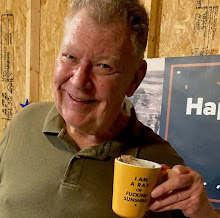
Rachael tells me there are still a few tickets left for "American Whiskey 101 with Charles Cowdery" at Capital Cellars, 227 W. Broadway, Frankfort, Kentucky, this Saturday, April 28, from 4 to 6 PM.
The class will be an introduction to bourbon and other American whiskeys, but we'll get as 'advanced' as the class wants and time permits.
You’ll learn what whiskey is, how it compares to other distilled spirits, and how American whiskey compares to other world whiskeys, such as scotch, Canadian, and Irish. Production methods, recipes, tasting techniques, and history are all covered.
And we will taste four, maybe five whiskeys (Class Theme: "All Bourbon, All 100 proof and Above"). The class will be informal and student participation is encouraged. You'll also have a chance to buy copies of my book, Bourbon, Straight, and my DVD documentary, "Made and Bottled in Kentucky."
Cost is $30 ($25 for Cru Club Members).
Contact Rachael Peake at Capital Cellars, 502-352-2600, for more information.
Showing posts with label American whiskey. Show all posts
Showing posts with label American whiskey. Show all posts
Tuesday, April 24, 2012

Tuesday, April 10, 2012
New Distinctive Products Agreement Protects American Whiskey In Brazil.
Yesterday, United States Trade Representative (USTR) Ron Kirk and Brazilian Trade Minister Fernando Pimentel signed an agreement to officially recognize each country's native distilled spirits products. The Distilled Spirits Council called it “an historic event that is sure to contribute to further acceleration of trade in distilled spirits between the two countries.”
The signing ceremony, which took place at USTR headquarters, involved an exchange of letters detailing the process by which each country will formally recognize its counterpart's distinctive distilled spirits categories; Bourbon and Tennessee Whiskey by Brazil and Cachaça by the U.S.
“This is a historic day for exporters of Bourbon and Tennessee Whiskey to Brazil, which is a rapidly growing market for American Whiskeys,” said Distilled Spirits Council President Peter H. Cressy. He noted that U.S. whiskey exports to Brazil shot up 519% from 2001 to 2011, growing from $517,000 to $3.2 million. “Brazilians are rapidly acquiring a taste for the finest American whiskeys, and today’s agreement—when implemented—will ensure the integrity and authenticity of these world class drinks,” Cressy added.
Under the agreement, the United States government will begin its process seeking public comments regarding recognizing Cachaça as a distinctive product of Brazil. Once a final rule is issued by the Treasury Department’s Tax and Trade Bureau (TTB), formally recognizing Cachaça, Brazil will then work to complete its regulatory process within a set timeframe to officially recognize Bourbon and Tennessee Whiskey as distinctive products of the United States.
“Formal recognition for Bourbon and Tennessee Whiskey producers is critical because it will ensure that only those products produced in accordance with strict U.S. standards will be permitted for sale in the Brazilian market. We wish to thank USTR and TTB staff, in particular, for their tireless efforts over the past several years to secure this important agreement,” Cressy concluded.
So if any of you micro-distillers were planning to make domestic Cachaça, too bad. It's about to become illegal.
The signing ceremony, which took place at USTR headquarters, involved an exchange of letters detailing the process by which each country will formally recognize its counterpart's distinctive distilled spirits categories; Bourbon and Tennessee Whiskey by Brazil and Cachaça by the U.S.
“This is a historic day for exporters of Bourbon and Tennessee Whiskey to Brazil, which is a rapidly growing market for American Whiskeys,” said Distilled Spirits Council President Peter H. Cressy. He noted that U.S. whiskey exports to Brazil shot up 519% from 2001 to 2011, growing from $517,000 to $3.2 million. “Brazilians are rapidly acquiring a taste for the finest American whiskeys, and today’s agreement—when implemented—will ensure the integrity and authenticity of these world class drinks,” Cressy added.
Under the agreement, the United States government will begin its process seeking public comments regarding recognizing Cachaça as a distinctive product of Brazil. Once a final rule is issued by the Treasury Department’s Tax and Trade Bureau (TTB), formally recognizing Cachaça, Brazil will then work to complete its regulatory process within a set timeframe to officially recognize Bourbon and Tennessee Whiskey as distinctive products of the United States.
“Formal recognition for Bourbon and Tennessee Whiskey producers is critical because it will ensure that only those products produced in accordance with strict U.S. standards will be permitted for sale in the Brazilian market. We wish to thank USTR and TTB staff, in particular, for their tireless efforts over the past several years to secure this important agreement,” Cressy concluded.
So if any of you micro-distillers were planning to make domestic Cachaça, too bad. It's about to become illegal.
Wednesday, March 2, 2011
Upcoming Schedule Of I Wish Whiskey Classes Taught By Me.
I have been negligent in posting about the upcoming schedule of classes I'm teaching for I Wish Lessons, perhaps because I've been so busy teaching them. We have increased the number and types of classes this year and they have been very well received. I Wish is a new company, only just beginning its second year in business.
The mission of I Wish Lessons is to help people enjoy life through learning. All of the classes I teach about distilled spirits are held in different cool bars in the city (Chicago). They always involve tasting usually four products and the bars are pretty good about premium pours. You can also order food and other beverages, and make it a fun night out with a little learning on the side.
They prefer the term 'coach' to 'teacher' or 'instructor.' I usually 'coach' everybody as a group for about an hour, then hang around for individual one-on-one 'coaching.' Class size is typically 20 to 30 people. It's all very relaxed and informal and the students usually determine the course of events through their questions. Students are encouraged to participate. They are also encouraged to stay after class to continue their studies on their own.
Last night we debuted a new course at Waterhouse called Whiskey 101. As the name suggests, it's an introduction to whiskey in general. Because it's me we started with bourbon and worked our way up to single malt scotch, with Irish and Canadian in between. It went well, I think. I was surprised that the group was probably two-thirds women, which is rare for anything to do with whiskey. I was thrilled because I like women and because that's good for the whiskey business, if more women start to discover and appreciate whiskey.
Whiskey & Cupcakes is, essentially, Whiskey 101 except with cupcakes. The cupcakes are fun and the cupcake artists do try to match each cupcake to a whiskey, which gives us an opportunity to talk about matching whiskey with foods. The cupcake thing is really just a way to up the fun a little bit. Unfortunately, it's hard for me to coach and eat cupcakes so I usually miss out. (I do manage to drink, however.)
Here is what I have coming up. Go to the I Wish website to sign up.
All dates are subject to change.
I Wish also does private classes, so if you have a group that would like to have a whiskey or other distilled spirits tasting with me as your coach, you can arrange that through I Wish too.
The mission of I Wish Lessons is to help people enjoy life through learning. All of the classes I teach about distilled spirits are held in different cool bars in the city (Chicago). They always involve tasting usually four products and the bars are pretty good about premium pours. You can also order food and other beverages, and make it a fun night out with a little learning on the side.
They prefer the term 'coach' to 'teacher' or 'instructor.' I usually 'coach' everybody as a group for about an hour, then hang around for individual one-on-one 'coaching.' Class size is typically 20 to 30 people. It's all very relaxed and informal and the students usually determine the course of events through their questions. Students are encouraged to participate. They are also encouraged to stay after class to continue their studies on their own.
Last night we debuted a new course at Waterhouse called Whiskey 101. As the name suggests, it's an introduction to whiskey in general. Because it's me we started with bourbon and worked our way up to single malt scotch, with Irish and Canadian in between. It went well, I think. I was surprised that the group was probably two-thirds women, which is rare for anything to do with whiskey. I was thrilled because I like women and because that's good for the whiskey business, if more women start to discover and appreciate whiskey.
Whiskey & Cupcakes is, essentially, Whiskey 101 except with cupcakes. The cupcakes are fun and the cupcake artists do try to match each cupcake to a whiskey, which gives us an opportunity to talk about matching whiskey with foods. The cupcake thing is really just a way to up the fun a little bit. Unfortunately, it's hard for me to coach and eat cupcakes so I usually miss out. (I do manage to drink, however.)
Here is what I have coming up. Go to the I Wish website to sign up.
- Mon, Mar. 7th – Whiskey & Cupcakes (Pitchfork)
- Tue., Mar. 29th – Single Malt Scotch (Pitchfork)
- Wed, Mar. 30th – Whiskey & Cupcakes (Pitchfork)
- Tue, Apr. 5th – Whiskey 101 (Waterhouse)
- Mon, Apr. 11th -- Whiskey & Cupcakes (Pitchfork)
- Tue, Apr. 19th – Bourbon (Pitchfork)
- Wed, April 27th -- Whiskey & Cupcakes (Pitchfork)
All dates are subject to change.
I Wish also does private classes, so if you have a group that would like to have a whiskey or other distilled spirits tasting with me as your coach, you can arrange that through I Wish too.
Thursday, December 9, 2010
Tried It? I Made It!

Someone asked me today if I'd ever had the George Washington Distillery Limited Edition Vatted American Whiskey?
"Had it?" I said. "I made it!"
When the whole project to restore George Washington's Mount Vernon distillery began, each DISCUS member donated a full barrel of their whiskey. It was delivered with much fanfare and then left to age a little longer at Mount Vernon.
The original bottling they did from that whiskey was special bottles of each brand, which were auctioned or otherwise sold at ridiculous prices to benefit the restoration project.
After that they still had a lot of it left and some of it was getting pretty old, so they came up with this idea to mix it all together. I was on hand for that event in the summer of 2005. The plan was to empty all of the barrels into a big plastic tub, mix them together, then put them back into the barrels for another six months.
As you can imagine, getting whiskey out of a barrel is pretty easy but getting it back in is not. The only way in is through the bung hole, which is about 2.5 inches in diameter.
Joe Dangler, from A. Smith Bowman Distillery, brought a small lab pump, which was too slow. This part of the plan had not been thought through. Because we all had planes to catch we started to improvise. My innovation was cutting some plastic water bottles into scoops and funnels. We were all dipping and dumping as fast as we could (including a female DISCUS lawyer wearing a Chanel suit...what a sport!) and we were in the tub up to our elbows.
I'm sure there is part of me in every bottle.
I managed to clean up a little bit at the airport but I'm sure we all smelled like...well, you can just about imagine.
I was also there when it was bottled a few months later and that's a good story too, but for another time.
(In the picture, that's Joe Dangler on the left and Dave Pickerell on the right. Ron Call is in the background. I don't recall the woman talking to Ron.)
Sunday, August 29, 2010
Specific Recommendations For The Bourbon Beginner.
A few weeks ago I posted here some "Advice For The Bourbon Beginner." It attracted many good comments, so be sure to read them if you go back and check it out.
As for the advice itself I see now what was missing; specific suggestions about what to drink. A correction follows. I'll also explain why each recommendation is on the list in terms of what it can teach you.
It's a question I'm often asked, what product do I recommend for the bourbon beginner? I usually suggest Maker's Mark, so let's begin there.
Maker's Mark. A litmus test, really, because if Maker's Mark is too much for you -- "too strong" -- then it is likely bourbon whiskey will never be your drink. Arguably, wheated bourbon is bourbon for people who don't like bourbon, assuming that the characteristic they don't like is the sharpness and heat that is typical of rye-recipe bourbon. It also has the advantage of being in most bars so you don't have to buy a whole bottle to take the test.
Evan Williams Single Barrel Vintage (any year). I have argued that older bourbons aren't necessarily better than younger ones, just different, but I have to concede that most experienced drinkers prefer the older to the younger style, myself included. While the single barrel and vintage things are fun, the best part of Evan Williams Single Barrel Vintage is that it is simply the best whiskey Heaven Hill makes in any given year and Heaven Hill makes a lot of whiskey. For Heaven Hill, at least, the perfect age appears to be nine years, though in fairness barrels for this product are usually pulled from parts of the warehouse that age the whiskey most aggressively.
Jim Beam Black. Similarly, this is the easiest of the Beam company's bourbons to love. It's old enough that the foxy yeast notes of the younger Beams have mellowed and nothing stands in the way of all the caramel and vanilla the spirit has absorbed from the barrel. Booker Noe always said the standard Beam mash bill is 15 percent rye but the company says the mash bill is a secret. (Booker did whisper it in my ear the first time.) Based purely on the taste you would think it contains less. Beam's Knob Creek, for a little more money, has a little more edge but is also easy to like. Try them both to see how different two whiskeys from the same producer that are very similar on paper can taste.
Wild Turkey 101. The idea here is to take it up a notch. Many bourbon drinkers and all loyal Wild Turkey 101 drinkers believe bourbon should burn a little going down. Not a lot, but it's like a scotch drinker who believes scotch has to have at least a little bit of peat. Also, while many bourbon brands talk about making bourbon 'the old-fashioned way,' in terms of its overall style Wild Turkey most nearly does. If 50.5% alcohol is too much for you feel free to add water (to all of the above as well) but stay away from the 40% alcohol (80 proof) bottling.
Old Forester Signature. Although Wild Turkey is made very traditionally, the brand is only 70 years old, has had several owners, and has only been made exclusively at its present distillery for about 40 years. Old Forester, on the other hand, is 140 years old and has had only one owner (Brown-Forman), though it did switch distilleries about 30 years ago. Although Old Forester is a bargain today, it really represents what a finer bourbon tasted like back before today's super-premiums existed. It is simply a very good, solid, reliable, traditional bourbon. Unlike with Turkey, here I don't object if you'd rather try the 43% alcohol expression instead of the 50%.
After the above I suggest you dabble in some extra age, perhaps with Weller 12 or Elijah Craig 12, and try a straight rye like Jim Beam Rye, Wild Turkey Rye, or Rittenhouse Rye. This would be a good time to add a Tennessee whiskey to the collection, Dickel 12 or Jack Daniel's Single Barrel, though if you've never had it you really should try Jack Daniel's No. 7, since it is the most popular whiskey in the world.
That should hold you for now.
Thursday, August 19, 2010
A Few Suggestions For Improving The Kentucky Bourbon Festival.
On Tuesday I expressed some opinions about the annual Kentucky Bourbon Festival (KBF) in Bardstown, Kentucky. This year's event is September 14-19. (I'll be there.)
Here are a few specific suggestions for improving the KBF. Feel free to add your own via comments. (I will be enforcing a constructive-suggestions-only policy.)
- Put up some signs. BIG signs. As it is you can drive through the center of little Bardstown in the middle of the festival and not know anything special is going on. Welcome signs but also directional signs.
- Promote bourbon. The producers are there to promote their brands but the festival needs to promote the enjoyment, understanding, and appreciation of bourbon generally, to both beginners and veteran enthusiasts. Where are the seminars, the guided tastings, the master classes, the presentations on history and craft? How about a whiskey-themed film and video festival?
- Attract collectors. Get a law passed allowing whiskey collectors (legal age only, of course) to have a legal and above board swap meet. It would be a natural extension of the existing Master Distiller's Auction.
- Discourage driving. Make it easy and convenient for people to get around without using their cars. Eliminate the parking immediately adjacent to the festival grounds and use those lots for more festival acreage. Have remote parking and connect the parking, festival sites, and area hotels using buses.
- Think 'big tent.' In the spirit of American whiskey solidarity invite Tennessee distilleries Jack Daniel's and George Dickel to participate in events such as the Spalding Hall lawn booths and the World Championship Bourbon Barrel Relay. Both companies (Brown-Forman and Diageo) are major players in Kentucky too.
- Think even bigger. Find a role for the new craft distillers that are springing up all over the country and encourage all producers to feature all of their U.S.-made whiskey products, such as straight rye whiskey. There is a lot to be gained by being less literal and more inclusive.
- Work your brand. Pay for the improvements by working your valuable Kentucky Bourbon Festival brand a lot harder and all year round.
To quote architect Daniel Burnham, as I did last year during the KBF when I was inducted into the Kentucky Bourbon Hall of Fame, "Make no little plans. They have no magic to stir men’s blood."
Wednesday, August 18, 2010
No Short-Cuts To Whiskey Appreciation.
Regular readers of this space may have noticed that while I will review specific whiskeys from time to time I don't score them. I last wrote about this here.
One of the main reasons I hate ratings is because they are a crutch for lazy people looking for a short cut. They are looking for a short cut because they have no base of knowledge and no interest in obtaining one. People who buy-by-the-numbers are people who do everything by the short cut route and who are looking for social validation more than they are a great bottle of whiskey.
As a writer, I hate the idea that these people don't even read the reviews, they just look at the numbers. Ideally, a critic will give you enough information to make up your own mind but you as the reader have to work too. You have to think. You don't need to be a writer to pull a two-digit number out of the air and you don't need to think to turn those numbers into a shopping list.
People who buy-by-the-numbers wouldn't recognize "brine and spice, apple pip, and traces of aniseed"* if it bit them.
I don't blame or condemn the writers, publications, and entities like the Beverage Testing Institute (BTI) that give ratings. They are forced to do it because they depend on advertising revenue or (in the case of BTI) fees to stay in business. The producers would scream bloody murder if any of those entities switched to the type of "good-better-best" ranking system I advocate.
Ridgemont Reserve 1792 is a very good bourbon made by Sazerac at its Tom Moore Distillery in Bardstown, Kentucky. Accordiing to BTI, 1792 is a 93, ranking above the brands 1792 considers its competitors: Knob Creek, Woodford Reserve (both 90), and Gentleman Jack (82).
The sad reality is that their 93 will sell more bottles of 1792 than positive reviews by me and every other writer combined. And selling more bottles is what the producers are in business to do.
For the people who give ratings the pointlessness of it doesn't harm their credibility as long as they're running an honest game and so far as I know everyone is. That it is a silly and meaningless game is beside the point as long as people buy-by-the-numbers. The only harm it does is put great bottles of whiskey into the cabinets of people who manifestly do not deserve them.
As long as there are people with money to spend who believe the ratings mean something there will be ratings.
* From Dominic Roskrow's Guest Review of Caol Ila, 25 Year Old on "What Does John Know." He gave it an 88.
One of the main reasons I hate ratings is because they are a crutch for lazy people looking for a short cut. They are looking for a short cut because they have no base of knowledge and no interest in obtaining one. People who buy-by-the-numbers are people who do everything by the short cut route and who are looking for social validation more than they are a great bottle of whiskey.
As a writer, I hate the idea that these people don't even read the reviews, they just look at the numbers. Ideally, a critic will give you enough information to make up your own mind but you as the reader have to work too. You have to think. You don't need to be a writer to pull a two-digit number out of the air and you don't need to think to turn those numbers into a shopping list.
People who buy-by-the-numbers wouldn't recognize "brine and spice, apple pip, and traces of aniseed"* if it bit them.
I don't blame or condemn the writers, publications, and entities like the Beverage Testing Institute (BTI) that give ratings. They are forced to do it because they depend on advertising revenue or (in the case of BTI) fees to stay in business. The producers would scream bloody murder if any of those entities switched to the type of "good-better-best" ranking system I advocate.
Ridgemont Reserve 1792 is a very good bourbon made by Sazerac at its Tom Moore Distillery in Bardstown, Kentucky. Accordiing to BTI, 1792 is a 93, ranking above the brands 1792 considers its competitors: Knob Creek, Woodford Reserve (both 90), and Gentleman Jack (82).
The sad reality is that their 93 will sell more bottles of 1792 than positive reviews by me and every other writer combined. And selling more bottles is what the producers are in business to do.
For the people who give ratings the pointlessness of it doesn't harm their credibility as long as they're running an honest game and so far as I know everyone is. That it is a silly and meaningless game is beside the point as long as people buy-by-the-numbers. The only harm it does is put great bottles of whiskey into the cabinets of people who manifestly do not deserve them.
As long as there are people with money to spend who believe the ratings mean something there will be ratings.
* From Dominic Roskrow's Guest Review of Caol Ila, 25 Year Old on "What Does John Know." He gave it an 88.
Saturday, August 7, 2010
Advice For The Bourbon Beginner.
Many people who are new to bourbon don't know where to start. Some turn to books, magazines or web sites like StraightBourbon or BourbonEnthusiast for recommendations. But it can be confusing.
I'm on record, in my book and elsewhere, as not thinking very much of rating systems. Their basic flaw is that they give a sheen of objectivity to something inherently subjective.
I had a long conversation about this with Jim Murray once and his conclusion was, "we owe it to people to give them some kind of guidance."
Point taken.
Here, for example, is a pitfall to avoid. Newcomers do themselves no favor by trying to find a consensus 'best' bourbon or other whiskey as if they can learn all they need to know by tasting 'the best.' Unfortunately, products enthusiasts rave about tend to be atypical and hard to appreciate if you are still learning the basics.
My recommendation for a beginner is to work your way through the leading brands from the major producers -- Jim Beam white, Jack Daniel's No. 7, Evan Williams black, Wild Turkey 101.
Compare them to each other, get to know them.
Taste them the right way. Start your journey by developing your tasting technique. I recommend tasting everything both neat and diluted with room temperature water.
Remember that smelling is a crucial part of tasting.
For the next round, pick the two or three of the first group that you liked best and figure out what that producer's step-up is. If you like Wild Turkey 101, you might want to step up to Russell's Reserve, Rare Breed or Kentucky Spirit. Which one? It doesn't really matter, though budget might play a role as Kentucky Spirit costs twice as much as Russell's Reserve.
After that you should be able to fly solo.
Most of all, resist the lure of short cuts. They're a waste of time because they don't work. You don't become a bourbon connoisseur just because you drank a bottle of Pappy 23. That's probably the hardest thing to get across to young people so I'll repeat it, because they love it when you do that. Short cuts don't work.
Okay, vets. What are your tips for beginners?
Friday, July 9, 2010
Bill Samuels Is Going To Russia, Czech Republic.
Bourbon industry icon Bill Samuels, president of Maker’s Mark, will be the featured speaker at two upcoming American whiskey seminars in Russia and the Czech Republic. They are July 13 in St. Petersburg and July 15 in Prague.
The St. Petersburg event will be hosted by acting U.S. Ambassador John Ordway. The Prague event will be hosted by U.S. Consul General Sheila Gwaltney. The Distilled Spirits Council of the U.S. (DISCUS) is putting them on to educate key local hospitality industry executives about the taste, style, and heritage of American whiskey while showcasing the characteristics that make American whiskey unique.
Samuels' presentation will include a tasting of assorted American-made whiskeys (not just his). Following Samuels’ presentation, guests will discover the style and sophistication of cocktails prepared with American Whiskey during a mixology demonstration by renowned local bartenders.
The events are partially supported by the U.S. Department of Agriculture.
The St. Petersburg event will be hosted by acting U.S. Ambassador John Ordway. The Prague event will be hosted by U.S. Consul General Sheila Gwaltney. The Distilled Spirits Council of the U.S. (DISCUS) is putting them on to educate key local hospitality industry executives about the taste, style, and heritage of American whiskey while showcasing the characteristics that make American whiskey unique.
Samuels' presentation will include a tasting of assorted American-made whiskeys (not just his). Following Samuels’ presentation, guests will discover the style and sophistication of cocktails prepared with American Whiskey during a mixology demonstration by renowned local bartenders.
The events are partially supported by the U.S. Department of Agriculture.
Saturday, May 15, 2010
Beam's "Distillers Tree" Is a Major Contribution to Whiskey History.
The Beams are the Kennedys of American whiskey. Members of the Beam family have worked at dozens of different distilleries. Virtually every major brand on the market today can find a Beam somewhere in its history.
This heritage, of course, reflects most proudly on Jim Beam Bourbon itself, which is why they have produced the interactive Distillers Tree. Naturally they highlight those family members in Jim Beam's direct line, but they don't short the others, with one exception.
In addition to David M. and Joseph B., David Beam had a third distiller son, John, better known as Jack, who started a Nelson County distillery called Early Times. That brand is owned today by arch rival Brown-Forman, which also owns Jack Daniel's.
But I won't let that blemish spoil my enjoyment of this wonderful contribution to the preservation and dissemination of American whiskey's true history.
This heritage, of course, reflects most proudly on Jim Beam Bourbon itself, which is why they have produced the interactive Distillers Tree. Naturally they highlight those family members in Jim Beam's direct line, but they don't short the others, with one exception.
In addition to David M. and Joseph B., David Beam had a third distiller son, John, better known as Jack, who started a Nelson County distillery called Early Times. That brand is owned today by arch rival Brown-Forman, which also owns Jack Daniel's.
But I won't let that blemish spoil my enjoyment of this wonderful contribution to the preservation and dissemination of American whiskey's true history.
Monday, March 29, 2010
Bourbon Versus Scotch.
Although I prefer American whiskey I have nothing against scotch, despite my occasional pokes at some of its more pretentious enthusiasts. My real quarrel is with the ones who denigrate and dismiss as pretenders all whiskeys that are not single malt scotch. Their prejudices, like most, are generally based in ignorance.
One of their false beliefs is that spirit distilled in pot stills is inherently superior to spirit distilled in column stills. Because most American whiskey is initially distilled in a column still, like Scottish grain whiskey, many scotch enthusiasts assume they are more or less the same thing.
They aren't.
First, the stills. A column still can do anything a pot still can do but it can also do things a pot still cannot, like distill to 95% alcohol. It's not the type of still that matters, it's how you use it.
Second, the second distillation. Like Scottish single malts, American whiskeys are distilled twice, the second time in a pot still. Although the Americans don't need that second distillation to raise the proof, they believe it polishes the whiskey by pulling off a few of the more stubborn undesirable congeners.
Third, the end product. In Scotland, column stills are used to make blending whiskey that is distilled just shy of 95% alcohol, meaning just shy of neutrality, i.e., vodka. Pot stills are used to make malt whiskey that is distilled to about 70% alcohol. In an American whiskey distillery, column stills are used to distill to about 70% alcohol, about the same as a Scottish malt distillery. (Lower proof off the still means more flavor in the green spirit.)
The two distillates are different because of different grains, different yeast, and different water, but not because the stills are different.
The Celtic (Scotland plus Ireland and Wales) and American whiskey-making traditions began to diverge more than 200 years ago. They're different, you may even like the product of one better than the other, but to claim that one is objectively better than the other is calumny.
Wednesday, March 10, 2010
How Much Is This Bottle Worth?
It has been about 16 months since I've made a "what's my bottle worth" post. It's a question I get all the time.
“How much?” is a tricky subject with old liquor bottles because it is illegal to sell alcohol without a license. There are collectors, they buy and sell, and I haven’t heard of anyone being prosecuted for it, but because it is illegal most transaction are on the down low.
A precondition for assessing the resale value of anything is a sufficiently active secondary market for the type of object being assessed. An assessor studies recent sales to predict future prices. The secondary market for American whiskey is too small, fragmented and secretive to do that.
The only easily-accessible market for this sort of thing is the auction web site eBay.
The rarest and most valuable bottles are the oldest ones. Some post-Prohibition bottles have value, usually because the distillery where they were made is out-of-business. Prohibition-era medicinal whiskey is surprisingly common. Rarest of all are intact (i.e., full and well-sealed) pre-Prohibition bottlings.
The absolute high end on eBay is maybe $1,000, and that is only if you get lucky and a couple of people really want what you're selling.
There is a subset of this market that specializes in limited editions by particular producers, Jack Daniel's and Maker's Mark primarily. While most items sell in the sub-$500 range, there is no saying what the top end is. Naturally, big money transactions are the most secretive of all.
Among the people who buy old whiskey, many do it to drink the stuff. This tends not to be true of the Daniel's and Maker's Mark collectors.
I hope this is helpful.
“How much?” is a tricky subject with old liquor bottles because it is illegal to sell alcohol without a license. There are collectors, they buy and sell, and I haven’t heard of anyone being prosecuted for it, but because it is illegal most transaction are on the down low.
A precondition for assessing the resale value of anything is a sufficiently active secondary market for the type of object being assessed. An assessor studies recent sales to predict future prices. The secondary market for American whiskey is too small, fragmented and secretive to do that.
The only easily-accessible market for this sort of thing is the auction web site eBay.
The rarest and most valuable bottles are the oldest ones. Some post-Prohibition bottles have value, usually because the distillery where they were made is out-of-business. Prohibition-era medicinal whiskey is surprisingly common. Rarest of all are intact (i.e., full and well-sealed) pre-Prohibition bottlings.
The absolute high end on eBay is maybe $1,000, and that is only if you get lucky and a couple of people really want what you're selling.
There is a subset of this market that specializes in limited editions by particular producers, Jack Daniel's and Maker's Mark primarily. While most items sell in the sub-$500 range, there is no saying what the top end is. Naturally, big money transactions are the most secretive of all.
Among the people who buy old whiskey, many do it to drink the stuff. This tends not to be true of the Daniel's and Maker's Mark collectors.
I hope this is helpful.
Thursday, February 18, 2010
At Tuthilltown Spirits, Three And Twelve.
A few days ago, I wrote here about the use of smaller barrels for aging spirits such as whiskey. Tuthilltown Spirits, in Gardiner, N.Y, is one of the pioneers of the micro-distillery movement. They initially created their Hudson Baby Bourbon and other aged products in three gallon barrels and are now using twelve gallon casks, essentially the quarter casks Finger Lakes uses as well.
Among the handful of small distillers who are serious about whiskey-making, it looks like some consensus is emerging around barrels in the ten to fifteen-gallon range. There are a lot of factors to consider, including how you are going to wrangle them from place to place.
It's hard to explain exactly why this looks like the ideal size, there are many factors to consider. One of the intangibles is the basic organization of your barrel inventory and how you are going to use it to create products. I'm talking about people who are going into production, at any scale, not people who are just filling a barrel or two to see what happens. Remember that you lose volume over time through absorption and evaporation, maybe up to 10 percent in the first year. If you start with ten to fifteen-gallons, you're still going to have something to sell after months or years of evaporation and sampling, but the unit size is small enough to be manageable.
Back to Tuthilltown, they came up with an interesting idea when they created their whiskeys. U.S. regulations say a bourbon whiskey or rye whiskey has to be aged in new, charred oak barrels, but it doesn't say for how long. Is three months long enough? The feds approved it, but is long enough for legal purposes the same as long enough for drinking purposes?
I haven't tasted all of Tuthilltown's whiskeys but I have tasted their Hudson Baby Bourbon. Does it taste like bourbon whiskey that has aged in a barrel for five or six years? Of course not. Is it a product worth tasting? Absolutely! Yes, it's more like white dog than mature spirit, but there's nothing wrong with that. Jumping into the micro-distillery pool is all about opening yourself up to new tastes and new ideas. (Yes, guys, I'm learning.)
You can read more about Tuthilltown here. (The site is SmartMoney.com, their Small Business sub-site.)
Among the handful of small distillers who are serious about whiskey-making, it looks like some consensus is emerging around barrels in the ten to fifteen-gallon range. There are a lot of factors to consider, including how you are going to wrangle them from place to place.
It's hard to explain exactly why this looks like the ideal size, there are many factors to consider. One of the intangibles is the basic organization of your barrel inventory and how you are going to use it to create products. I'm talking about people who are going into production, at any scale, not people who are just filling a barrel or two to see what happens. Remember that you lose volume over time through absorption and evaporation, maybe up to 10 percent in the first year. If you start with ten to fifteen-gallons, you're still going to have something to sell after months or years of evaporation and sampling, but the unit size is small enough to be manageable.
Back to Tuthilltown, they came up with an interesting idea when they created their whiskeys. U.S. regulations say a bourbon whiskey or rye whiskey has to be aged in new, charred oak barrels, but it doesn't say for how long. Is three months long enough? The feds approved it, but is long enough for legal purposes the same as long enough for drinking purposes?
I haven't tasted all of Tuthilltown's whiskeys but I have tasted their Hudson Baby Bourbon. Does it taste like bourbon whiskey that has aged in a barrel for five or six years? Of course not. Is it a product worth tasting? Absolutely! Yes, it's more like white dog than mature spirit, but there's nothing wrong with that. Jumping into the micro-distillery pool is all about opening yourself up to new tastes and new ideas. (Yes, guys, I'm learning.)
You can read more about Tuthilltown here. (The site is SmartMoney.com, their Small Business sub-site.)
Sunday, February 14, 2010
What Effect Smaller Barrels?
The standard American whiskey barrel holds 53 gallons. Why the odd number? Because that works out to almost exactly 200 liters.
These are the barrels all of the big American whiskey distilleries use.
Today, more and more micro-distilleries are making whiskey and most of them are using smaller barrels. Barrels can be made in literally any size you want, but some of the standard smaller sizes are 5 gallons, 10 gallons, 15 gallons, 20 gallons and 30 gallons. It isn't just distilleries. Wineries use barrels too and some of them prefer the smaller barrels as well.
The cooperages claim smaller barrels don't make a difference, but that's both counterintuitive and counter to most anecdotal evidence.
Size isn't the only consideration. Other variables include source of the wood, how and for how long it was seasoned, how heavily it's charred, even how thick the staves are. I'm told that some of the very small 'presentation' barrels that some people are using for aging have very thin staves (the dimension from the inner surface to the outer surface, the depth not the width) that may not be able to withstand high temperatures. They literally pop when it gets really hot.
In Texas, Garrison Brothers uses 10 gallon barrels primarily, but they're experimenting with 20 and 30 gallons as well. Finger Lakes in Upstate New York uses 'quarter casks,' which I assume are in the neighborhood of 10-15 gallons.
Barrels Unlimited is a company that sells barrels in a wide range of sizes and you can order them directly from their web site. Note that the 5 gallon barrel is $210 but the 30 gallon barrel is $235. If you're trying to do something commercially, you have to consider that the barrel-cost-per-gallon can range from $8 with a 30 gallon barrel up to $42 with a five gallon barrel. Like everything, the advantages of smaller barrel aging come at a price.
The reality is that three things happen in the barrel that affect the whiskey: evaporation, absorption, and oxidation (and some other chemical changes). Absorption happens pretty quickly and can be accelerated by using smaller barrels. Being in a warmer climate also accelerates absorption. Evaporation tends to concentrate flavors and I'm not sure what effect, if any, a smaller barrel or warmer climate has on that, but I know humidity is also part of that equation. Oxidation, which tends to round things out, is strictly a function of time.
So what? A lot of mirco-distilleries are afraid to make whiskey because they find the 4- to 10-years (or more) that most American whiskeys are aged overwhelming, but it's starting to look like some pretty tasty tipples can be made in two years or less using small barrels.
Some people will say things like, "we aged it for 18 months in a ten gallon barrel and it tastes like a five or six year old whiskey." It's not really about finding a faster way to make Jim Beam. It's about crafting something original and tasty, and marketable. Smaller barrels appear to be part of the answer.
These are the barrels all of the big American whiskey distilleries use.
Today, more and more micro-distilleries are making whiskey and most of them are using smaller barrels. Barrels can be made in literally any size you want, but some of the standard smaller sizes are 5 gallons, 10 gallons, 15 gallons, 20 gallons and 30 gallons. It isn't just distilleries. Wineries use barrels too and some of them prefer the smaller barrels as well.
The cooperages claim smaller barrels don't make a difference, but that's both counterintuitive and counter to most anecdotal evidence.
Size isn't the only consideration. Other variables include source of the wood, how and for how long it was seasoned, how heavily it's charred, even how thick the staves are. I'm told that some of the very small 'presentation' barrels that some people are using for aging have very thin staves (the dimension from the inner surface to the outer surface, the depth not the width) that may not be able to withstand high temperatures. They literally pop when it gets really hot.
In Texas, Garrison Brothers uses 10 gallon barrels primarily, but they're experimenting with 20 and 30 gallons as well. Finger Lakes in Upstate New York uses 'quarter casks,' which I assume are in the neighborhood of 10-15 gallons.
Barrels Unlimited is a company that sells barrels in a wide range of sizes and you can order them directly from their web site. Note that the 5 gallon barrel is $210 but the 30 gallon barrel is $235. If you're trying to do something commercially, you have to consider that the barrel-cost-per-gallon can range from $8 with a 30 gallon barrel up to $42 with a five gallon barrel. Like everything, the advantages of smaller barrel aging come at a price.
The reality is that three things happen in the barrel that affect the whiskey: evaporation, absorption, and oxidation (and some other chemical changes). Absorption happens pretty quickly and can be accelerated by using smaller barrels. Being in a warmer climate also accelerates absorption. Evaporation tends to concentrate flavors and I'm not sure what effect, if any, a smaller barrel or warmer climate has on that, but I know humidity is also part of that equation. Oxidation, which tends to round things out, is strictly a function of time.
So what? A lot of mirco-distilleries are afraid to make whiskey because they find the 4- to 10-years (or more) that most American whiskeys are aged overwhelming, but it's starting to look like some pretty tasty tipples can be made in two years or less using small barrels.
Some people will say things like, "we aged it for 18 months in a ten gallon barrel and it tastes like a five or six year old whiskey." It's not really about finding a faster way to make Jim Beam. It's about crafting something original and tasty, and marketable. Smaller barrels appear to be part of the answer.
Friday, January 29, 2010
Buy Your WhiskeyFest Chicago Tickets by Sunday and Save $10.
WhiskeyFest Chicago, sponsored by Malt Advocate Magazine, is Chicago's only major whiskey event. It is held each year at the Hyatt Regency downtown. This year it is on Friday, April 23, from 6:30 pm to 9:30 pm.
For the second consecutive year there is no increase in ticket prices. Regular tickets are $110 each and early admission VIP tickets are $150 each. But order now (through Sunday, January 31) and pay just $100 for the standard admission ticket. Go here to order your tickets or here if you want more information.
They've also arranged for special room rates at the Hyatt. Unless you're like me and can get home on the #145 bus, staying there is a good plan.
If you've never been to one of these events, it goes something like this.
When you arrive and register, you receive a commemorative Glencairn Scottish crystal nosing glass. Then you enter the ballroom, which looks like you're at a trade show, with rows of booths. Each booth is hosted by a different whiskey producer and they are pouring one or several of their whiskeys. Sometimes the person doing the pouring is the master distiller or master blender.
There's also a substantial buffet, one at each end of the hall. It's a typical hotel buffet, but you can make a dinner of it.
In the adjacent meeting rooms, distillery representatives give presentations, most of which include guided tastings.
Most of the whiskeys you can buy in the United States are represented. Bourbon, rye, scotch, Irish, Canadian, Japanese, it's all there. Naturally, new expressions are often featured.
It can get pretty crowded. So it doesn't get too crowded, they limit how many tickets they sell. They always sell all of them in advance, so don't think you're going get tickets at the door.
I'll be there, though not in any official capacity. Once, a few years ago, I asked myself if I was there to work or there to drink and I opted for drinking.
For the second consecutive year there is no increase in ticket prices. Regular tickets are $110 each and early admission VIP tickets are $150 each. But order now (through Sunday, January 31) and pay just $100 for the standard admission ticket. Go here to order your tickets or here if you want more information.
They've also arranged for special room rates at the Hyatt. Unless you're like me and can get home on the #145 bus, staying there is a good plan.
If you've never been to one of these events, it goes something like this.
When you arrive and register, you receive a commemorative Glencairn Scottish crystal nosing glass. Then you enter the ballroom, which looks like you're at a trade show, with rows of booths. Each booth is hosted by a different whiskey producer and they are pouring one or several of their whiskeys. Sometimes the person doing the pouring is the master distiller or master blender.
There's also a substantial buffet, one at each end of the hall. It's a typical hotel buffet, but you can make a dinner of it.
In the adjacent meeting rooms, distillery representatives give presentations, most of which include guided tastings.
Most of the whiskeys you can buy in the United States are represented. Bourbon, rye, scotch, Irish, Canadian, Japanese, it's all there. Naturally, new expressions are often featured.
It can get pretty crowded. So it doesn't get too crowded, they limit how many tickets they sell. They always sell all of them in advance, so don't think you're going get tickets at the door.
I'll be there, though not in any official capacity. Once, a few years ago, I asked myself if I was there to work or there to drink and I opted for drinking.
Monday, January 18, 2010
KDA Releases Economic Impact Report.
This may not do anything for whiskey-lovers outside of Kentucky, but for better or worse America's whiskey industry is closely tied to the states of Kentucky and Tennessee.
The Kentucky Distillers Association (KDA) does a lot to promote the industry to the world, but it also looks out for its members interests within the Commonwealth.
The new, first-ever economic impact study was prepared by University of Louisville economist Paul Coomes. Here are a few highlights:
While other Kentucky manufacturers cut 20 percent of their jobs over the past decade, distilling employment grew by 6 percent.
Kentucky distilleries employ 3,200 people with an annual payroll of $244 million, plus benefits. They represent 43 percent of all distilling workers in the United States.
Each distilling job creates more than twice as many spin-off jobs as other Kentucky “signature” industries such as horse breeding, tobacco farming and coal mining.
More than $1.5 billion worth of bourbon is produced in Kentucky each year. It accounts for 26 percent of the value of all distilled spirits produced in the United States. Kentucky bourbon is exported to 126 countries.
The Kentucky Distillers Association (KDA) does a lot to promote the industry to the world, but it also looks out for its members interests within the Commonwealth.
The new, first-ever economic impact study was prepared by University of Louisville economist Paul Coomes. Here are a few highlights:
While other Kentucky manufacturers cut 20 percent of their jobs over the past decade, distilling employment grew by 6 percent.
Kentucky distilleries employ 3,200 people with an annual payroll of $244 million, plus benefits. They represent 43 percent of all distilling workers in the United States.
Each distilling job creates more than twice as many spin-off jobs as other Kentucky “signature” industries such as horse breeding, tobacco farming and coal mining.
More than $1.5 billion worth of bourbon is produced in Kentucky each year. It accounts for 26 percent of the value of all distilled spirits produced in the United States. Kentucky bourbon is exported to 126 countries.
Tuesday, November 17, 2009
Gifts for Bourbon Lovers.
What should you give to the bourbon lover on your list? Well, it's pretty hard to beat bourbon, but let's say you want to give them something else.
Two great suggestions are, BOURBON STRAIGHT; The Uncut and Unfiltered Story of American Whiskey, and "Made and Bottled in Kentucky," the definitive bourbon documentary on DVD.
Need more? Many of the top American whiskey brands have online stores, where you can pick up T-shirts, hats, flasks and other gifts, helpfully emblazoned with the brand's logo. Here are a few of them.
Woodford Reserve
Jack Daniel's
Jim Beam
Evan Williams
Buffalo Trace
Maker's Mark
Knob Creek
Although you'll probably have to go through the age check, these links should take you directly to the online shops. By the way, not all brands have them. Wild Turkey does not, neither do Four Roses and Bulleit.
That does not, however, mean that just because a brand isn't mentioned here they don't have an online store. Don't hesitate to check the brand's website. A page of links directly to most producer web sites is here.
Two great suggestions are, BOURBON STRAIGHT; The Uncut and Unfiltered Story of American Whiskey, and "Made and Bottled in Kentucky," the definitive bourbon documentary on DVD.
Need more? Many of the top American whiskey brands have online stores, where you can pick up T-shirts, hats, flasks and other gifts, helpfully emblazoned with the brand's logo. Here are a few of them.
Woodford Reserve
Jack Daniel's
Jim Beam
Evan Williams
Buffalo Trace
Maker's Mark
Knob Creek
Although you'll probably have to go through the age check, these links should take you directly to the online shops. By the way, not all brands have them. Wild Turkey does not, neither do Four Roses and Bulleit.
That does not, however, mean that just because a brand isn't mentioned here they don't have an online store. Don't hesitate to check the brand's website. A page of links directly to most producer web sites is here.
Tuesday, November 10, 2009
Steve Cole, Whiskey Professor
I had lunch today with Steve Cole, Whiskey Professor.
Cole is quick to admit that "whiskey professor" is a marketing term. He doesn't have a PhD in Whiskey nor is he tenured faculty at Whiskey U. He is an employee of Beam Global and his job is more generically known in the industry as brand ambassador. Beam chose the whiskey professor title, according to Cole, because his job is education, not sales. He teaches consumer and trade audiences about whiskey generally and the Beam Small Batch Bourbons Collection specifically.
The Small Batch Bourbons Collection consists of four brands: Knob Creek, Booker's, Baker's and Basil Hayden. The biggest seller of the group is Knob Creek and most of the time, that's the brand Cole and the other two whiskey professors talk about. He was wearing a Knob Creek fleece pullover when we met.
Steve Cole grew up in Sioux City, Iowa, and went to college at Middle Tennessee State, where he discovered whiskey. His roommates happened to be from Lynchburg and patronized their local brand. Rebelling against that peer pressure, Cole became a Maker's Mark drinker.
In the course of post-graduate job seeking, Cole worked as a bartender and fell in love with that profession. He moved to Chicago and began tending bar at an upscale joint on the North Side that had a good whiskey selection. Fear of appearing unknowledgeable to his patrons fueled his desire to learn all he could about bourbon, scotch and other whiskeys. One day about three years ago, one of those customers happened to be a Beam brand manager and a new career was born.
During the next phase of his whiskey education, Cole was put to work at Beam Global distilleries in Kentucky and Scotland. Suddenly he was working beside one of his idols, Fred Noe, then digging peat on Islay. Heady stuff.
In addition to making presentations at whiskey shows, whiskey professors answer questions submitted to the Knob Creek web site.
As more and more audiences clamor for information about whiskey and other spirits, and the public schedules of people like Fred Noe and other distillers and blenders become overbooked, more and more companies are recruiting people like Steve Cole for the brand ambassador role. Diageo, for example, has its Masters of Whiskey, who perform a similar function.
As the saying goes, nice work if you can get it.
Cole is quick to admit that "whiskey professor" is a marketing term. He doesn't have a PhD in Whiskey nor is he tenured faculty at Whiskey U. He is an employee of Beam Global and his job is more generically known in the industry as brand ambassador. Beam chose the whiskey professor title, according to Cole, because his job is education, not sales. He teaches consumer and trade audiences about whiskey generally and the Beam Small Batch Bourbons Collection specifically.
The Small Batch Bourbons Collection consists of four brands: Knob Creek, Booker's, Baker's and Basil Hayden. The biggest seller of the group is Knob Creek and most of the time, that's the brand Cole and the other two whiskey professors talk about. He was wearing a Knob Creek fleece pullover when we met.
Steve Cole grew up in Sioux City, Iowa, and went to college at Middle Tennessee State, where he discovered whiskey. His roommates happened to be from Lynchburg and patronized their local brand. Rebelling against that peer pressure, Cole became a Maker's Mark drinker.
In the course of post-graduate job seeking, Cole worked as a bartender and fell in love with that profession. He moved to Chicago and began tending bar at an upscale joint on the North Side that had a good whiskey selection. Fear of appearing unknowledgeable to his patrons fueled his desire to learn all he could about bourbon, scotch and other whiskeys. One day about three years ago, one of those customers happened to be a Beam brand manager and a new career was born.
During the next phase of his whiskey education, Cole was put to work at Beam Global distilleries in Kentucky and Scotland. Suddenly he was working beside one of his idols, Fred Noe, then digging peat on Islay. Heady stuff.
In addition to making presentations at whiskey shows, whiskey professors answer questions submitted to the Knob Creek web site.
As more and more audiences clamor for information about whiskey and other spirits, and the public schedules of people like Fred Noe and other distillers and blenders become overbooked, more and more companies are recruiting people like Steve Cole for the brand ambassador role. Diageo, for example, has its Masters of Whiskey, who perform a similar function.
As the saying goes, nice work if you can get it.
Friday, October 30, 2009
Jimmy Russell, Rock Star.
Bruce Schreiner does a good job covering the American whiskey business for AP. His article today describes how the master distillers of American whiskey have become like rock stars on the international circuit of whiskey festivals and other events. As usual with an AP story, you can find it on the web in about 5,000 places, but one of them is here.
Thursday, October 29, 2009
Where Are The Enthusiast Bourbons From Beam Global?
This post isn't about Red Stag. Let's just say that a lot of whiskey enthusiasts are viscerally offended by the very existence of Red Stag. Others are primarily offended by the advertising slogan, "A New Breed of Bourbon," arguing that Beam Global should be prohibited from calling it bourbon without a modifier like "flavored."
I'm not as hostile to Red Stag as some people are, but as I've said from the beginning, it's not for us. Red Stag is intended for people who like to think of themselves as whiskey drinkers but want it to taste like Peach Schnapps. You know, Southern Comfort drinkers.
My criticism of Beam Global is a little different. Potentially, gimmicks like the Knob Creek drought, or gimmicky products like Red Stag, can be viewed as floating the corporate boat and making it possible for them to also give us truly great products. Ideally, these things will make them a pile of money that they can invest in making something cool that we might like. I might be able to sell that rationale to the bourbon enthusiast community. Producers such as Four Roses, Heaven Hill and Buffalo Trace understand and keep that bargain. Beam Global gives us plenty of gimmicks, but they aren't giving us the esoteric products we crave.
Okay, fair is fair. Knob Creek--promotional gimmicks aside--is an outstanding whiskey. So are Booker's and Baker's. But they're all 20 years old! Where is the single-barrel Booker's? Where is the 15- or 20-year-old Beam bottling? Where are the Beam limited editions; not fancy bottles, but truly exceptional whiskey?
Beam Global owns Maker's Mark and, again, fine whiskey in itself, but their one and only expression is 50 years old. The only variation they ever give us is different colored wax.
Bourbon enthusiasts buy a lot of bourbon. We also influence a lot of people about what bourbon they should buy. We try new stuff. We fill the web with bourbon talk. That's why all of the producers cater to enthusiasts in one way or another. Beam just isn't pulling its weight.
As we say here in Illinois, ubi est mea ("where's mine?").
Subscribe to:
Posts (Atom)