Wednesday, March 15, 2023

Memphis Minnie, the Chicago Years


Release date Oct 15, 1930
After she moved to Chicago, Minnie became a major star in the stable of Lester Melrose, who produced most of the blues recordings made in the United States between 1934 and 1951, usually with the same core group of musicians. 

In addition to Minnie, the Melrose group included Big Bill Broonzy, Tampa Red, Arthur "Big Boy" Crudup, Lonnie Johnson, Roosevelt Sykes, and many others. By 1939, Minnie had changed partners, professionally and romantically, teaming up with Ernest "Little Son Joe" Lawlars. They were together for the rest of her career. 

During the 1930s, Minnie's guitar style evolved. She developed, along with Tampa Red and Lonnie Johnson, a single-string picking style that characterized what came to be called the "urban blues." Their innovations inspired T-Bone Walker and B. B. King and can be heard today in the playing of virtually every guitarist born since 1950. 

Minnie was one of the first to play in this new style on an electric guitar. She had already helped change the fundamental sound of blues guitar once before, when she was among the first to use a National steel. Later, in the 1950s, she was one of the first blues guitarists to play standing up, a seemingly minor change in performing style but one that was universally adopted thereafter. 

Memphis Minnie enjoyed her greatest commercial success during the 1940s. She and Lawlars recorded a string of hits, including "Me and My Chauffeur Blues," her biggest. Like her earlier hit, "Bumble Bee Blues," it was sexual advertisement at its most explicit, as frankly erotic as any blues recorded by a male singer of the period. In no uncertain terms, Minnie told her listeners what she wanted and why: "Wants to see my chauffeur, wants to see my chauffeur, I wants him to drive me, I wants him to drive me downtown." (A little guitar riff.) "Says he drives so easy, I can't turn him down." 

Minnie still sang with a full country twang after more than twenty years off the farm, which added to her earthy appeal. 

Throughout the 1940s and well into the 1950s, Minnie and Lawlars were in demand at all the top Chicago clubs, including The Gate, a popular West Side tavern operated by Ruby Lee Gatewood. The Gate was the site of Memphis Minnie's famous weekly "Blue Monday" parties, but her main club base was the 708 on the South Side. 

In her mid-forties, Minnie Lawlars continued to enhance her lifelong reputation for hard living. Her fellow musicians, all men, remember her as drinking, cursing, gambling, fighting, chewing tobacco, and playing guitar "just like a man." Her fans, both male and female, regularly awarded her the prize in "cutting" contests against other guitarists. 

Minnie's career declined in the 1950s, and by the time Big Bill Broonzy died in 1958 the party was just about over for Minnie and Joe as well. Their lifestyle had taken its toll. Joe had a serious heart condition that prevented him from performing, so he and Minnie moved back to Memphis.  

For Minnie, the party lasted more than forty years. When she began to have circulatory problems of her own they moved in with her youngest sister. Joe died in 1961 and Minnie continued her slow decline for the next twelve years. She had no money and received no royalties for the many songs she wrote and recorded. Donations from fans paid for a few comforts near the end. She died in 1973. 

Memphis Minnie's career was full of singular accomplishments, the greatest of which was the sum of them all. She was literally the only woman of her time to accomplish what she did, and she overcame enormous obstacles to do it. Memphis Minnie's greatest legacy is that she did exactly as she pleased, got away with it, and created some great art along the way.

This is Part 4 of a 4-part series. Part 1 is here, Part 2 is here, Part 3 is here.

Saturday, March 11, 2023

Memphis Minnie, Life on the Road


Record company publicity photograph, 1930s.
Playing the blues in barrel houses and juke joints was dangerous. Memphis Minnie's solution was twofold. She always traveled and performed with a male partner, a husband for most of her career, but she also developed a reputation as a very rough customer. 

Minnie could take care of herself and made sure everyone knew it. She was quick with a bottle or knife, and didn't play an all-steel National guitar just for its sound. In Chicago, word was that she had killed more than one man back in Mississippi. Minnie laid down her rules so swiftly, decisively, and forcefully that there was no excuse for ignorance: Look all you want and listen, please, but touch without being asked and you will lose something; make no mistake. 

Memphis Minnie began life as Lizzie Douglas in Algiers, Louisiana, in 1897. She was the oldest of thirteen children and always "Kid" to her family, never Lizzie. "Memphis Minnie" was a name she was given much later by a white record-company executive. 

When "Kid" Douglas was seven, her family moved north to Walls, Mississippi, a small town just south of Memphis, Tennessee. About a year later, Douglas got her first guitar. She would do anything to avoid farm work, including run off to Memphis and play for nickels in the parks around Beale Street. During World War I, she toured the South with the Ringling Brothers traveling show out of Clarksdale, Mississippi. 

Toward the end of her run with the circus, while in her late teens or early twenties, Kid Douglas began to follow the blues in her own particular way. She would hook up with a man as lover, protector, and musical partner. He would play rhythm guitar to her lead, and both would sing and contribute songs. For about ten years, Douglas auditioned men for this job, including Willie Brown, who also worked with Robert Johnson and Son House. 

During this period, just after World War I, Kid Douglas was one of the few Black entertainers hired to play at parties for the local white aristocracy, usually when W. C. Handy was not available. She knew how to satisfy these audiences because of her traveling show experience, and she used that income to supplement the meager amounts she made playing blues. 

Around age 30, Kid Douglas hooked up with Joe McCoy. In 1929, the couple cut their first six sides in New York for Columbia, including one of their biggest hits, "Bumble Bee Blues." When the first sides from that session were released, the couple became "Kansas Joe and Memphis Minnie."

Although her new name was coined by the record company, it suited her. Lizzie Douglas was no longer a kid. She was Memphis Minnie McCoy, popular blues recording artist. 

Like most blues singers, Minnie's whole life was spent on the road, whether recording in New York or Chicago, or touring the Midwest and South. Memphis was her home as much as any other place, but she also lived in Jackson, Mississippi, the state capital, where Joe McCoy was raised. 

After the success of their early records, they moved their base to Chicago but returned South often. Unlike many blues artists, the recording career of Kansas Joe and Memphis Minnie survived the Depression, though greatly diminished. Retail prices for their records fell from seventy-five to thirty-five cents or less, and times were tough financially. 

There were personal and artistic differences, too. As their careers matured, it became clear that Minnie was the star of the pair, a fact that did not sit well with Kansas Joe. They split in 1935.

(MORE TO COME)


Wednesday, March 8, 2023

Memphis Minnie, Defier of Taboos


From R. Crumb's "Heroes of the Blues"
Why did so few women follow the life Memphis Minnie chose? The answer lies in the sexual mores of the time. In the nineteenth and early twentieth centuries, show business was not considered a respectable occupation for anyone, male or female, white or Black. 

The main reason for this social disapproval was that popular entertainers, especially singers, invariably traded on whatever sex appeal they had. Advertising their sexual availability, whether actual or symbolic, was part of their act. Across cultures, this is the most universal theme in popular music, and while it invariably conflicts with society's official attitudes about some sexual behavior, it usually reinforces having different standards for men and women. 

In Black American culture when Minnie was young, the taboo against women playing the blues was so strong it was almost completely successful. Women could sing sacred songs in church or at home, but they could not sing the blues in barrel houses. A woman who violated this taboo could not be a member of the church and was, therefore, cut off from support by the female community. 

Sure, male blues performers were considered spawn of the devil too, but a woman who played guitar and sang the blues in public also was assumed to be a whore, a lash of social censure for which there is no male equivalent. Memphis Minnie did not avoid these assumptions or that censure; she simply disregarded them and succeeded in spite of them. 

Although classic blues artists like Bessie Smith suffered the same social disapproval, their situation was more tolerable because they typically performed in theaters, insulated from the audience. Minnie played in bars and dance halls, where the heady mixture of alcohol, gambling, and sex was always present. 

She performed exposed on the dance floor or a makeshift platform. There was no orchestra pit, no backstage dressing room. 

Playing blues in the kinds of places where blues was played was dangerous for musicians of both sexes. Robert Johnson was only the best-known victim of his own successful sexual advertising. Jealous boyfriends and husbands, as well as jilted lovers, ended the life of many a bluesman. For a woman, the obvious additional risk was sexual assault. 

(MORE TO COME)

Saturday, March 4, 2023

Memphis Minnie, A Blues Original


Lizzie 'Memphis Minnie' Douglas (1897-1973)
The blues tradition that most influenced modern popular music is that of the self-accompanied singer/songwriter. This tradition of the traveling musician who sings and plays guitar, and whose original songs address current events as well as timeless themes, is the "country blues" that begot the "urban blues" that begot rock and roll. Those musicians were almost exclusively male. Lizzie "Memphis Minnie" Douglas was the rare exception. 

The singers usually named as great blueswomen--Bessie Smith, Ma Rainey, Sippie Wallace, Victoria Spivey, and many others--are from a different tradition, usually called "classic blues." This strain was born in the popular theater of the early twentieth century known as vaudeville. It combined blues ideas with then-popular European-American song forms to produce a sophisticated, sexy sound recognizable as the blues, but also different. 

"Classic" makes it sound old, but it was actually the newest thing, created by the first generation of African-American musicians to penetrate the mainstream American entertainment industry. Exemplified by Bessie Smith and W.C. Handy, they were professional musicians, often well-trained in the musical idioms of the dominant white culture. They generally had not "lived" the blues except peripherally. 

The term "classic" applies because this was the first type of blues to be recorded, beginning in 1921, and remained virtually the only style of blues recorded until the end of that decade. 

There is sometimes a tendency to portray the classic tradition as female and the country tradition as male, but this is not accurate. The purveyors of classic blues were both men and women. Its composers and musicians were mostly men, while the singers were mostly women. Country blues, the American griot tradition of the traveling, self-accompanied singer/songwriter, consisted almost entirely of men. Almost, but not entirely. 

Memphis Minnie was not the only women "in the blues," but their numbers were small, and she was unquestionably the most successful. For more than twenty years, she was among a handful of top blues performers, one of the few who survived the Depression with her career largely intact. She wrote most of the songs she performed, was an early innovator on both National steel and electric guitars and was the clear leader of the various ensembles in which she worked. The groups always included her man of the moment, and often other musicians as well. 

(MORE TO COME)

Wednesday, March 1, 2023

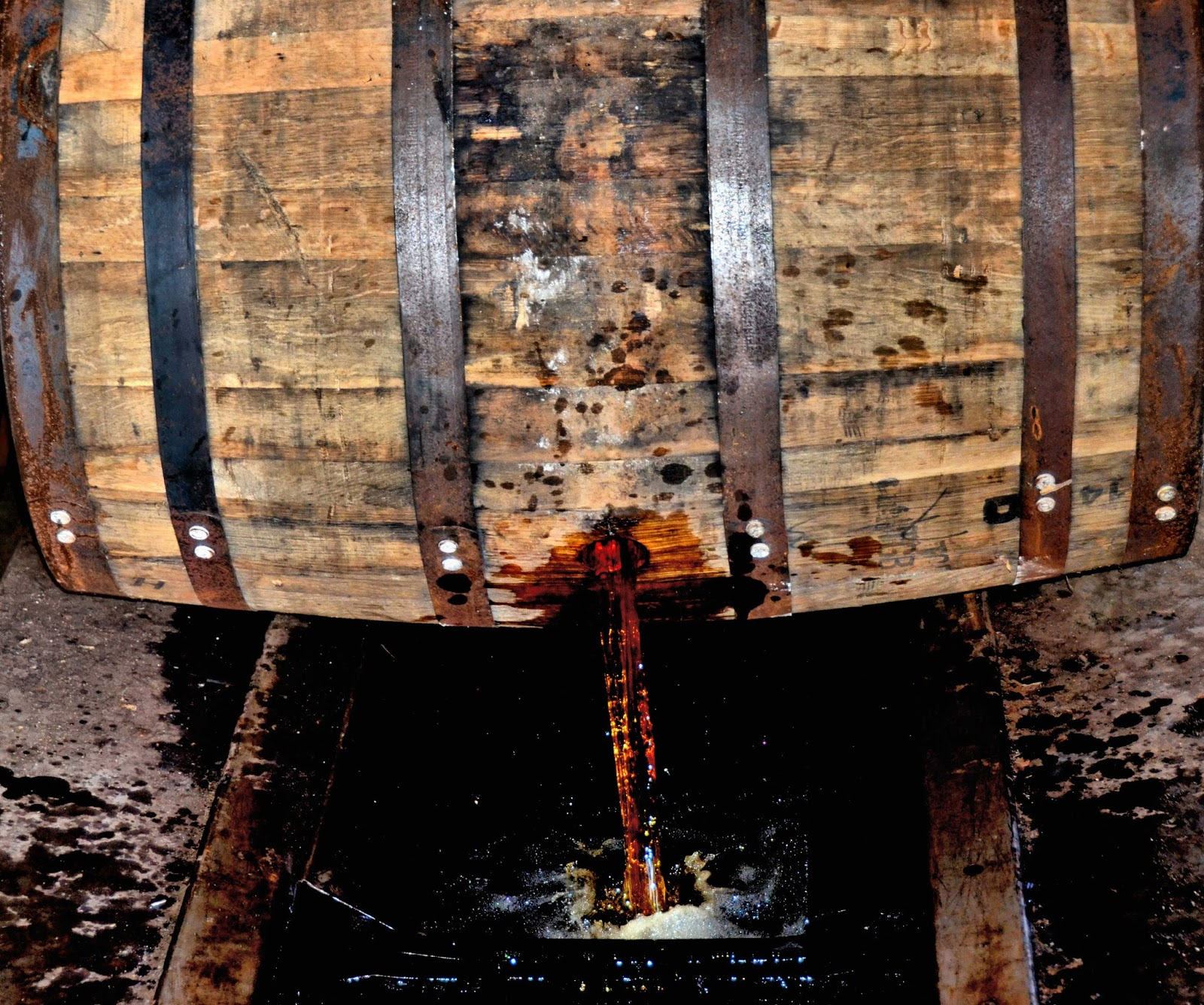
Sweating a Barrel with Fred Noe


Photo by Fred Minnick
The "Scotch Guys Think Bourbon Guys Are Screwing with 'Their' Barrels" post got a lot of attention and sparked a memory.

When Beam introduced Devil's Cut in 2011, I asked Fred Noe how this new way of processing used barrels would affect the Scottish distillers who buy them to age scotch. "I don't give a damn about scotch," said Fred, or words to that effect. I know there was an expletive involved.

But later, as we talked, I tried to wheedle more information from him about Beam's proprietary extraction process. I mentioned that it sounded like sweating a barrel, a practice beloved by youngsters throughout whiskey country. Kids would ‘liberate’ a freshly-dumped barrel from one of the local distilleries, put a few gallons of water in it, plug up the bung hole, and roll it around in the hot sun until they got bored. The resulting liquid usually contained enough alcohol to deliver a light buzz.

Fred agreed and shared a story about one time, as a kid, he and some buddies snitched a barrel from the Beam distillery at Clermont and sweated it, but since he was the son of one of the company's distillers and cousin of the other two, he got caught. I forget what his punishment was.


Wednesday, February 15, 2023

Scotch Guys Think Bourbon Guys Are Screwing with 'Their' Barrels


Dumping a bourbon barrel. But is it really empty?
The headline seems innocuous enough: "Why more bourbon distillers are rinsing their used barrels." In her article in Whisky Magazine, Susannah Skiver Barton explains how, since bourbon must be aged in new barrels, producers of other kinds of barrel-aged products, such as scotch whisky, reuse them.

But then the trouble starts. "In the last decade," writes Barton, "the American whiskey industry has begun adopting a dumping technique that changes the way the barrel behaves when it goes on to its next life. After emptying barrels of mature whiskey, distillers are filling a few gallons of water into the wood, 'rinsing' it of any excess spirit (sometimes using pressure or jets), and using that liquid in the proofing process. It’s a cost saving for them – they get more alcohol per barrel – but potentially disastrous for Scotch, because water-rinsed barrels mature single malt very differently from their standard counterparts."

Several scotch-makers then go on to bemoan the misbehavior of those tricksey Americans.

Do scotch-makers have a legitimate gripe, or are they being disingenuous?

First, this term 'rinsing.' Bourbon producers have always rinsed barrels. When the newly dumped barrel has stopped draining, a worker with a hose squirts some water into it, rolls it over again, and dumps the water out. This is mostly to rinse out loose sediment, but it gets some whiskey too.

That's not what the article is about. They are using 'rinsing' as a euphemism to describe something else entirely, and it is nothing new. Jack Daniel's started to do it 16 years ago. Here is how I described the process in The Bourbon Country Reader in 2007, after I watched them do it.

"When whiskey barrels are dumped, they never give up 100 percent of their contents. A small amount of whiskey stays behind, trapped in the wood.

"At a new facility near a cluster of warehouses, several miles from the tourist sites, Jack Daniel’s is doing something no other distillery has tried to recapture some of that lost product.

"After dumping, each empty barrel is sent to this building (a big, feature-less, steel-clad industrial structure) where it is loaded with about 20 gallons of water, a level which, with the barrel standing on end, doesn’t quite reach the now-open bunghole.

"After they receive their water, these barrels are placed on pallets, nine at a time, and stacked up about ten high in the warehouse portion of the building, where they sit for three to four weeks.

"The water is then dumped out and used to dilute barrel proof whiskey down to its bottling proof.

"There was a previous system, in which the barrels were merely rinsed. This new system produces five times as much additional product, as measured by its alcohol content."

Jim Beam started to do something similar in 2011. They passed it on to Maker's Mark in 2013. Their process uses heat and agitation, similar to a practice beloved by youngsters throughout whiskey country known as 'sweating' a barrel. Kids would ‘liberate’ a freshly-dumped barrel from one of the local distilleries, put a few gallons of water in it, plug up the bung hole, and roll the barrel around in the hot sun until they got bored. The resulting liquid usually contained enough alcohol to deliver a light buzz.

Unless one can press a herd of thirsty teenagers into service, the process requires a dedicated facility. It's not cheap. That's why the practice isn't universal. If a scotch-maker is buying used bourbon barrels without determining how they were processed, whose fault is that?


Thursday, February 2, 2023

America Should Reconsider the 3-Tier System


Image courtesy National Alcohol Beverage Control Association (NABCA)

As American laws go, the 21st Amendment to the Constitution is stunningly brief, not even 100 words, most of them boilerplate. 

The first section repeals the 18th Amendment (i.e., Prohibition). The third sets out the window for ratification: seven years. It's the second section that concerns us. What it says in 31 words can be said in eight: states may regulate beverage alcohol however they choose.

Each state does it differently, but a common feature is the three-tier distribution system. The three tiers are producers, wholesalers (aka, distributors), and retailers. 'Retailers' includes both off-premise (bars and restaurants) and on-premise (stores that sell beverage alcohol by the bottle).

The issue with the three-tier system is not whether or not it provides value, it is whether or not requiring the 3-step process is justified. If I can streamline my business by eliminating a step, what public policy interest prevents me?

Before Prohibition, 'tied houses' were a common feature of the retail landscape. A 'tied house' was a retail outlet (a bar, typically) owned by a producer. It was widely believed that when producers controlled retailers in this way, consumers and communities suffered because all the far-away producer cared about was increasing sales and profits. If lives and even whole communities were destroyed, so what? 

More importantly, what could the affected community do about it?

After Prohibition, it was believed that preventing the tied house and keeping retailers as far from producers as possible would prevent most abuses. The wholesaler would insulate the retailer and retail customers from the depredations of rapacious producers. The wholesaler would be an in-state company with seizable in-state assets, which would keep wholesalers on-side.

Most states also separated the two types of retailers. Bars can't sell bottles and bottle shops can't sell drinks. Both types have to buy from wholesalers. They can't buy directly from producers, nor each other. In many states, chain retailers are prohibited even from transferring merchandise from one store location to another. 

Today, because so much has changed, the mandatory wholesale tier can seem like a vestigial organ. Big producers would love to sell directly to large chain retailers. Brown-Forman would love to distribute Jack Daniel's to Walmart through Walmart's distribution system, not through 50 different distributor locations in 50 states. They'd love to do it with Chili's, Applebee's, Hilton, and Marriott too. 

Big producers do sell directly to those national customers, and even many smaller local and regional customers, they just run the paperwork through distributors, who also do the physical distribution. Is there a genuine public policy justification for requiring that, despite the obvious inefficiency? 

One reason the present system seems pointlessly wasteful is how easily rules are circumvented. 'No cross ownership' is a joke. The businesses have to look separate on paper, but distributor/producer cross-ownership is common in fact. Distributors as in-state businesses? Also a joke. Most distributors are national or nearly so, they're just separately incorporated in each state where they do business. (For more about this click here.)

Does it make sense that a distillery gift shop must buy its own distillery's products through a distributor? 

The system has changed little since 1933. In the last decade or so, a few states have changed their laws to allow craft producers to do many things large producers cannot. Otherwise, the laws have been virtually impossible to change. That's because distributors and government (both the elected part and the bureaucracy) have a vested interest in the status quo. Small retailers do too.

Wholesalers in this system are so coddled that in some states it is virtually impossible for a producer to fire their distributor and sign-up with a different one. 

Because each state's laws are unique, sometimes in subtle ways, regulatory compliance is maddeningly difficult and wastefully expensive.

Producers of all sizes and large retailers would like to see the distributor made optional, not mandatory, or modified in some way to reduce its wastefulness.

The interests of consumers and of the public at large are supposed to be paramount to regulators. A more efficient system would surely benefit consumers in terms of lower prices and greater convenience. More liberal laws in general would liberate the creativity of all industry participants to better fulfill consumer wants and needs. Policies intended to limit harms caused by alcohol abuse could be focused directly on the problems instead of a very broad proxy for them.

In defense, distributors will trot out the vague claim that they protect children from the harm of underage drinking, but precisely how the 3-tier system is uniquely effective at preventing underage drinking is never explained.

C. Jarrett Dieterle, a Resident Senior Fellow, Competition Policy, at R Street Institute, specializes in alcohol policy. He writes often and well on this and other matters.

America's liquor laws, directed as they are at 19th century problems, badly need a 21st century upgrade.