Saturday, July 1, 2017

Falk and Baranaskas, Saviors of Buffalo Trace, Belong in the Hall of Fame


Imagine a world without the Buffalo Trace Distillery.

If you think that prospect is too horrible to contemplate, say a quiet word of thanks to Ferdie Falk and Robert Baranaskas, without whom that great distillery might be a state office complex today.

In 1983, veteran spirits execs Falk and Baranaskas bought the nearly-idle Albert Blanton Distillery in Frankfort from Schenley and formed a new company called Age International. They ran it successfully during some of the worst years for the American whiskey business since Prohibition itself. They enjoyed a nice payday when they sold it to their Japanese partners, who immediately sold the distillery to Sazerac, itself one of the few companies in those days making money selling American whiskey. Sazerac renamed it Buffalo Trace and the rest is bourbon history.

Ancient Age kept the brands it made there: Blanton's, Ancient Age, Elmer T. Lee, and others. Buffalo Trace still makes them, under contract.

For the whole story, including the likely reason they aren't in the Hall, you need to read the new issue of The Bourbon Country Reader.

The Sazerac Company figures in this issue's other story too, as the company has submitted a patent application for its Old Fashioned Sour Mash process, which differs from conventional sour mash in that it does not use backset (i.e., stillage).

Current subscribers should receive their copies in the next few days. New subscribers can get on the bandwagon by clicking here.

The Bourbon Country Reader is the oldest publication devoted entirely to American whiskey. It is a charming mix of news, history, analysis, and product reviews. Do you worry that advertising spending influences coverage in other publications? No chance of that here since The Bourbon Country Reader is 100 percent reader-supported. It accepts no advertising.

To experience The Bourbon Country Reader for yourself, you need to subscribe. Honoring tradition, The Bourbon Country Reader still comes to you exclusively on paper, in an envelope, via the USPS.

A subscription to The Bourbon Country Reader is still just $20 per year for addresses in the USA, $25 for everyone else. The Bourbon Country Reader is published six times a year, more-or-less, but your subscription always includes six issues no matter how long it takes.

Click here to subscribe with PayPal or any major credit card, or for more information. Click here for a free sample issue (in PDF format). Click here to open or download the free PDF document, "The Bourbon Country Reader Issue Contents in Chronological Order." (It's like an index.)

If you want to catch up on what you've missed, bound back issue volumes are available for $20 each, or three for $50. That's here too.

If you prefer to pay by check, make it payable to Made and Bottled in Kentucky, and mail it to Made and Bottled in Kentucky, 3712 N. Broadway, PMB 298, Chicago, IL 60613-4198. Checks drawn on U.S. banks only, please.

Go ahead and subscribe. All of the cool kids are doing it.

Friday, June 16, 2017

Tom Bulleit, Great Guy, But Not an Entrepreneur


Under the "Icons of Entrepreneurship" banner, the INC.COM headline says this: "The Unsung Hero Behind Bulleit Bourbon."

It is about Betsy Bulleit, her marriage to Tom, and their "third and fourth children," Bulleit Bourbon and Bulleit Rye. It is a fluff piece, written by the brand's PR agency.

I like Bulleit Bourbon (a product of Four Roses) and Bulleit Rye (a product of MGP of Indiana). They are excellent whiskeys. And I love Tom Bulleit. I always enjoy visiting with him. He is a great guy. I don't know Betsy, but the happy marriage angle is great too. I'm totally happy for them.

But Tom Bulleit is not an entrepreneur.

In 1995, Bulleit, a lawyer in Frankfort, Kentucky who had some business in Japan, created two new bourbon brands, 'Bulleit' and 'Thoroughbred,' for the booming Japanese market. He sold Bulleit to Seagrams in 1997. They reformulated the whiskey and redesigned the package. Mostly, they liked the name, which is pronounced 'bullet.' Thoroughbred fell by the wayside.

Tom was an entrepreneur for two years.

Selling your company after two years is surely one measure of entrepreneurial success, but you stop being an entrepreneur when you stop entrepreneuring. For the last 20 years he has been a brand ambassador. Brand ambassador is a noble calling and Tom is a very good brand ambassador but he is an employee, like Fred Noe is at Beam. It is not his company.

The brand owner is Diageo, world's largest drinks company, which never can resist gilding the lily.

Friday, June 9, 2017

MGP Ingredients Announces the Re-Launch of George Remus Bourbon


A lot has been written about MGP Ingredients, a company that makes commodity whiskey at a distillery in Lawrenceburg, Indiana. The company is primarily a neutral spirits distiller. It has been mentioned here a few times.

MGP is changing, gradually and not always smoothly, but profoundly. They are cautiously adding a branded products component to their commodity offering.

That is what makes their re-launch of George Remus Bourbon, announced this week, significant. George Remus Bourbon is a tiny Cincinnati-area brand that MGP acquired last year, not long after it was launched. That product used whiskey made at MGP's Lawrenceburg, Indiana distillery. The new version, according to the company, is a different formulation ("a smoother, more complex whiskey") in a new package.

Liquor brands that celebrate criminals (e.g., Popcorn Sutton, Clyde May) are inherently problematic, considering the fraught history of alcohol in both legal and illegal forms. The real George Remus was a very successful bootlegger at the beginning of Prohibition, but is that any reason to buy his namesake whiskey? Guys like Remus are only in it for the money, after all, so his standards were not very high. If it had alcohol in it, that was good enough for him.

But he was a colorful character. If you want to know more, check out William Cook's biography, George Remus, King of the Bootleggers

"We’re whiskey lovers and are very proud to offer this updated styling of George Remus Bourbon," says Andrew Mansinne, Vice President of Brands, MGP Ingredients. He is a recent hire in a brand new job. Til American Wheat Vodka is MGP's other branded product.

"This is a complex bourbon whiskey that showcases our signature, high-rye profile and the talent of our distillation team, who have artfully crafted George Remus Bourbon into a beautiful and bold spirit inspired by George Remus’ rebellious and entrepreneurial character," says Mansinne.

Available this summer in select markets (Ohio, Kentucky, Indiana, Kansas, Missouri, Wisconsin, Nebraska, and Minnesota), George Remus Bourbon is made at "MGP’s historic, 170-year-old distillery in Lawrenceburg, Indiana." It is good to see them featuring the "historic, 170-year-old distillery," an attribute that will have resonance long after the novelty of the brand's name fades.

Suggested retail is $44.99 for a 750 ml bottle.

6/13/17: I received this image of the new package from MGP's PR firm. It's an improvement.

Wednesday, June 7, 2017

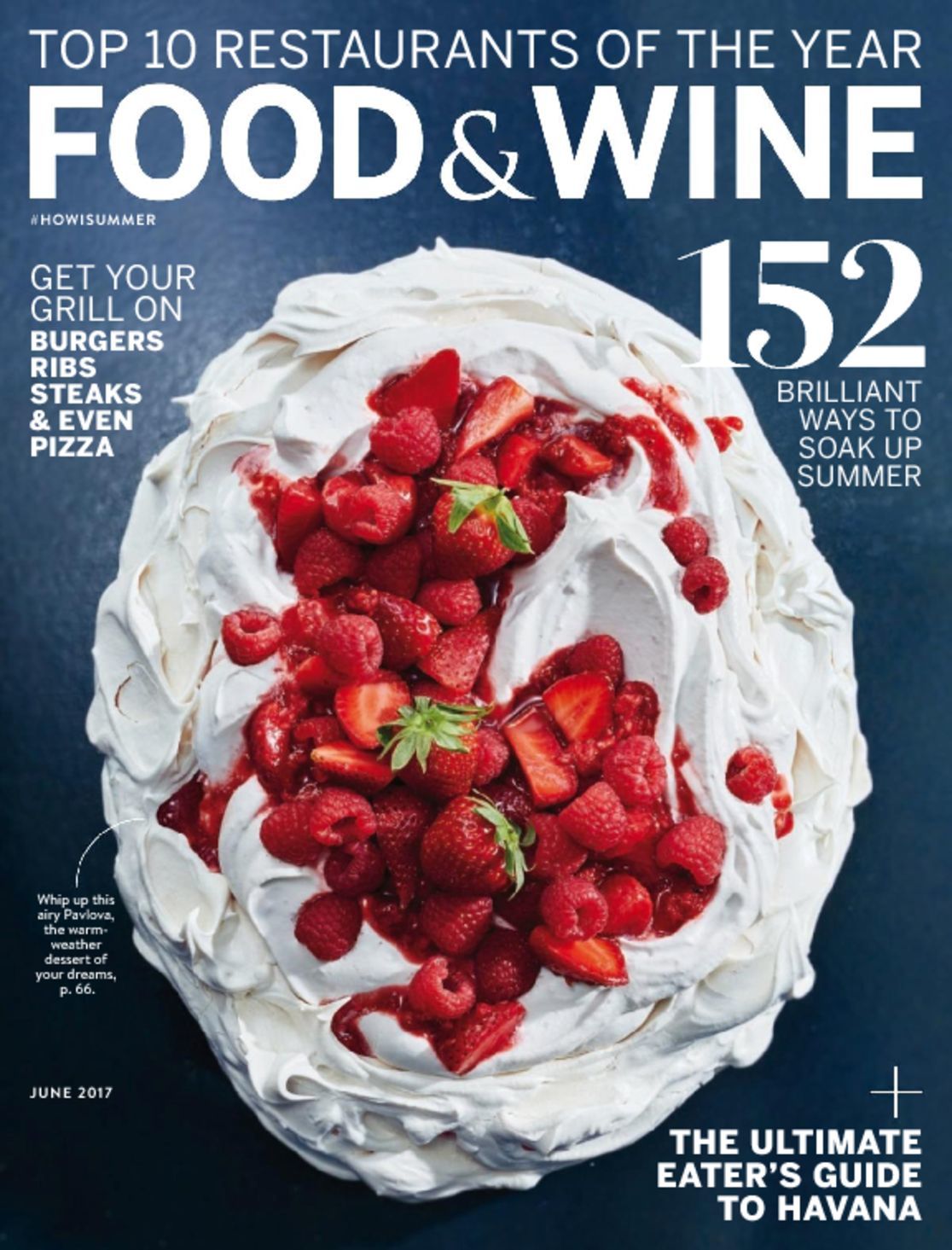
Something Went Wrong on the Way to "The 25 Most Important Bourbons Ever Made"


Two months ago, I was invited to participate in a project for Food & Wine magazine being helmed by Robert Simonson, a writer I hold in high esteem. The pitch went like this:

"The idea is to catalogue the 25 most significant and influential and just plain excellent Bourbons ever distilled since they started distilling Bourbon. These could be adjudged so for a variety of reasons: innovation, historical significance, social significance, method of production, quality, etc. They can be extant Bourbons handily found on the shelf, or Bourbons that are hard to get, or Bourbons that are extinct and impossible to get and only live on in memory."

The finished product, on the Food & Wine website, is here.

It is disappointing.

What went wrong? It is hard to say. You will notice that all of the products pictured can be purchased today, albeit with difficulty in some cases (e.g., Van Winkle). Was that always the plan? Or was it the decision of an editor, perhaps sensitive to the article's advertising-seeking potential? It is implausible that all of the "25 most important bourbons ever made" are still available. Where are the avatars of "innovation, historical significance, social significance, method of production, quality, etc." from the past? Some of that is in the text, but the overall result is confusing.

Take Michter's, for example. The picture shows a current iteration of Michter's, but the short blurb that accompanies it accurately states that, "This old Pennsylvania distilling name got new life in the 1990s under new owners who sourced, rather than made, their whiskey." It is hard to tell a complicated story in 100 words or less. (It took me more than 100 pages.)

One could argue that Michter's is important for two reasons. The old Michter's, which had a brief history under that name, died in 1990. A few years later, the present owners claimed the abandoned trademark and made good use of it. The whiskey they sourced was excellent and the Michter's line became a leader in the super-premium segment of the market. In August of 2015 (not 2012, as the article states), this Michter's became a distiller, operating a new distillery in the Louisville suburb of Shively.

But the original Michter's was also important, for many reasons but in bourbon lore for being the source of the legendary A. H. Hirsch Reserve Bourbon, the history of which is told in The Best Bourbon You'll Never Taste.

Many of the other selections have a similar problem, trying to combine multiple points of significance into a 100-word blurb under a picture of a modern product that may have little or no relationship to the story being told. Then you realize that the list represents a ranking and comes to the conclusion that Maker's Mark is the most important bourbon of all time, which is absurd on its face. Apparently, the method was to add up how many people mentioned a given brand name. Maker's was mentioned most often, hence it was judged the most important.

Here, for what it is worth, is what I submitted:

Old Oscar Pepper/Old Crow made during Dr. Crow’s lifetime, so pre-1856. Crow introduced many practices we take for granted, such as the sour mash process and routine aging. None of his whiskey has survived. I’ve never tasted it, nor probably has anyone in more than a century. Its significance is that it fundamentally changed how bourbon was made.

Very Very Old Fitzgerald, 12-year-old. It was a 12-year-old wheated bourbon made at the Stitzel-Weller Distillery and just about perfect, as in perfectly balanced. It was generally available from the late 50s until about 1990. I’ve gone through several bottles. I have none left.

Abraham Bowman 18-year-old rye-recipe bourbon from Sazerac. It came out in about 2012. Very limited. Very old bourbons are hit-or-miss. They miss more often than not or are okay but nothing special. Very rarely are they exceptional. This one was. I had one bottle. It is long gone.

A. H. Hirsch Reserve Bourbon, any bottling. A rye-recipe bourbon made by a doomed Pennsylvania distillery during a couple of weeks in 1974, that became a phenomenon and is genuinely great whiskey too. Most of it was sold at 16-years-old but even the 20-year-old is terrific. I’ve tasted them all and still have one or two bottles.

Weller 12-year-old. The closest you can get today to the taste of those great Stitzel-Weller wheaters of yore. Still made and widely available though often in short supply as its reputation as ‘poor man’s Pappy’ has spread.

Wild Turkey Kentucky Spirit. On the rye-recipe side of the ledger, Kentucky Spirit stands out as an exemplar. It is simply everything you want in a rye-recipe bourbon. Still made, widely available, and modestly priced for what you get.

Parker’s Heritage Collection Master Distiller’s Blend of Mashbills Bourbon (2012). On paper, it’s just a mixture of Heaven Hill’s 11-year-old rye-recipe bourbon with Heaven Hill’s 11-year-old wheated bourbon. The proportions were never revealed. To me, it is one of the best bourbons ever made and a great example of what a veteran master distiller at the height of his powers can accomplish.

Robert Simonson is a terrific writer who I know personally, and who has written kindly about me on at least two occasions. If you read the piece, ignore the photographs and modify some of the subheads, a very different story emerges, one that reads a lot more like the way he writes. I won't embarrass him by asking what went wrong. It only matters what is on the page. Whatever the reason, the article as presented is confusing and unsuccessful. It does not deliver what the headline promises.

By the way, I'm about halfway through Simonson's book from last year, A Proper Drink. So far, it is a delight. More later.

Tuesday, May 30, 2017

Ken Cowdery's Laundry Tips (No Bourbon Content)


For 40 years, my father -- Joseph Kendrick 'Ken' Cowdery -- was an engineer for a major laundry equipment manufacturer. For most of that time he ran their testing laboratories. Here is what he taught me about laundry.

1.  Detergent Amount: Use the amount of detergent recommended by the detergent manufacturer, no more, no less. The correct amount of detergent is a function of the amount of water being used, so if your machine has different water level settings, adjust accordingly. Adding more detergent won’t do any good if you can’t also add more water.

2.  Too Much Detergent: Using too much detergent won’t get your clothes any cleaner. It may cause excess suds, which can make a mess in your laundry room and damage your equipment. It also may leave a residue on your clothes.

3.  Washer Type: Top loaders use a lot more water than front loaders, and consequently call for more detergent. The makers of both the equipment and the detergent will tell you this. Believe them. Front loaders need less detergent because they need less water. (Dad loved front loaders. He helped develop them. They use less energy, less water, less detergent, and clean better.)

4.  Washer Load Size: If your clothes aren’t getting clean enough, or are heavily soiled, wash smaller loads. This is simple and is just about the only way to improve washer performance. Use the same amount of water and detergent, but put in fewer clothes. (Pre-soaking also helps.)

5.  Dryer Load Size: This is counter-intuitive, but the dryer performs best with a full load. It is the hot air trapped within the clothes that dries them. Too few and a lot of the hot air goes straight out the vent. That’s the simplest summation of Dad’s advice: under-load the washer, over-load the dryer.

6.  Water Temperature: Some detergents advertise that they clean just as well in cold water as hot. It’s not true. Use the hottest water whatever you are washing can stand. Dad preferred hot water for everything. Mom didn’t necessarily agree.

7.  Fabric Softener: Dad opposed the use of fabric softener. Mom disagreed. Despite Dad’s standing in the industry, Mom’s vote mattered because she actually did the laundry, and because she was Mom. Dad’s position was that fabric softeners work by damaging (i.e., weakening) the clothing. Mom’s position was that he was the only family member who wore things until they fell apart.

Friday, May 26, 2017

A Tennessee Whiskey History Lesson


In the beginning, there were hundreds of small, farm-based distillers in the land that became Tennessee in 1796 (four years after Kentucky statehood). If they made whiskey, it was 'Tennessee whiskey,' because it was whiskey and it was made in Tennessee.

As whiskey-making matured into a real industry after the Civil War, major producers emerged there as they did in Kentucky and elsewhere. The distillery established by Jack Daniel was one of them. Another was Cascade Hollow, which was sold by a Nashville merchant named George Dickel. Another large Nashville merchant, Charles Nelson, owned a distillery in Greenbrier, Tennessee.

They all called their products Tennessee whiskey because they were proud of their home state and because bourbon seemed like a Kentucky thing, although it was also made in Ohio, Indiana, Illinois, and other places. Nobody was particularly concerned about definitions and the Federal 'Standards of Identity for Distilled Spirits' didn't exist. By the end of the century, producers and politicians were still arguing about the definition of 'whiskey.' They weren't yet concerned about whiskey types.

Statewide prohibition of alcohol came early to Tennessee (1907) and stayed late (1938). Of the major pre-Prohibition distillers in Tennessee, only Jack Daniel's came back in a big way. Cascade Hollow Tennessee Whiskey became Cascade Hollow Bourbon, made at the distillery in Frankfort, Kentucky, now known as Buffalo Trace. Nelson's Green Brier Distillery would not be revived until the 21st century.

So as the industry developed after Repeal, only one brand represented Tennessee: Jack Daniel's. The legend of the 'Lincoln County Process,' the filtering of new make spirit through sugar maple charcoal, was promoted as the brand's primary point-of-difference. And Jack Daniel's became pretty successful, so successful that by the mid-1950s, the Motlow family could no longer afford the capital required to keep the brand growing. They decided to sell, but they wanted to sell it to someone who would allow the family to keep running it and keep things in Lynchburg more or less unchanged.

One of the bidders was Schenley, by then one of the 'Big Four' companies that dominated the distilled spirits business. Schenley's owner, Lewis Rosenstiel, went after Jack Daniel's hard. Another bidder was Brown-Forman, a much smaller company. Although Schenley offered more money, the Motlows chose Brown-Forman because it was family-controlled and because they had not enjoyed their previous dealings with Rosenstiel.

In retaliation, Rosenstiel decided to repatriate Cascade to Tennessee, building a new distillery there, and calling it George Dickel Tennessee Whiskey. The first batch went on sale in 1964. It used a similar, though not identical, charcoal filtering process, because imitating and eventually beating Jack Daniel's was the whole point of the exercise.

The intention was to compete head-to-head, but although the Dickel brand was successful, it never got close to beating Daniel's. Today, Jack outsells George about 100 to 1. For all intents and purposes, Jack Daniel's is Tennessee whiskey. Jack Daniel's always has maintained that while it adheres to the legal standards for bourbon, it is different (better?) because of the 'Lincoln County Process.'

In recent years, micro-distilleries have begun to appear in Tennessee, as they have in the rest of the country. Because there was nothing to prevent them from doing so, some of these new, small producers decided to make and sell 'Tennessee whiskey' that didn't use the 'Lincoln County Process,' reasoning that it being whiskey made in Tennessee was sufficient.

The folks at Jack Daniel's, naturally, decided this was bad for the 'Tennessee whiskey' brand and, of course, they had the most to lose if that 'brand' became diluted or meaningless. So they proposed a law to the Tennessee legislature, which passed in 2013. The law defined 'Tennessee whiskey' using the legal requirements for bourbon with two additions: (1) the whiskey had to be made and aged in Tennessee and (2) it had to be filtered through maple charcoal.

Leading up to the new law's passage, Jack Daniel's folks conferred with all of the new Tennessee distillers, most of whom saw the benefit of preserving the traditional meaning of Tennessee whiskey. Most of them supported the law. After the fact, Diageo (successor company to Schenley) tried to get the law repealed or changed for fairly nefarious reasons of their own. They failed.

Many people incorrectly assume that Jack Daniel's is not called 'bourbon' because it cannot be for some reason. They will solemnly explain to you why it cannot be called bourbon. They are wrong. The sole reason Jack Daniel's is not called bourbon is because its owners, from Jack himself, through the Motlows, and since 1956 Brown-Forman, prefer to call it Tennessee whiskey.

So now you know the truth, but if some blowhard in a bar wants to fight you about it, don't bother. It's not worth the trouble.

Tuesday, May 23, 2017

The History of Maker's Mark, by Sam Cecil


Sam Cecil's 1999 book, The Evolution of the Bourbon Whiskey Industry in Kentucky, is an invaluable resource for anyone interested in whiskey history. I use it constantly. The book is best when Cecil writes about places where he worked, such as Maker's Mark and T. W. Samuels.

The Makers story starts with Charles Burks, who built a grist mill and distillery on Hardin's Creek in 1805. Although Burks died in 1831, his family kept the place going and in 1878, George Burks joined the company and began to rebuild the facility, adding a bottling house and a manager's residence. When Prohibition came in 1920, the family moved to Louisville, selling the 200 acre property to a farmer, Ernest Bickett.

The distillery still had whiskey in storage, of which it was relieved by George Remus, the notorious 'King of the Bottleggers.' Bickett's tenant, Bill Shockency, thereafter used the empty warehouse as a hay barn. The Bicketts revived the distillery after repeal, then sold it, after which it had a succession of owners.

For all of the years before and during Prohibition, and for several years after repeal, the distillery had no electricity. A small steam engine ran the mechanicals. In 1943, a spring-fed lake was built above the distillery and the line from it to the distillery delivered enough static pressure to operate the cooling coils.

Bill Samuels Sr. bought the property on October 1, 1953 for $50,000. Production began in February of 1954. Eighteen barrels were produced on that first day. In that first year they filled 1,527 barrels. It jumped to 2,550 in year two.

Elmo Beam, the eldest son of Joe Beam, was the first master distiller. Samuels knew him from the old T. W. Samuels Distillery and he came out of retirement to start up what they were then calling 'Old Samuels.' Elmo Beam died on April 5, 1955.

Like many of today's new distilleries, Samuels sourced whiskey to get cash flowing, to start building relationships with distributors, and to work out the kinks in the bottling operation. Some of it came from what is now Beam's Booker Noe Distillery, then owned by Barton.

With the time to bottle the first whiskey distilled at 'Old Samuels' approaching, Samuels learned that he no longer owned the rights to his own name. French and Shields, a St. Louis advertising agency, was hired. In the Spring of 1957, they presented the name and packaging for Maker's Mark bourbon. After some test batches, regular bottling began in August, 1958.

After a slow start the company began to pick up steam. In 1981 it was sold to Canada's Hiram Walker, which was subsequently acquired by England's Allied Lyons.

Cecil concludes the article with a personal note, about his acquisition of an original bottle of Burk's Springs.