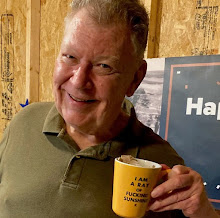
In 2012, legendary 6th Generation Master Distiller Parker Beam was diagnosed with amyotrophic lateral sclerosis (ALS), a disease of the nerve cells in the brain and spinal cord that control voluntary muscle movement. ALS is also known as Lou Gehrig's Disease. ALS affects more than 30,000 Americans at any given time. Parker Beam is in the early stages of ALS.
Today, Heaven Hill Distilleries announced that it, in Parker's honor, it is working with the ALS Association to promote awareness and raise money to battle the disease.
Heaven Hill and Parker Beam will dedicate the upcoming fall 2013 edition of Parker’s Heritage Collection, an eagerly anticipated and highly regarded limited annual release of rare American Whiskeys, to raising funds for the ALS Association. Heaven Hill will donate $20 from each bottle sold and projects that a minimum of $250,000 will be raised.
Parker Beam is a charter member of the Kentucky Bourbon Hall of Fame and a grand-nephew of James Beauregard 'Jim' Beam. He has been crafting some of the world’s most critically acclaimed whiskeys at Heaven Hill for more than 50 years; first with his father, Earl, and now with his son, Craig.
Despite his condition, Parker is continuing to work and contribute to Heaven Hill and the bourbon industry’s rising profile. He will continue to personally select the barrels used for his namesake Parker’s Heritage Collection bottlings.
The ALS Association has established a special fund, known as the Parker Beam Promise of Hope Fund. Details and quantities of the next Parker’s Heritage Collection release will be made public later this year.
"Both my wife, Linda, and myself have become very involved in the ALS Association and in raising awareness of the disease since I was diagnosed with it," noted Mr. Beam. "We are pleased to help in any way we can and are most appreciative to Heaven Hill and the Shapira family for helping with such a generous financial contribution from the sale of the upcoming edition of Parker’s Heritage Collection.
"We hope that others will become more aware of ALS and will find additional ways to help us in our fight."
Thursday, January 31, 2013

Wednesday, January 30, 2013
Oregon Rectifier Sentenced to Federal Prison for Tax Fraud
Among distilled spirits producers and enthusiasts, the Alcohol Tax and Trade Bureau of the United States Treasury (TTB) is best known as the Federal agency that enforces the Standards of Identity for Distilled Spirits by reviewing and approving alcoholic beverage labels, but their primary job is collecting taxes. We don't often hear about producers being busted and prosecuted for tax offenses, but with the recent explosion of new licenses and new producers, we may hear about it more often.
Yesterday, Chief U.S. District Court Judge Ann Aiken sentenced William Myers, 66, of Cottage Grove, Oregon, to serve one year and one day in prison for failing to pay $879,000 in federal excise taxes and for filing more than 70 false federal excise tax returns on behalf of his company, the Side Pocket Food Company.
Upon release from prison, Myers must serve three years of supervised release, including 100 hours of community service in each of the three years, and he must pay restitution in the amount of $873,186.88. Pursuant to a plea agreement, Myers admitted that he owes more than $879,000 in federal excise taxes and filed more than 70 false excise tax returns.
Myers was also operating an illegal still inside the company warehouse. He was reportedly distilling wine into brandy on behalf of local wineries. Agents discovered the still while serving a search warrent. When tested, the distilled alcohol had dangerous levels of lead and copper. The Food and Drug Administration said that drinking the tainted alcohol could cause nausea, abdominal pain, and vomiting.
Myers runs Side Pocket with his wife and five of their six children. His lawyers argued that Myers was merely trying to save the company on which his family's livelihood depends, after it experienced setbacks during the financial crises of 2007-2008. Assistant U.S. Attorney Scott Bradford, who prosecuted the case, argued for a two-year sentence, saying it was important to send a message that cheating customers and taxpayers is not the way to salvage a struggling business.
Bradford's boss, U.S. Attorney S. Amanda Marshall, noted that, “Defendant cheated his clients, the taxpayers, and the regulatory system, acting as if the rules did not apply to him or his business. Business owners need to understand that this type of conduct will not be tolerated. There are legitimate ways, like bankruptcy, to work through difficult financial times. Theft and tax fraud puts individuals and communities at risk, it is illegal, and will land you in jail.”
Licensed as a rectifier (processor), warehouseman and bottler, but not a distiller, Side Pocket bought distilled spirts, which it used to create a line of products that included whiskey, vodka, rum, tequila, gin, and pre-mixed cocktails.
Cottage Grove is a small town located about 20 miles south of Eugene.
UPDATE 1/31/13: Christopher Null at Drinkhacker alerted me to this angle. Two days before the story above broke, it was reported that Side Pocket is being sued for failure to deliver on a private label vodka named for the Ying Yang Twins, a music group. It looks like the Myers family's troubles are just beginning.
Friday, January 25, 2013
Beam Moves Vodka Bottling to Kentucky
A small announcement today from Beam illustrates why bourbon-making is so good for Kentucky, even when bourbon-making itself isn't directly involved.
Last year, Beam acquired the Pinnacle vodka brand, which continues to boom. Pinnacle and other products from that deal are now bottled in Maine, but Beam has decided to close and possibly sell that facility, and will bottle in Frankfort, Kentucky, instead. The move is expected to add 45 jobs. Last year, Beam closed a facility in Cincinnati and moved those operations to Frankfort as well.
Consolidating operations is efficient and just good business, but where to consolidate? In the case of Kentucky's bourbon makers, since Kentucky bourbon whiskey can only be made in Kentucky, and is preferred by consumers, Kentucky is always the obvious choice. Since they aren't going to move bourbon distillation and maturation to another state (or country), they might as well do everything in Kentucky, at least everything that can be done anywhere, like bottling vodka, and that's a boon to Kentucky's economy.
Beam obtained the Frankfort facility, located at Forks of the Elkhorn, in 1987 when it acquired National Distillers. It was then the Old Grand-Dad Distillery but other National brands, such as Old Overholt Rye Whiskey, were also made there. Beam closed the distillery portion but still has active maturation warehouses there, and the bottling operation has been expanded several times. Beam's distilleries are at Clermont, which also has bottling, and Boston, which does not.
Beam's Maker's Mark Distillery in Loretto is entirely self-contained; distilling, aging, and bottling Maker's Mark Bourbon and nothing else. All three distilleries are close to Bardstown, Kentucky.
This phenomenon is not unique to Beam. Last year, Campari America announced that it is building a new bottling facility at the Wild Turkey Distillery in Lawrenceburg, Kentucky. It will bottle Wild Turkey, of course, but also the company's much larger Skyy Vodka brand. Again, since Wild Turkey needs to be in Kentucky, it just makes sense for other company operations to be there too.
Another example is 'California' brandy. Although the grapes are grown in California, and the brandy is distilled there, three of the top five domestic brandies are aged and bottled in Kentucky, primarily because it's cheaper to transport the brandy than it is to transport the used bourbon barrels in which it is aged.
Wherever bottling is done, that's where finished good distribution begins, which benefits shipping companies and their drivers, as well as all the businesses that support that industry, from truck mechanics to road builders.
Although the Commonwealth has gotten much better in recent years, Kentucky often seems to take its bourbon industry for granted. Other states would kill for something like that, an industry so tied to its home state in the minds of consumers that it can't possibly relocate, and that by its mere presence attracts other businesses that produce jobs, tax revenue, and economic vitality.
Both literally and figuratively, Kentucky would be a much poorer place without its bourbon makers.
Tuesday, January 22, 2013
Beam Is Selling Bellows and Other Value Brands to Luxco
It takes different kinds of companies to make up the distilled spirits business. One way to divide them is between brand companies and commodity companies.
The brand companies base their business on household-name brands, which become and remain household names because the companies spend a lot of money to support them. They count on consumer demand to pull product off the shelf.
Commodity companies base their business on narrow margins, high volume, and efficiency. They push their products into distribution with price, and count on the distributors and retailers to push them out to value-conscious consumers. Commodity companies spend almost nothing on marketing support. Both types of companies make money, it's just a different approach.
Of course, brand v. commodity is a simple dichotomy and, consequently, not entirely accurate . Most of the brand companies have a few commodity products tucked away, and many commodity companies have a recognizable brand name or two.
Heaven Hill and Sazerac would be classed as commodity companies, for example, but Heaven Hill's Evan Williams is a serious brand, #3 in American straight whiskey. So is their Pama Pomegranate Liqueur, and a few others. Same with Sazerac (Blanton's, Weller, Van Winkle).
The commodity companies, generally, are privately-owned, while the brand companies are public. The announcement of this transaction, for example, came from Beam, not Luxco.
On the other side of the coin you have Beam, Diageo, Pernod, and Brown-Forman. Brown-Forman especially has a very lean portfolio, but it's packed with category leaders like Jack Daniel's and Woodford Reserve. Diageo, Pernod, and Beam--all much bigger than Brown-Forman--emphasize their category leaders, but they all have some 'cats and dogs' in their stables too.
So it is that, periodically, a brand company will off-load some of its commodity brands (also known as 'value' brands) to an established commodity company, as Beam announced it was doing this week. The buyer, Luxco, is a St. Louis-based rectifier and bottler (they don't distill).
For $65 million, Luxco got Bellows and Calvert, both of which Beam acquired in 1987 when it bought National Distillers. Bellows and Calvert are pretty old brands, but they never got off the bottom shelf. Calvert is blended whiskey, both Canadian and American, as well as gin. Bellows is bourbon, American blended whiskey, gin, rum, scotch, and vodka. Luxco also got a couple of vodkas, most notably Wolfschmidt, and a couple of other Canadians.
Wolfschmidt is a good example of a commodity 'brand.' It's a top seller in some markets, but strictly because of its distribution and price. Skol, a similar brand, was once described by its owner as the company's 'aircraft carrier.' Its profit margin was minimal, but its volume was so great that it paid to roll the trucks. The company's smaller but more profitable brands rode for free.
So a move like this is good for both companies. Beam gets $65 million and gets rid of what, for it, were mostly nuisances. Nobody at Beam wanted to manage Bellows. That's not how you advance your career.
Luxco, for its part, got that much more volume. It will keep selling everything Beam sold everywhere Beam sold it. Nobody is going to stop buying Wolfschmidt vodka because it's now sold by Luxco instead of Beam. Luxco will absorb its new acquisitions easily, because that's the business they're in.
The deal should close at the end of this month. Beam will continue to produce and bottle the brands for Luxco until at least January of 2014, according to Beam.
Monday, January 21, 2013
Recipe for Bourbon Pork Tenderloin
I was asked to post my favorite bourbon recipe. I hesitated, because I don't cook with bourbon very often, but this is one I love, and it's quite simple. It's appropriate that the meat is pork, since pig in all its forms is highly favored in bourbon country.
I prefer a simple and straightforward rye-recipe bourbon for cooking, but use whatever you like. I haven't used rye whiskey in this recipe but it would probably be great.
Ingredients:
Two whole pork tenderloins (1 to 1½ pounds each)
1 ½ cup bourbon whiskey
1 ½ cup orange juice
5 tbsp brown sugar
1 tbsp soy sauce
1 tbsp Worcestershire sauce
Crushed red pepper to taste
Salt to taste
Fresh cracked black pepper to taste
1 tbsp butter
Directions:
Combine all ingredients except the meat and butter. Reserve one cup of the liquid for sauce and use the rest as marinade.
Pierce the meat with a fork and marinate it for at least one hour.
Pre-heat oven to 300 degrees.
Discard the used marinade and roast the meat, uncovered, for about 1 hour and 45 minutes, until done. Baste occasionally with the reserved marinade.
In a saucepan, boil the rest of the reserved marinade until it is reduced by about half. Finish with butter. Serve as a sauce.
Let the meat rest for at least ten minutes after removing it from the oven. Cut into medallions ¾” to 1” thick.
Saturday, January 19, 2013
Bourbon Classic in Louisville, March 22-23
There's something new on the whiskey events calendar. It's the Bourbon Classic, March 22-23, at the Kentucky Center for the Performing Arts in Louisville, Kentucky.
As Steve Coomes wrote on InsiderLouisville.com last month, "The state’s whiskey makers surely are saying and sighing simultaneously, 'It’s about time!' and they’re right. They’ve done their part; it’s time to do ours."
The Bourbon Classic is produced by FSA Group, a professional event organizer based in Louisville, and Bourbon Review Magazine, with heavy support from the Louisville Convention and Visitors Bureau. It's new, but they hope it will be annual. They're starting small, expecting about 500 people.
Unlike other events, this one is entirely bourbon-centric, though no doubt there will be some rye around too. It's being held in downtown Louisville, on Whiskey Row, in a building located where headquarters of whiskey companies once stood, all within sight of the Ohio River, which first took Kentucky's whiskey south and, ultimately, around the world.
Amazingly, Louisville has never hosted a major bourbon event before, at least not in the modern era. Although it lacks the 'weekend in the country' appeal of the annual Kentucky Bourbon Festival in Bardstown, it makes up for it with all the amenities of a major city, including an international airport and world-class dining and lodging options.
There are different events on the two nights and they can be purchased together or separately, at a standard or VIP level. You can spend as little as $135 or as much as $355. Packages that include lodging are available. There's more information here, but if you want to go directly to the ticketing information, click here.
I will be participating in some way, as the moderator of a panel, probably about history. I'll post more when information becomes available, but I am planning to be there.
In a way, this inaugural event will be a leap of faith for both participants and attendees. It's certainly the right idea, but you can't be sure exactly what you are going to get. In a way, it depends on who buys the tickets or, at least, whether or not the organizers' vision meshes with the aspirations of the ticket buyers. It will be a one-off if the attendees don't feel that they got their money's worth. But if your problem with other events has been "not enough bourbon," both literally and figuratively, that should not be a problem here.
If you want to combine the Bourbon Classic with distillery tours or other activities, there are plenty of people eager to help you set it all up. You can start here.
It's just two month away.
Friday, January 18, 2013
Jacob's Ghost Launch Delayed

Both products were slated to launch in January and Tennessee Rye is starting to appear, but Jacob's Ghost has been pushed back slightly. Bottles are starting to ship to control states now and may appear soon. Ohio, for one, has a reputation for getting product on the shelf as soon as it arrives, without regard for the producer's intended launch date.
Most states, however, won't see it until March.
Although both are as transparent as vodka, the Beam and Daniel's products are quite different. Beam's is named after 18th century family patriarch Jacob Beam. It is standard Jim Beam bourbon, aged for one year, then heavily filtered to remove all of the color and most of the harsher flavors.
The result is a spirit that is still raw, but much milder than white dog, with significant amounts of corn body and barrel sweetness. Beam envisions it mostly as a cocktail ingredient, but they won't object if people want to drink it straight too.
Subscribe to:
Posts (Atom)