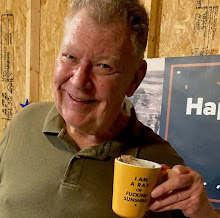
You can now buy alcoholic beverages on Sunday within the city limits of Bardstown. The county government is expected to follow suit for the rest of Nelson County.
This wouldn't be worthy of much attention outside of the affected communities except for one thing. This is Bardstown, Kentucky, which styles itself as the Bourbon Capital of the World®.
So-called Blue Laws still exist in many parts of the U.S., prohibiting or restricting alcohol sales on Sunday. Slowly but surely, most of them are being repealed.
Bardstown is the seat of Nelson County, which is quickly following the city's lead. According to the Kentucky Standard, Nelson County Fiscal Court, in a first reading yesterday, approved expanding the county’s alcohol ordinance to include Sunday packaged sales.
Magistrates Maynard Wimsett, Sam Hutchins and Jerry Hahn voted yes on first reading, while Magistrate Bernard Ice dissented. Magistrate Tim Hutchins abstained due to what he felt is a conflict of interest since he owns a convenience store and is involved in a pending lawsuit with the city involving zoning.
Bardstown’s ordinance went into effect this past Sunday.
I'm not sure what prompted this sudden change, but the timing suggests tourism. People come to town, tour the distilleries, and want to purchase some of the local product. If they came on Sunday, they couldn't. Now they can.
Wednesday, May 20, 2009

Tuesday, May 19, 2009
Enough With The Alcohol Taxes Already.
Kentucky isn’t the only state that wants to balance its budget on the backs of drinkers. Illinois lawmakers are currently looking at sales tax hikes too, maybe on beer and wine, but certainly on distilled spirits.
Alcoholic beverages are always an inviting target They are seen as non-essential and some people favor high taxes to deter consumption. Even the language—-‘sin tax,’ ‘hard liquor’—-is loaded.
Some regard Kentucky as a unique case because it is a major producer, primarily of bourbon whiskey. Fewer people, even here in Illinois, know that our state is one of the top producers of grain neutral spirits, the basis for vodka, gin and many other distilled spirits products.
In addition to threatening those manufacturing jobs, higher taxes on alcohol have a negative impact on every business that sells liquor of any kind. Whether you’re talking about bars, restaurants, hotels, stores, or sports venues, the alcohol they sell is usually more profitable than just about anything else, so if higher prices caused by higher taxes hurt alcohol sales, the bottom line suffers more than it would from just about any other cost increase.
Few people realize how much drinkers already pay in taxes. If you drink, smoke and gamble, you probably should get some kind of citizenship award.
With distilled spirits, taxes cost more than the product! Here is the rundown, courtesy of the Distilled Spirits Council (DISCUS).
The retail price of a typical 750ml bottle of 80 proof distilled spirits is about $12. Of that, about $7—-nearly 60 percent-—is taxes and fees. Out of that $12, the producer, distributor and retailer split $5 among them. That $5 pays the farmer who grows the grain, the distiller who makes the product, the bottle manufacturer and label maker, the wholesaler, the retailer, and all of their employees and suppliers.
Out of the $7, the federal government takes about $2.15. state and local taxes account for another $2.40. Those are the extraordinary taxes that are there just because it’s alcohol. The rest, about $2.45, represents the normal tax burden on the various businesses involved and their employees.
One way to look at it is as a 60/40 split, with the government taking the lion’s share. Another way to look at it is as a 140% mark-up that makes a product which should cost $5 cost $12 instead.
No other consumer product, except perhaps tobacco, carries such a heavy tax burden.
Just as there is no such thing as a free lunch, there are no painless taxes. By fostering the illusion that there are in order to collect as much as possible, politicians try to pit taxpayer groups against one another. I’m a soft touch for taxes on gambling and tobacco, because those aren’t my vices. Alcohol is.
When the United States was just formed, its only taxes were import duties. Imported goods were viewed as luxuries, non-essential. It was even argued that taxes on imports were good because they encouraged domestic production. When they didn’t produce enough revenue, the government turned to taxes on distilled spirits. Distilled spirits consumers have paid more than their fair share ever since.
Arguably, those high taxes on distilled spirits have been a good thing. They have raised a lot of needed tax revenue and people probably would drink more if it cost less. But let’s be realistic. There is such a thing as killing the golden goose and it doesn’t say much for us as a society if we increasingly fund our government by exploiting our own weaknesses.
Alcoholic beverages are always an inviting target They are seen as non-essential and some people favor high taxes to deter consumption. Even the language—-‘sin tax,’ ‘hard liquor’—-is loaded.
Some regard Kentucky as a unique case because it is a major producer, primarily of bourbon whiskey. Fewer people, even here in Illinois, know that our state is one of the top producers of grain neutral spirits, the basis for vodka, gin and many other distilled spirits products.
In addition to threatening those manufacturing jobs, higher taxes on alcohol have a negative impact on every business that sells liquor of any kind. Whether you’re talking about bars, restaurants, hotels, stores, or sports venues, the alcohol they sell is usually more profitable than just about anything else, so if higher prices caused by higher taxes hurt alcohol sales, the bottom line suffers more than it would from just about any other cost increase.
Few people realize how much drinkers already pay in taxes. If you drink, smoke and gamble, you probably should get some kind of citizenship award.
With distilled spirits, taxes cost more than the product! Here is the rundown, courtesy of the Distilled Spirits Council (DISCUS).
The retail price of a typical 750ml bottle of 80 proof distilled spirits is about $12. Of that, about $7—-nearly 60 percent-—is taxes and fees. Out of that $12, the producer, distributor and retailer split $5 among them. That $5 pays the farmer who grows the grain, the distiller who makes the product, the bottle manufacturer and label maker, the wholesaler, the retailer, and all of their employees and suppliers.
Out of the $7, the federal government takes about $2.15. state and local taxes account for another $2.40. Those are the extraordinary taxes that are there just because it’s alcohol. The rest, about $2.45, represents the normal tax burden on the various businesses involved and their employees.
One way to look at it is as a 60/40 split, with the government taking the lion’s share. Another way to look at it is as a 140% mark-up that makes a product which should cost $5 cost $12 instead.
No other consumer product, except perhaps tobacco, carries such a heavy tax burden.
Just as there is no such thing as a free lunch, there are no painless taxes. By fostering the illusion that there are in order to collect as much as possible, politicians try to pit taxpayer groups against one another. I’m a soft touch for taxes on gambling and tobacco, because those aren’t my vices. Alcohol is.
When the United States was just formed, its only taxes were import duties. Imported goods were viewed as luxuries, non-essential. It was even argued that taxes on imports were good because they encouraged domestic production. When they didn’t produce enough revenue, the government turned to taxes on distilled spirits. Distilled spirits consumers have paid more than their fair share ever since.
Arguably, those high taxes on distilled spirits have been a good thing. They have raised a lot of needed tax revenue and people probably would drink more if it cost less. But let’s be realistic. There is such a thing as killing the golden goose and it doesn’t say much for us as a society if we increasingly fund our government by exploiting our own weaknesses.
Monday, May 18, 2009
Texas to Permit Tastings at Distilleries.
Dan Garrison got some good news today. Garrison is the guy behind Garrison Brothers Distillery, which is in Hye, Texas. Last week, the legislature passed and the governor signed a law that makes it legal for Texas distilleries to provide free samples of their products at the distillery itself. According to the Fort Worth Star-Telegram, which reported the story, there are "fewer than a dozen" distilleries in Texas. The best known is probably Tito's Vodka. Garrison Brothers doesn't have any product on the market yet because they are making bourbon whiskey, and their oldest barrels are only about a year old, but now they can at least give visitors a taste.
Hey, Kentucky. Some states actually pass laws to support their local distilling industry. You might want to look into that.
Hey, Kentucky. Some states actually pass laws to support their local distilling industry. You might want to look into that.
Friday, May 15, 2009
KDA Fights the Good Fight.
Columnist Tom Eblen, in the Lexington Herald-Leader (online here), did a good job yesterday of describing Kentucky’s fraught relationship with one of its signature industries, whiskey-making. His subject was Bill Samuels, president of Maker’s Mark, who spoke to the Bluegrass Hospitality Association in Lexington on Wednesday. In the course of unveiling a new look for the Kentucky Bourbon Trail (see my post, here), Samuels talked about whiskey’s economic contribution to Kentucky, its growth potential, and the commonwealth’s seemingly counterproductive beverage alcohol tax policies.
Knowing a few more facts makes the story even better.
Samuels was speaking on behalf of the Kentucky Distillers Association (KDA). Eric Gregory has been president of that 128-year-old organization for a little more than a year. He is a young leader who is shaking things up and showing his members (i.e., the distilleries) how to lobby and promote effectively. Gregory is also smart enough to pick a fight he believes he can win.
Bill Samuels and Maker’s Mark are now part of Beam Global Spirits and Wine. Counting Maker’s, Beam has three Kentucky distilleries in three different counties, plus a warehousing and bottling site in a fourth county. Even though Beam is based here, in Illinois, it has a lot at stake down there. Beam’s vice president for government relations and public affairs is Chris Swonger, another savvy young man who knows how the political game is played. The other companies have smart people working for them too. This isn’t just Bill Samuels shooting from the hip.
But Samuels is a good choice because he is always colorful, and if he goes too far it can easily be shrugged off. He can get away with attacking religious conservatives who see high sin taxes as deterrents. Even if that argument is not a winner, it makes the topic hot, which gets it more coverage.
To pour more 140-proof bourbon on the fire, Samuels pits Kentucky’s 30 most populous counties, where alcohol sales are permitted, against the other 90, where it is either banned or restricted. According to Eblen, “Samuels suggested legislation removing all local-option restrictions and forcing counties that want to ban alcohol sales to vote ‘dry’ again. And, he said, those that did should not get any alcohol tax revenues.”
That won’t happen, but it gets people talking, even though the argument is specious.
Does anyone suppose that people who live in dry counties don’t drink? Of course they do, and although some of them buy from bootleggers, most do not. They buy legally where it is legal to sell and they pay all the taxes. Even bootleggers and their customers pay taxes, since virtually all bootlegged liquor is bought legally at retail, with all taxes paid.
Dry means no sales, which means drinkers who live in those counties just pay their taxes someplace else. It is legal everywhere in Kentucky for anyone of legal age to possess and consume alcoholic beverages, that’s not the issue, and there are tax-paying alcohol consumers in every Kentucky county, so making this a wet v. dry fight is not really logical, but politics seldom is.
What matters here is that if the KDA shows legislators it can make their phones ring, it has leverage for its real agenda.
Which is, Kentucky will collect more taxes by encouraging us than it will by strangling us.
You can bet that what they are emphasizing behind closed doors is economic development.
It makes sense. Kentucky’s practical monopoly on bourbon production is a historical accident, but real nonetheless, and bourbon’s popularity is growing. Kentucky can capitalize on that, or not.
Kentucky’s whiskey-makers directly employ 3,200 people now. Could that number grow to 6,000 or 10,000, or even more in the future? Whiskey directly creates $3 billion in gross state product now. What if that could be $6 billion or $10 billion or more down the road? Or would you rather it be $2 billion, or $1 billion, or nothing?
Then there is bourbon tourism, which is why Samuels’ speech was made to representatives of the Kentucky tourism industry. Tourism is a big, fat tax pie too.
I haven’t seen them but I’m sure there are polls that show most Kentuckians, by a wide margin, believe their state should be behind all that and not trying to kill it, regardless of whether or not they, personally, drink. If the question is asked the right way, most Kentuckians will agree that encouraging whiskey-makers should be one of the state’s highest economic development priorities.
Every whiskey-maker in Kentucky is part of a diversified company that makes a lot more than bourbon. Some have more of their operations in Kentucky than others. This sort of campaign is exactly what the KDA exists to do. It is refreshing to finally see it doing it, and doing it so effectively.
Knowing a few more facts makes the story even better.
Samuels was speaking on behalf of the Kentucky Distillers Association (KDA). Eric Gregory has been president of that 128-year-old organization for a little more than a year. He is a young leader who is shaking things up and showing his members (i.e., the distilleries) how to lobby and promote effectively. Gregory is also smart enough to pick a fight he believes he can win.
Bill Samuels and Maker’s Mark are now part of Beam Global Spirits and Wine. Counting Maker’s, Beam has three Kentucky distilleries in three different counties, plus a warehousing and bottling site in a fourth county. Even though Beam is based here, in Illinois, it has a lot at stake down there. Beam’s vice president for government relations and public affairs is Chris Swonger, another savvy young man who knows how the political game is played. The other companies have smart people working for them too. This isn’t just Bill Samuels shooting from the hip.
But Samuels is a good choice because he is always colorful, and if he goes too far it can easily be shrugged off. He can get away with attacking religious conservatives who see high sin taxes as deterrents. Even if that argument is not a winner, it makes the topic hot, which gets it more coverage.
To pour more 140-proof bourbon on the fire, Samuels pits Kentucky’s 30 most populous counties, where alcohol sales are permitted, against the other 90, where it is either banned or restricted. According to Eblen, “Samuels suggested legislation removing all local-option restrictions and forcing counties that want to ban alcohol sales to vote ‘dry’ again. And, he said, those that did should not get any alcohol tax revenues.”
That won’t happen, but it gets people talking, even though the argument is specious.
Does anyone suppose that people who live in dry counties don’t drink? Of course they do, and although some of them buy from bootleggers, most do not. They buy legally where it is legal to sell and they pay all the taxes. Even bootleggers and their customers pay taxes, since virtually all bootlegged liquor is bought legally at retail, with all taxes paid.
Dry means no sales, which means drinkers who live in those counties just pay their taxes someplace else. It is legal everywhere in Kentucky for anyone of legal age to possess and consume alcoholic beverages, that’s not the issue, and there are tax-paying alcohol consumers in every Kentucky county, so making this a wet v. dry fight is not really logical, but politics seldom is.
What matters here is that if the KDA shows legislators it can make their phones ring, it has leverage for its real agenda.
Which is, Kentucky will collect more taxes by encouraging us than it will by strangling us.
You can bet that what they are emphasizing behind closed doors is economic development.
It makes sense. Kentucky’s practical monopoly on bourbon production is a historical accident, but real nonetheless, and bourbon’s popularity is growing. Kentucky can capitalize on that, or not.
Kentucky’s whiskey-makers directly employ 3,200 people now. Could that number grow to 6,000 or 10,000, or even more in the future? Whiskey directly creates $3 billion in gross state product now. What if that could be $6 billion or $10 billion or more down the road? Or would you rather it be $2 billion, or $1 billion, or nothing?
Then there is bourbon tourism, which is why Samuels’ speech was made to representatives of the Kentucky tourism industry. Tourism is a big, fat tax pie too.
I haven’t seen them but I’m sure there are polls that show most Kentuckians, by a wide margin, believe their state should be behind all that and not trying to kill it, regardless of whether or not they, personally, drink. If the question is asked the right way, most Kentuckians will agree that encouraging whiskey-makers should be one of the state’s highest economic development priorities.
Every whiskey-maker in Kentucky is part of a diversified company that makes a lot more than bourbon. Some have more of their operations in Kentucky than others. This sort of campaign is exactly what the KDA exists to do. It is refreshing to finally see it doing it, and doing it so effectively.
Thursday, May 14, 2009
Brewing and Distilling Scholarships Available.
Drinks giant Diageo is sponsoring postgraduate scholarships at the International Centre for Brewing and Distilling at Heriot-Watt University in Edinburgh.
The scholarships will be offered to support the study of the postgraduate diploma or MSc in brewing and distilling.
The scholarships, worth £6,000 ($9,000) over three years, start in September this year.
Alan Barclay, Diageo's governance director, Global Supply Scotland, said: "We have enjoyed a very close contact with Heriot-Watt over the years. It is a long-established university with a history of links to brewing and distilling.
"Students come from all over the world for the courses and it means that we can choose from a very high calibre of people coming into the brewing and distilling industry."
The scholarships will be offered to support the study of the postgraduate diploma or MSc in brewing and distilling.
The scholarships, worth £6,000 ($9,000) over three years, start in September this year.
Alan Barclay, Diageo's governance director, Global Supply Scotland, said: "We have enjoyed a very close contact with Heriot-Watt over the years. It is a long-established university with a history of links to brewing and distilling.
"Students come from all over the world for the courses and it means that we can choose from a very high calibre of people coming into the brewing and distilling industry."
Wednesday, May 13, 2009
Bourbon Trail Gets New Logo.
The Kentucky Bourbon Trail is a registered trademark of the Kentucky Distillers' Association (KDA), so watch your step.
The Kentucky Bourbon Trail today introduced a new logo, brochure, souvenir passport and commemorative t-shirt to mark its 10th anniversary. "This is a significant milestone for one of Kentucky’s most popular tourism attractions," said Eric Gregory, President of the KDA. "It’s also a perfect opportunity to introduce a fresh new look that reflects the growing bourbon revolution."

I'm not sure what any of that means, but it's hard to build a press event around the release of a new logo and a couple brochures. I kid because I care. Gregory, still new in the role, has been busting his butt on his two main jobs, lobbying and promotion. He's certainly got the distillers marching in lockstep behind him, which is a lot like herding cats.
The KDA originally launched the Kentucky Bourbon Trail in 1999 in imitation of similar vehicles in California and Scotland. Since then, millions of visitors from around the world have made the pilgrimage to Kentucky, the birthplace of bourbon. The increase in tourist traffic has inspired the distilleries to do more with their own visitor experiences. It's all good.
The Trail features eight distilleries: Buffalo Trace, Four Roses, Heaven Hill, Jim Beam, Maker’s Mark, Tom Moore, Wild Turkey and Woodford Reserve. All participated in the unveiling of the new Kentucky Bourbon Trail brand at the Bluegrass Hospitality Association’s annual tourism forum in Lexington. The Lexington area's big draw is horse farms, but distilleries are running a close second.
The new brochure showcases each distillery and provides details about their tours. The Passport program allows visitors who collect stamps from all of the distilleries to redeem their passport for a Kentucky Bourbon Trail t-shirt. The new shirt design commemorates the 10th anniversary of the Trail.
Gregory also encourages bourbon enthusiasts to visit the Trail’s new Facebook page. A revised web site (www.kybourbontrail.com) and Twitter page are in the works and should be launched soon.
"Just like great bourbon, the Kentucky Bourbon Trail gets better with age," Gregory said. "And just like the millions of barrels sleeping at our legendary distilleries, the best is yet to come. It's the experience of a lifetime, 200 years in the making."
The Kentucky Bourbon Trail today introduced a new logo, brochure, souvenir passport and commemorative t-shirt to mark its 10th anniversary. "This is a significant milestone for one of Kentucky’s most popular tourism attractions," said Eric Gregory, President of the KDA. "It’s also a perfect opportunity to introduce a fresh new look that reflects the growing bourbon revolution."

I'm not sure what any of that means, but it's hard to build a press event around the release of a new logo and a couple brochures. I kid because I care. Gregory, still new in the role, has been busting his butt on his two main jobs, lobbying and promotion. He's certainly got the distillers marching in lockstep behind him, which is a lot like herding cats.
The KDA originally launched the Kentucky Bourbon Trail in 1999 in imitation of similar vehicles in California and Scotland. Since then, millions of visitors from around the world have made the pilgrimage to Kentucky, the birthplace of bourbon. The increase in tourist traffic has inspired the distilleries to do more with their own visitor experiences. It's all good.
The Trail features eight distilleries: Buffalo Trace, Four Roses, Heaven Hill, Jim Beam, Maker’s Mark, Tom Moore, Wild Turkey and Woodford Reserve. All participated in the unveiling of the new Kentucky Bourbon Trail brand at the Bluegrass Hospitality Association’s annual tourism forum in Lexington. The Lexington area's big draw is horse farms, but distilleries are running a close second.
The new brochure showcases each distillery and provides details about their tours. The Passport program allows visitors who collect stamps from all of the distilleries to redeem their passport for a Kentucky Bourbon Trail t-shirt. The new shirt design commemorates the 10th anniversary of the Trail.
Gregory also encourages bourbon enthusiasts to visit the Trail’s new Facebook page. A revised web site (www.kybourbontrail.com) and Twitter page are in the works and should be launched soon.
"Just like great bourbon, the Kentucky Bourbon Trail gets better with age," Gregory said. "And just like the millions of barrels sleeping at our legendary distilleries, the best is yet to come. It's the experience of a lifetime, 200 years in the making."
Friday, May 8, 2009
Red Stag Sighted in Ohio.
Red Stag by Jim Beam is a new product, Jim Beam Bourbon infused with natural black cherry. I told you about it here when I first tasted a sample.
We were told then that it would debut at retail in June. Well, guess what? It’s on the shelves now, at the Kroger’s in the Johnny Appleseed Shopping Center in Mansfield, Ohio, at least. (That’s my home town.) I just saw it there.
What’s more, to promote Red Stag, regular bottles of Jim Beam white label have a 50ml bottle attached to the neck, at no extra charge.
There is also now a Red Stag by Jim Beam web site, which is here.
As I’ve said before, I have mixed feelings about this product. On the one hand, I think there’s a danger of confusing the bourbon/American whiskey category, about which there is already no lack of confusion. On the other hand, the stuff tastes good, and what else really matters?
We were told then that it would debut at retail in June. Well, guess what? It’s on the shelves now, at the Kroger’s in the Johnny Appleseed Shopping Center in Mansfield, Ohio, at least. (That’s my home town.) I just saw it there.
What’s more, to promote Red Stag, regular bottles of Jim Beam white label have a 50ml bottle attached to the neck, at no extra charge.
There is also now a Red Stag by Jim Beam web site, which is here.
As I’ve said before, I have mixed feelings about this product. On the one hand, I think there’s a danger of confusing the bourbon/American whiskey category, about which there is already no lack of confusion. On the other hand, the stuff tastes good, and what else really matters?
Subscribe to:
Comments (Atom)