Tuesday, November 11, 2014

Jeremiah Weed Maker Says Product Is "Bewildering"


As Thanksgiving approaches, I am grateful to drinks giant Diageo for giving me so many interesting subjects to write about this past year. I love absurdity and Diageo never disappoints. Case in point is this announcement of three new products in the Jeremiah Weed line.

"It’s show time for Jeremiah Weed as the makers of the brand unveil a new line of American whiskies (sic) blended with hand-selected secret spices and natural flavors. Each variant is sure to bewilder and amaze as they take the stage as either a shot or mixed with cola. With these releases, consumers craving more curiosity and excitement from their whiskey will be provided additional options to be enjoyed responsibly."

The three new products are Jeremiah Weed Spiced Whiskey, Jeremiah Weed Cinnamon Whiskey, and Jeremiah Weed Sarsaparilla Whiskey. ("It's like root beer," the press release helpfully advises.)

Diageo is also the company behind the new Pie Hole brand, another trio of flavored whiskey products. The Pie Hole line has a Canadian whisky base. Jeremiah Weed is an American Blended Whiskey with flavoring. Unlike whiskey whiskey, flavored whiskey can be sold at less than 80° proof (40% ABV). The new Jeremiah Weed products are 70.6° proof (35.3% ABV), 71.2° proof (35.6% ABV), and 70.4° proof (35.2% ABV), respectively. Why three different proofs? Probably just for added bewilderment.

Speaking of which, it may be hard to understand why a producer wants to call something that tastes so little like whiskey by that name. Imitation, of course, drives much of the packaged goods industry and the big dog in sweet, flavored alcoholic drinks right now is Sazerac's Fireball, which calls itself 'whiskey' with the same minimal justification and likewise tastes nothing like whiskey as most whiskey drinkers understand the term.

You should drink whatever you like but if you drink these products, just understand that they have nothing to do with whiskey. Due to a political compromise made more than a century ago, the United States alone in the world allows products that contain very little actual whiskey to be labeled as whiskey if the proper modifiers are used. American blended whiskey (the base for these Jeremiah Weed products) can be as much as 80 percent vodka and usually is. Spirit whiskey can be as much as 95 percent vodka. The base for Canadian whisky, while not quite vodka, is whiskey distilled just a jot shy of neutrality. It's a fine line. Hit 95 percent alcohol or more off the still and it's vodka. Anything less than that is legally considered whiskey.

In Canada and Scotland, while blending whiskeys are nearly neutral off the still, they are all aged in oak, usually used bourbon barrels. The blending spirit in American blended whiskey is straight neutral spirit, i.e., vodka.

In contrast the products whiskey drinkers call whiskey, such as bourbon, rye, and single malt scotch, come off the still at less than 80 percent alcohol and therefore retain more flavor from their base ingredients.

The Jeremiah Weed line contains one product, Jeremiah Weed Blended Bourbon, that is 50 percent bourbon and 50 percent vodka. Every other product in the Jeremiah Weed line contains more vodka than whiskey.

Jeremiah Weed is one of Diageo's smallest brands and they use it as an experimental platform. The current line includes a 'sweet tea' product too. In the UK, Diageo sells a line of Jeremiah Weed hard ciders. Despite Diageo's might, they haven't been able to make Jeremiah Weed a player. It is, however, fascinating to see the kinds of products and themes Diageo thinks consumers might buy.

"When it comes to whiskey, a little bit of mystery always provides a lot more excitement.” So says Patrick Hughes, Innovation Director at DIAGEO. “Jeremiah Weed Whiskies were developed to bring a sense of fun and intrigue to the world of whiskey and to entertain the most curious legal drinking age consumers,” he said.

The original Jeremiah Weed (which is no longer made) was created in the late 1960s, hence the name. It was a nasty-tasting herbal liqueur, similar to Jagermeister, that contained a little bit of bourbon. It became a cult favorite among American jet fighter pilots, who drank it ceremonially. Like Jager and Chicago's own Malort, guys get their friends to drink it just to watch them gag.

'Adult' and 'mature' are not synonyms.

By the way, Diageo, the plural of 'whisky' is 'whiskies.' The plural of 'whiskey' is 'whiskeys.' Happy Thanksgiving.

Sunday, November 9, 2014

ACSA to Tito: "Code of Ethics Demands Honesty and Transparency from all ACSA Members"


On October 27, Wine & Spirits Daily (WSD) exclusively published a letter from Tito Beveridge, founder of Tito's Handmade Vodka, who is being sued for deceptive marketing. In the letter, Tito defended his company's use of the term "craft,"  claiming that pot still distillation is "the cornerstone of craft spirits."

In response to Tito's letter, the American Craft Spirits Association (ACSA) sent its own letter to WSD from president Tom Mooney. ACSA represents more than 200 members in 36 states.

I have questioned in the past if any of these organizations has the guts to challenge the questionable practices of their most prosperous members. Through this letter, the ACSA has shown that it does. Good for them.

The issue is not 'what is craft?' It is 'what is truth?'
__________

As the nation's leading association of craft spirits producers, we are keenly interested in the way that consumers, the media, and our industry peers view our trade. The latest chapter in this ongoing conversation is an op-ed by our friend and fellow ACSA founding member Tito Beveridge, offering a simple answer to one of the most elusive questions in our industry - what is 'craft'?

ACSA has, from the start, adopted and then actively promoted an inclusive answer to this question. We believe that craft - like beauty - is in the eye of the beholder. Acting on this belief, we have taken action in two important areas:

We broadened our membership eligibility criteria to include independent spirits producers who craft high quality products through methods other than distillation. We believe that inclusion will lead to more innovation, while formulaic definitions (e.g., pot stills equal craft) will stifle it.

More importantly, we adopted a code of ethics that demands honesty and transparency from all ACSA members. As we see it, if a producer is forthcoming about the way that a product is made, consumers can judge for themselves whether it rises to the level of a 'craft' spirit.

We support Tito's call for greater inclusion, but we disagree that any single definition of the term "craft" will bring it about. Instead, we challenge all spirits producers (large and small) to unleash their creativity, to be forthcoming about the way their products are made, and to be honest when they promote them. The public is intelligent, and they will embrace authenticity regardless of the size, home country, or methods of a producer.

Friday, November 7, 2014

What Bourbon Should Obama and McConnell Drink? That's a No-Brainer


I'll admit my heart skipped a beat on Wednesday when President Obama suggested that he and Senator Mitch McConnell have a bourbon summit. Many since have speculated as to what bourbon they should drink. They're probably important enough to get their hands on some Pappy, if they want to go that route, but if Mitch has anything to say about it there is really only one choice.

Most members of Louisville's Brown family, who control Brown-Forman, are major Republican donors. They have backed Mitch McConnell's career from the beginning. I attended one of the first fundraisers for his 1984 Senate campaign at the home of Robinson Brown Jr., then Brown-Forman's Chairman of the Board.

At the time Robbie's cousin, Lee (Lyons Brown Jr) was Brown-Forman's CEO. After he handed the reins to his brother, Owsley, he was named to the President's Advisory Committee for Trade Policy and Negotiations by President Reagan. In 2001, President Bush made him U.S. Ambassador to Austria, where he served until 2006.

The summit bourbon, therefore, must be Old Forester, the brand that launched Brown-Forman in 1870. The company's marketing executives will probably argue for Woodford Reserve, the more popular and contemporary brand. These days the company's true flagship is Jack Daniel's, but that's for summits with Lamar Alexander and Bob Corker.

As McConnell has always been the Senator from Brown-Forman, Jim Beam became a big supporter of former Senator Jim Bunning, also a Republican. Until 2003, Beam's CEO was another retired baseball big-leaguer, Rich Reese. Bunning's replacement, Rand Paul, doesn't appear to have a favorite bourbon distiller.

I worked on a project for McConnell in 1992. I only had one meeting with him, at which I presented. When you're presenting, you always try to read your audience so you can make adjustments on the fly. McConnell was inscrutable. I wouldn't want to play poker with him. He was also very low key, not an attention hog at all, which is very uncharacteristic for a politician. He was professional and business-like, no showboating. I believe he drove himself to the meeting, which took place in Louisville. I don't recall a driver or any aides being there. The project must have gone well, as he alluded to it in his speech on Wednesday.

In this era of excessive disclosure, the drinking habits of presidents are still generally kept private. We now know that Johnson and Nixon were likely alcoholics. Obama is known to favor a beer now and then. McConnell, too, is believed to be a light drinker but he has been known to take a sip of bourbon from time to time. Sharing one with the president certainly couldn't hurt.

Thursday, November 6, 2014

MGP Launches First Brand: Metze's Medley


The company that was never going to have its own brand has announced the release of its first. It's called Metze's Medley.

Metze's Medley is, admittedly, a small and very limited release to support the inaugural Whiskey City Festival in Lawrenceburg, Indiana, which MGP is sponsoring. Since 2011, MGP has owned the Lawrenceburg distillery everyone there still calls Seagrams. MGP produces bulk whiskey for non-distiller producers (NDPs) to brand, bottle, and sell. Until now, MGP has said it had no intention of creating any brands of its own, because it didn't want to compete with its customers.

The new product will be labeled as Indiana straight bourbon whiskey. It is named for MGP Master Distiller Greg Metze, who has spent his entire 36-year career at the Lawrenceburg distillery. The festival is this weekend, Friday and Saturday, Nov. 7 and 8.

“MGP has a proud legacy of making world-class whiskeys,” said President and CEO Gus Griffin. “This limited edition medley, mashed and distilled at our historic distillery in Lawrenceburg, celebrates that legacy and the whiskey industry’s long history in the Lawrenceburg community.”

Metze’s Medley, a unique whiskey, consists of 20 percent of their 21 percent rye bourbon, made in 2005; 20 percent of their 36 percent rye bourbon, also made in 2005; and 60 percent of their 21 percent rye bourbon, made in 2008, making the youngest whiskey in the mix about six years old.

According to the company's tasting notes, the whiskey showcases subtle grain differences, delivering a rich full taste with slight vanilla notes and a spicy finish.

MGP is joining with the City of Lawrenceburg, Lawrenceburg Main Street, Hollywood Casino, and the Dearborn County Visitor Center to support the festival.  Guests who donate $100 or more to the Greater Cincinnati United Way at the event will receive a bottle of Metze’s Medley. Metze will be on hand to sign each bottle. The product will not be available for retail sale.

“MGP is pleased and excited for the opportunity to play a substantial role in supporting this festival, while also coming up with a creative way to further support our communities through donations to the United Way,” Griffin said.

Other activities during the two-day festival will feature whiskey tastings and exhibits, talks by industry experts, specially prepared food and great music, including nationally-recognized entertainment.

Since 1803, Lawrenceburg has been home to several distilleries, earning its name, “Whiskey City.” Through the years, the industry has made its mark on the history, economy and lives of generations of residents, regionally, as well as locally. MGP’s Lawrenceburg distillery was established in 1847 as Rossville Distillery. It was acquired by Joseph E. Seagram and Sons in 1933.

Additional details about the Whiskey City Festival can be accessed at www.whiskeycityfestival.net.

Sunday, November 2, 2014

Who I Am


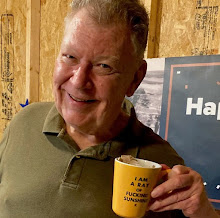
I was updating my official bio and thought it might be a good idea to share it here. Then again, I've been wrong about such things before. The photo is by Fred Minnick.
__________

Charles K. Cowdery is an internationally renowned whiskey writer, specializing in American whiskey. He is a Kentucky Colonel (Patton, 206) and a member of the Kentucky Bourbon Hall of Fame (2009). He is the author of Bourbon, Strange: Surprising Stories of American Whiskey (2014), The Best Bourbon You’ll Never Taste. The True Story of A. H. Hirsch Reserve Straight Bourbon Whiskey, Distilled in the Spring of 1974 (2012), and Bourbon, Straight: The Uncut and Unfiltered Story of American Whiskey (2004).

He is the producer/director/writer of the public TV documentary "Made and Bottled in Kentucky" (1992).

Other books include Blues Legends (1995), 20 profiles of notable blues musicians. Cowdery was a contributor to the book 1001 Whiskies You Must Taste Before You Die (2012).

He is a regular contributor to Whisky Advocate Magazine, and the editor and publisher of The Bourbon Country Reader, the oldest publication dedicated exclusively to American whiskey.

In 2012, Cowdery was cited by the 6th Circuit Court of Appeals as an expert on the history and marketing of American whiskey in Maker's Mark v Diageo. He wrote the ‘Bourbon’ article in The New Encyclopedia of Southern Culture, Volume 7, Foodways (2007).

He is available for speaking appearances and guided tastings.

Cowdery also works as a marketing writer for a variety of commercial clients, and is an attorney. He lives in Chicago, Illinois.

Thursday, October 30, 2014

If You Like Them, Drink Them. Just Know They Have Nothing Whatsoever To Do With Whiskey


Fireball, a hot cinnamon concoction, is the spirits fad of the moment. Of Canadian origin, it seemingly came from nowhere and has soared to massive popularity. There was a misunderstanding in Finland about the product's ingredients, but that means Fireball is now sold in Finland.

Then Diageo introduced Pie Hole. According to the web site, Pie Hole is "a tempting blend of premium whiskey & delicious pie-flavored liqueur." There are now a million of these products. Diageo's Crown Royal has apple and peach flavors. Honey is everywhere. Maple is nearly as ubiquitous. Scotch and Irish whiskey makers are in the act now too.

Clearly, a lot of people like these products. There has always been a market for sweet and fruity (or nutty) drinks. They're made in a lab with, essentially, vodka as a base. Even products like Jack Daniel's Honey and Pie Hole probably contain more vodka (i.e., grain neutral spirit) than they do whiskey. Fireball is 'whisky with natural cinnamon flavor,' but the whisky base is nearly flavorless.

These products are cheap to make. Most of the expense is in marketing.

What does whiskey have to do with it? Nothing. Drink these products if you want to, really. It's your mouth. Just don't tell yourself you're drinking whiskey. It's kind of great that whiskey is so popular right now that everybody wants to slap that word 'whiskey' on their label. Kind of great, kind of not.

But drink them if you want to, it's fine, it just has nothing whatsoever to do with with whiskey. Whiskey should taste like whiskey. These products don't. Many, like Fireball and Pie Hole, have Canadian whisky as their base. The whiskey flavor in Canadians is light to begin with. Throw in other alcohols, sweeteners and flavorings, and what little whiskey flavor there was disappears immediately. The whiskey is contributing nothing to the drink except its alcohol, which vodka could do just as well.

Seemingly, the main thing it contributes is the word "whiskey."

So drink whatever you want, just don't kid yourself. This stuff is not whiskey.

Wednesday, October 29, 2014

Al Capone's House is For Sale


This is the house Al and Mae Capone bought in 1923. Capone lived there with his extended family for the rest of his life, when he wasn't downtown at the Lexington Hotel, at his home in Florida, or at Alcatraz. The brick two-flat at 7244 South Prairie Ave., in Chicago's Park Manor neighborhood, is four blocks east of the Dan Ryan Expressway, just north of 73rd Street. It is priced to sell at $225,000, but there have been no takers.

Chicago doesn't know what to do with Al Capone and his legacy. He embodies Prohibition-era America for many Americans. He ruled not just Chicago's illegal alcohol trade and other criminal rackets, but Chicago itself. He was an important historical figure by any estimation. He was also a murderous thug. Should major sites associated with him be preserved? The house on South Prairie is a private residence now, two apartments actually, but it could be a landmark? A museum? Something. But should it be?

Chicago has never been sure. We know we bury history at our peril, yet how do you memorialize a character like Capone without unintentionally glorifying him? Gangster stories from "The Godfather" to "The Sopranos" humanize their subjects by showing them being tender with their families. So does that mean preserving his family home would be a good thing or a bad thing?


Capone was portrayed in the just-concluded HBO series "Boardwalk Empire" by Stephen Graham. He was a pivotal character throughout the series, which raised Capone's profile considerably with the current generation. In one of the final scenes of the final episode, Capone has a tender moment with his deaf teenage son, presumably in the house on South Prairie.

South Prairie is also the house where memoirist Deidre Capone is said to have heard her great uncle Al declare Templeton Rye to be Al's favorite whiskey. While many in Chicago would like to bury the memory of Al Capone, others will do anything to exploit it. Deidre Capone is the daughter of Ralph Capone's only son, also named Ralph. (The elder Ralph Capone, Al's brother, is portrayed on "Boardwalk Empire" by Domenick Lombardozzi.)

Deidre Capone was born in 1940. She was 7-years-old when Al Capone died. When he was released from prison a year before she was born, he was suffering from advanced syphilis. His cognitive abilities were greatly diminished. Deidre Capone never heard her great uncle Al declare anything.

There is more about the house here but, unfortunately, it is behind the Chicago Tribune's pay wall.

Maybe Templeton should double-down on their flimsy Capone myth, buy the house on South Prairie, and make it their Chicago welcome center. With their present story in shambles, they need to do something.