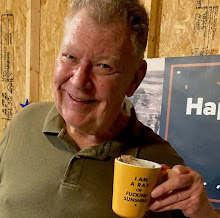
On Wednesday, Silver Trail Distillery announced that it has joined the legendary ranks of the Kentucky Distillers’ Association, the Commonwealth’s leading voice on spirits issues for more than 130 years.
“It’s taken years and a lot of hard work to realize his dream, but Spencer Balentine has persevered and brought distilling back to the Land Between the Lakes region for the first time in a century,” said Jeff Conder, Chairman of the KDA Board of Directors and Vice President of Americas Operations for Beam, Inc. “We are proud to welcome him to the KDA and congratulate him on his efforts.”
Silver Trail, located in dry Marshall County in far Western Kentucky, opened in 2011. Balentine, a former champion motorcyclist and aspiring screenwriter, toured Maker’s Mark Distillery several years ago and decided to get into the spirits business based on his family’s colorful moonshine past.
His distillery’s still is a recreation of one originally designed by his great uncle in 1947. His first product is 100-proof “LBL Most Wanted Moonshine,” packaged in ring-handled jugs. He has plans for an apple pie moonshine to be called “Apple Cin.”
“It’s a distinct honor for Silver Trail to be accepted into such a historic organization that represents the finest distilleries in the world,” Balentine said. “This has only added to my determination to showcase our proud Between the Rivers heritage.”
Silver Trail becomes KDA’s 12th member and the sixth Kentucky craft distillery to join.
The KDA is a non-profit trade association founded in 1880. Members include Beam Inc. (Jim Beam and Maker’s Mark), Brown-Forman, Diageo North America, Four Roses, Heaven Hill Distilleries, Inc., and Wild Turkey. Craft distillery members include Alltech, Barrel House Distilling Co., MB Roland Distillery, Limestone Branch Distillery and Corsair Artisan Distillery.
The KDA’s craft membership is available to licensed Kentucky distillers that maintain an inventory of less than 25,000 barrels of distilled beverage spirits, according to KDA President Eric Gregory.
“Our craft members are an important part of our organization,” Gregory said. “As small businesses, they often bring a different perspective on issues that affect our industry. We now have operating distilleries of all sizes in almost every corner of the state.”
Friday, March 30, 2012

Tuesday, March 27, 2012
GMO Grain And Bourbon.
WFPL is one of Louisville's public radio stations. Last week it did a story about corn and, being in Kentucky, that means it was also about bourbon whiskey.
The story starts with the observation that nearly 90 percent of the corn produced in the United States is genetically modified, "GMO" in the parlance. Yet there are still many people who worry about the safety of GMO corn and other foods. Even though fermentation and distillation are processes that transform grain starch into alcohol, so thoroughly that none of the original plant material remains, many people still wonder about the use of GMO grain in distilled spirits.
WFPL visited the Four Roses Distillery in Lawrenceburg and talked to Master Distiller Jim Rutledge. Four Roses uses only non-GMO corn. Rutledge said Four Roses is only able to keep getting it because the company is willing to pay a premium price—and the farm group they’ve been using for 52 years is still GMO-free.
He says that because GMO is now so common, and non-GMO fields can be contaminated with GMO material, it may become impossible for the distillery to remain GMO-free. Other distilleries are having the same issue.
No major American distiller has ever expressed the opinion that GMO grain is dangerous. If they prefer non-GMO it is only because some of their customers, particularly in Europe, insist on it, or require that products containing GMO ingredients must disclose that fact on their label.
The story starts with the observation that nearly 90 percent of the corn produced in the United States is genetically modified, "GMO" in the parlance. Yet there are still many people who worry about the safety of GMO corn and other foods. Even though fermentation and distillation are processes that transform grain starch into alcohol, so thoroughly that none of the original plant material remains, many people still wonder about the use of GMO grain in distilled spirits.
WFPL visited the Four Roses Distillery in Lawrenceburg and talked to Master Distiller Jim Rutledge. Four Roses uses only non-GMO corn. Rutledge said Four Roses is only able to keep getting it because the company is willing to pay a premium price—and the farm group they’ve been using for 52 years is still GMO-free.
He says that because GMO is now so common, and non-GMO fields can be contaminated with GMO material, it may become impossible for the distillery to remain GMO-free. Other distilleries are having the same issue.
No major American distiller has ever expressed the opinion that GMO grain is dangerous. If they prefer non-GMO it is only because some of their customers, particularly in Europe, insist on it, or require that products containing GMO ingredients must disclose that fact on their label.
Thursday, March 22, 2012
The Kentucky Bourbon Festival Sampler Is April 28. Here Is Why You Shouldn't Go.
The Kentucky Bourbon Festival in Bardstown, which happens in September, is preceded each year by the Kentucky Bourbon Festival Sampler, a one-night event, this year to be held on Saturday, April 28.
If this year's Sampler is anything like last year, and there is every reason to believe it will be exactly like last year, it is a waste of your time and money. That's a nice weekend to go to Bardstown and there will be many bourbon enthusiasts in town, but the smart ones won't be at the official event, which has always had problems but last year was an abomination
Imagine a Kiwanis Club Monte Carlo Night in a high school gym, if they started to plan it that morning. It was a big, sorry mess. Many of the producers privately expressed their disgust with it as well. Not one master distiller was in attendance and only a handful of top distillery people of any kind came. Everything about it had an air of desperation.
The Guthrie Opportunity Center, the venue, is a big, open, fluorescent-lit, concrete-floored, concrete block room with high ceilings and zero charm. It looks exactly like the empty industrial space it, in fact, is.
Each distillery has a folding table from which it dispenses samples, seemingly as fast as possible, to the ravenous hoard. There is no place to sit. Last year it was uncomfortably warm.
The reason for the mad dash is that in most, but not all cases, the samples come in nice logo glassware and the main activity engaged in by most attendees is a frantic progression from table to table, to accumulate as many free glasses as possible, as quickly as possible. In many cases they don't even drink the whiskey, they throw it out.
Some of the distilleries, unhappy with this particular turn of events, now use plastic glasses. Sometimes you can't tell they're plastic until you have invested the time in line to get one. This disappoints the mob and makes it surly.
It's all very 'Day of the Locust.'
There is food, dumped inelegantly around the room like slop in a trough. The fluorescent glare, bright industrial paint job, too-loud bad DJ, and zero seating all say, "we have your money, suckers. Now drink up and go." Attendees aren't treated like valued guests, they're treated like cattle entering the abattoir.
Speaking of which, as bad as the event is, you have to stand in line for an hour to get inside. Tickets are all pre-purchased, it's not that. It's just poorly organized and no one seems to care.
One of these years, it's going to rain.
The mad dash for free glasses is even more ridiculous when you consider that for the $40 individual ticket price, a couple could buy a nice set of glasses, a nice bottle of bourbon, two Carne Asadas to-go from one of Bardstown's excellent Tex-Mex restaurants, and spend a nice Spring evening on their deck.
In addition to being a miserable experience for anyone who attends, the Sampler is an embarrassment to the industry. American whiskey is an important international product and its premier events are being presented by people who would be over-matched organizing a high school prom.
If this year's Sampler is anything like last year, and there is every reason to believe it will be exactly like last year, it is a waste of your time and money. That's a nice weekend to go to Bardstown and there will be many bourbon enthusiasts in town, but the smart ones won't be at the official event, which has always had problems but last year was an abomination
Imagine a Kiwanis Club Monte Carlo Night in a high school gym, if they started to plan it that morning. It was a big, sorry mess. Many of the producers privately expressed their disgust with it as well. Not one master distiller was in attendance and only a handful of top distillery people of any kind came. Everything about it had an air of desperation.
The Guthrie Opportunity Center, the venue, is a big, open, fluorescent-lit, concrete-floored, concrete block room with high ceilings and zero charm. It looks exactly like the empty industrial space it, in fact, is.
Each distillery has a folding table from which it dispenses samples, seemingly as fast as possible, to the ravenous hoard. There is no place to sit. Last year it was uncomfortably warm.
The reason for the mad dash is that in most, but not all cases, the samples come in nice logo glassware and the main activity engaged in by most attendees is a frantic progression from table to table, to accumulate as many free glasses as possible, as quickly as possible. In many cases they don't even drink the whiskey, they throw it out.
Some of the distilleries, unhappy with this particular turn of events, now use plastic glasses. Sometimes you can't tell they're plastic until you have invested the time in line to get one. This disappoints the mob and makes it surly.
It's all very 'Day of the Locust.'
There is food, dumped inelegantly around the room like slop in a trough. The fluorescent glare, bright industrial paint job, too-loud bad DJ, and zero seating all say, "we have your money, suckers. Now drink up and go." Attendees aren't treated like valued guests, they're treated like cattle entering the abattoir.
Speaking of which, as bad as the event is, you have to stand in line for an hour to get inside. Tickets are all pre-purchased, it's not that. It's just poorly organized and no one seems to care.
One of these years, it's going to rain.
The mad dash for free glasses is even more ridiculous when you consider that for the $40 individual ticket price, a couple could buy a nice set of glasses, a nice bottle of bourbon, two Carne Asadas to-go from one of Bardstown's excellent Tex-Mex restaurants, and spend a nice Spring evening on their deck.
In addition to being a miserable experience for anyone who attends, the Sampler is an embarrassment to the industry. American whiskey is an important international product and its premier events are being presented by people who would be over-matched organizing a high school prom.
Monday, March 19, 2012
Wild Turkey Is Introducing A New Rye.
There hasn't been any kind of official announcement, but Wild Turkey is in the process of rolling out a new, 81° proof (40.5% ABV) version of Wild Turkey Rye, leading to some confusion about the status of the 101° proof (50.5% ABV) original.
Rye whiskey enthusiasts got wind of the 81 from Control State product listings, which are public information. Many states post them on their web sites. It showed up as a replacement for 101. This led to something resembling panic, as fans of the 101 began to plan their hoarding strategies. (Tip: start by establishing a budget.)
But as veteran spirits enthusiasts know, changes to Control States lists don't always mean what you think.
There are 18 Control States in the United States. Each is a little different but, essentially, when you buy liquor in a control state you are buying it directly from the state government. One typical characteristic of Control States is that they limit how many different products a producer can sell and make adding new products, or changing products, very difficult and expensive. If it's easier to make a change than an addition, you may swap an old (typically minor) product for the new one, to get the new one into the market faster.
Not only do Control States typically publish their lists, they often require long lead times, so information about new products or product changes often shows up first on Control State lists.
After several states swapped the 101 rye for the new 81, questions were asked. Initial information coming back from industry sources was conflicting. That has been sorted out. Here's what is happening, according to official sources at Wild Turkey and its parent, Campari America.
Yes, an 81° proof version of Wild Turkey Rye is being introduced as a companion to the 81° proof version of Wild Turkey Bourbon that was introduced last year. However, the 101° proof version of Wild Turkey Rye is not being discontinued. It will, however, be in short supply for probably the rest of 2012 due to the recent surge in rye whiskey popularity, but it is not being discontinued and it will be back. Due to its temporary unavailability, it was expedient for the company to list 81 by replacing 101 in some states.
Unsaid but obvious is the fact that, when stocks are limited, how ever much whiskey you have will go further if you dilute it to 40.5% ABV rather than 50.5% ABV.
This does not necessarily mean there are or even will be shortages of the 101 at retail. It just means the producer has shipped all of the 101 it will likely ship for this year. That doesn't tell you anything about how much there is in distributor warehouses or on retailer shelves.
The introduction of an 81 shows how mainstream rye whiskey is becoming. The 81° proof bourbon replaced an 80° proof bourbon that had a deservedly poor reputation. The 81 is a significant improvement. Wild Turkey has long been an anomaly with its high standard proof, which recalls the old days when most premium brands were bottled-in-bond and, hence, 100° proof. Wild Turkey never met the other requirements for bottled-in-bond but wanted to play in that space, so they created a point-of-difference with an extra proof point.
In time, most of the industry abandoned the high proof to cut costs and meet public demand for a lighter product, going to the legal minimum of 80° proof. (Any whiskey that's less than 80° proof has to be labeled 'diluted.') Wild Turkey alone kept its flagship bourbon at 101 but acknowledged the trend many years ago with the recently-departed 80. There was never enough interest in rye to justify creating an 80° proof version of it
Use of 81 in both cases with the new products shows that Wild Turkey parent Campari America gets that aspect of the brand's personality.
As the Wild Turkey folks pointed out to me, the original 101° proof Wild Turkey Rye has been growing by about 20 percent year here recently, which is both why they ran out and why they'd be crazy to drop it. Some people will adopt the 81, but the 101 will still be there for those who want it.
The straight rye whiskey produced at Wild Turkey is also sold as Russell's Reserve Rye.
Saturday, March 17, 2012
Damn These Freezing Chicago Winters.

The city ordinance allowing sidewalk seating permits it anytime after March 1, a joke in most years, a boon for business in this one.
Thursday, March 15, 2012
Corsair Artisan Distillery Joins KDA.
Corsair Artisan Distillery today announced that it has joined the ranks
of the Kentucky Distillers’ Association, the Commonwealth’s foremost voice on spirits issues for
more than 130 years.
“Corsair is one of the largest and most innovative craft distilleries in Kentucky, and we’ve been impressed with their growing portfolio of brands,” said Jeff Conder, Chairman of the KDA Board of Directors and Vice President of Americas Operations for Beam, Inc. “Our craft members are an important part of our organization and an emerging industry in the state, and we are happy to welcome Corsair to the KDA,” Conder said.
Corsair, located in Bowling Green’s historic town square, was founded in 2008 by friends Darek Bell and Andrew Webber. A second distillery in Nashville, TN, was added mid-2010. Bell and Webber focus on producing very small runs of premium spirits, combining traditional recipes and unusual techniques and ingredients. Products include Triple Smoke American Single Malt Whiskey, 100 percent Rye Whiskey, Wry Moon Unaged Rye Whiskey, Pumpkin Spice Moonshine and Corsair Gin and Barrel Aged Gin.
“This region is the heart of American distilling, producing spirits recognized around the globe as some of the world’s best,” Webber said. “KDA members distill products that represent America worldwide. We’re hugely honored to join.” Corsair becomes KDA’s 11th member and the fifth Kentucky craft distillery to join.
The KDA is a non-profit trade association founded in 1880. Members include Beam Inc. (Jim Beam and Maker’s Mark), Brown-Forman, Diageo North America, Four Roses, Heaven Hill Distilleries, Inc., and Wild Turkey. Craft distillery members include Alltech, Barrel House Distilling Co., MB Roland Distillery and Limestone Branch.
The KDA’s craft membership is available to licensed Kentucky distillers that maintain an inventory of less than 25,000 barrels of distilled beverage spirits, according to KDA President Eric Gregory. “Our members can trace their Kentucky roots back generations to small, family-owned distilleries that today are global icons,” Gregory said. “It’s with great pride that the KDA welcomes Corsair Artisan and our craft partners in keeping this tradition alive. “We look forward to working with Corsair Artisan to promote our rich heritage, to advocate fair treatment of our industry and to continue our commitment to responsible drinking.”
“Corsair is one of the largest and most innovative craft distilleries in Kentucky, and we’ve been impressed with their growing portfolio of brands,” said Jeff Conder, Chairman of the KDA Board of Directors and Vice President of Americas Operations for Beam, Inc. “Our craft members are an important part of our organization and an emerging industry in the state, and we are happy to welcome Corsair to the KDA,” Conder said.
Corsair, located in Bowling Green’s historic town square, was founded in 2008 by friends Darek Bell and Andrew Webber. A second distillery in Nashville, TN, was added mid-2010. Bell and Webber focus on producing very small runs of premium spirits, combining traditional recipes and unusual techniques and ingredients. Products include Triple Smoke American Single Malt Whiskey, 100 percent Rye Whiskey, Wry Moon Unaged Rye Whiskey, Pumpkin Spice Moonshine and Corsair Gin and Barrel Aged Gin.
“This region is the heart of American distilling, producing spirits recognized around the globe as some of the world’s best,” Webber said. “KDA members distill products that represent America worldwide. We’re hugely honored to join.” Corsair becomes KDA’s 11th member and the fifth Kentucky craft distillery to join.
The KDA is a non-profit trade association founded in 1880. Members include Beam Inc. (Jim Beam and Maker’s Mark), Brown-Forman, Diageo North America, Four Roses, Heaven Hill Distilleries, Inc., and Wild Turkey. Craft distillery members include Alltech, Barrel House Distilling Co., MB Roland Distillery and Limestone Branch.
The KDA’s craft membership is available to licensed Kentucky distillers that maintain an inventory of less than 25,000 barrels of distilled beverage spirits, according to KDA President Eric Gregory. “Our members can trace their Kentucky roots back generations to small, family-owned distilleries that today are global icons,” Gregory said. “It’s with great pride that the KDA welcomes Corsair Artisan and our craft partners in keeping this tradition alive. “We look forward to working with Corsair Artisan to promote our rich heritage, to advocate fair treatment of our industry and to continue our commitment to responsible drinking.”
Wednesday, March 14, 2012
Higher Bourbon Prices Are Coming.
Shanken today reported that Beam Inc. has raised prices on its bourbon brands and could take a second round of U. S. price hikes this year. The announcement was made by Beam North America president Bill Newlands. The Beam bourbons (Jim Beam, Maker’s Mark, Knob Creek, etc.) will probably go up the most. Newlands cited rising corn prices in the U. S. as the primary reason.
Beam’s Scotch, Tequila, and Cognac prices could also rise, in response to improving economic conditions. Newlands expects vodka prices to remain unchanged, given the category’s competitive and crowded nature.
Commodity prices notwithstanding, products are always priced based primarily on what the market will bear. Bourbon will continue to represent a great value for American drinkers as compared to scotch and other imports. Beam's higher prices may shuffle the deck a little, if consumers who resist the price increase on their favorite brand shop for an alternative. When a big company takes a price increase, that gives smaller companies an opportunity to grab any alienated consumers. It's all part of the market dynamic.
If past history is any indication, we probably can count on Beam taking some of the sting out by promoting heavily, giving the more price-sensitive shoppers an opportunity to stock up at a discounted rate.
The other difference between vodka and whiskey, of course, is that you can always make as much vodka as you can sell, whereas the aging cycle means the supply of ready-to-sell whiskey is always finite.
Nobody likes to pay more but this is further evidence that the whiskey category, and the American whiskey segment in particular, continues to enjoy robust good health, and that's good for everybody.
Beam’s Scotch, Tequila, and Cognac prices could also rise, in response to improving economic conditions. Newlands expects vodka prices to remain unchanged, given the category’s competitive and crowded nature.
Commodity prices notwithstanding, products are always priced based primarily on what the market will bear. Bourbon will continue to represent a great value for American drinkers as compared to scotch and other imports. Beam's higher prices may shuffle the deck a little, if consumers who resist the price increase on their favorite brand shop for an alternative. When a big company takes a price increase, that gives smaller companies an opportunity to grab any alienated consumers. It's all part of the market dynamic.
If past history is any indication, we probably can count on Beam taking some of the sting out by promoting heavily, giving the more price-sensitive shoppers an opportunity to stock up at a discounted rate.
The other difference between vodka and whiskey, of course, is that you can always make as much vodka as you can sell, whereas the aging cycle means the supply of ready-to-sell whiskey is always finite.
Nobody likes to pay more but this is further evidence that the whiskey category, and the American whiskey segment in particular, continues to enjoy robust good health, and that's good for everybody.
Subscribe to:
Comments (Atom)