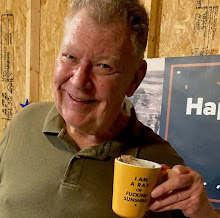
Proximo Spirits, the New Jersey company behind 1800 Tequila and 3 Olives Vodka, among other brands, is in the process of buying the finished goods warehouse and bottling hall part of the former Seagram's distillery in Lawrenceburg, Indiana, according to Proximo CEO Mark Teasdale. As we reported on October 21, the distillery and aging warehouses are being acquired by MGP.
Since the MGP announcement indicated that the distillery sale was conditional on a successful sale of the bottling operation, there was great interest in that part of the transaction.
Proximo popped up on the radar screens of whiskey enthusiasts last year when it was revealed that they had acquired Stranahan's in Colorado, the makers of Stranahan's Colorado Whiskey. Teasdale says they have no plans to bottle Stranahan's in Indiana. "We consider Stranahan's a jewel," said Teasdale. "It's a special thing and a Colorado brand." Although Proximo is expanding the Stranahan's operation and increasing production, the brand's strong growth in Colorado has limited their ability to distribute it outside the state. "We want to be loyal to the base," says Teasdale.
Lawrenceburg will continue to be a contract bottler and Teasdale hopes they can retain as many of the current customers as possible.
Saturday, November 12, 2011

Friday, November 11, 2011
Best Use For Turkey Leftovers: The Hot Brown.
There is more to Kentucky than bourbon, including foods you won’t find anywhere else. As we are entering prime turkey-eating season, here is the best and highest use for leftover turkey: the Hot Brown.
The Hot Brown is a very rich, open-face sandwich. It was created in 1926 at the Brown Hotel by Chef Fred K. Schmidt. The recipe below, which claims to be the original, was published by Cissy Gregg, the late Food Editor at the Louisville Courier-Journal.
Hot Brown (4 servings)
4 tablespoons butter
1 small onion, chopped
3 tablespoons flour
2 cups milk
1/2 teaspoon salt
1/4 teaspoon white pepper
1/4 cup shredded Cheddar cheese
1/4 cup grated Parmesan cheese
8 slices toast, with crusts cut off
Turkey breast slices
Crisp-fried bacon, crumbled
Mushroom slices, sauteed
Saute onion in butter until transparent; add flour and combine. Add milk, salt and pepper and whisk until smooth. Cook on medium heat until sauce thickens, stirring occasionally. Add cheese and continue heating until they blend. Remove from heat.
Put one slice of toast in each of four oven-proof individual serving dishes. Top each piece of toast with slices of turkey. Cut remaining toast slices diagonally and place on sides of sandwiches. Ladle cheese sauce over sandwiches. Place sandwiches under broiler until sauce begins to bubble. Garnish with crumbled bacon and sauteed mushroom slices and serve immediately.
If two cups sounds like a lot of sauce for four servings, you have perceived the essence of the Hot Brown. The typical Hot Brown is smothered in sauce. You’ll also notice it says nothing about heating up the turkey slices. You can but it's not necessary. This is a recipe designed for leftovers.
There are many variations. Most places don’t crumble the bacon, and there are many substitutes for the mushrooms, including tomato slices and asparagus spears. Some simply forgo the vegetables altogether. Cissy Gregg even suggested you can substitute chicken for the turkey, but I can’t get behind that.
If you’re traveling to Kentucky, you will find the Hot Brown on the menus of many restaurants. The Brown Hotel still serves it, of course. Kurtz’s, in Bardstown, has a good one too.
The Hot Brown is a very rich, open-face sandwich. It was created in 1926 at the Brown Hotel by Chef Fred K. Schmidt. The recipe below, which claims to be the original, was published by Cissy Gregg, the late Food Editor at the Louisville Courier-Journal.
Hot Brown (4 servings)
4 tablespoons butter
1 small onion, chopped
3 tablespoons flour
2 cups milk
1/2 teaspoon salt
1/4 teaspoon white pepper
1/4 cup shredded Cheddar cheese
1/4 cup grated Parmesan cheese
8 slices toast, with crusts cut off
Turkey breast slices
Crisp-fried bacon, crumbled
Mushroom slices, sauteed
Saute onion in butter until transparent; add flour and combine. Add milk, salt and pepper and whisk until smooth. Cook on medium heat until sauce thickens, stirring occasionally. Add cheese and continue heating until they blend. Remove from heat.
Put one slice of toast in each of four oven-proof individual serving dishes. Top each piece of toast with slices of turkey. Cut remaining toast slices diagonally and place on sides of sandwiches. Ladle cheese sauce over sandwiches. Place sandwiches under broiler until sauce begins to bubble. Garnish with crumbled bacon and sauteed mushroom slices and serve immediately.
If two cups sounds like a lot of sauce for four servings, you have perceived the essence of the Hot Brown. The typical Hot Brown is smothered in sauce. You’ll also notice it says nothing about heating up the turkey slices. You can but it's not necessary. This is a recipe designed for leftovers.
There are many variations. Most places don’t crumble the bacon, and there are many substitutes for the mushrooms, including tomato slices and asparagus spears. Some simply forgo the vegetables altogether. Cissy Gregg even suggested you can substitute chicken for the turkey, but I can’t get behind that.
If you’re traveling to Kentucky, you will find the Hot Brown on the menus of many restaurants. The Brown Hotel still serves it, of course. Kurtz’s, in Bardstown, has a good one too.
Wednesday, November 9, 2011
The Latest Outrage: Spirit Whiskey.
Spirit Whiskey.
It's a new term to most people. It even has a good sound too it, like it might be something great.
It's not.
Unless you're a vodka drinker. But in that case, you probably should just stick to vodka.
It's up to you.
The web site for new Kansas Clean Distilled Spirit Whiskey says, "You won't find rednecks in overalls or middle-aged men in tweed flat caps anywhere near a bottle of Kansas Clean Distilled Whiskey." Instead, the web site shows you pictures of hip, attractive, 20-somethings who supposedly drink this new product.
Other brands trying to catch this wave are American Spirit Whiskey and WhipperSnapper Oregon Spirit Whiskey.
These companies didn't invent 'spirit whiskey.' It has been in the federal Standards of Identity for Distilled Spirits (that's the official federal regulatory rule book) all along. It just hasn't been made much in recent years. There's a good reason for that.
The rules define 'Spirit Whiskey' as a combination of at least 5 percent whiskey and neutral spirit, i.e., vodka. That may sound a little like blended whiskey, except there the minimum is 20 percent whiskey and the whiskey has to be straight whiskey, meaning whiskey that has been distilled below 80 percent alcohol and aged for at least two years in new, charred oak barrels.
So consider Seagram's Seven, an American Blended Whiskey. It is 25 percent straight whiskey and 75 percent grain spirit (i.e., vodka with a few months in wood). Some people like that sort of thing, but most whiskey drinkers consider it brown vodka. Similar to Canadian whisky, it has a very mild whiskey flavor with strong vanilla notes. It's not ghastly, it's just very mild and superficial.
In the marketplace, American blended whiskey is an inexpensive, inoffensive alcohol delivery system. Typically sold in plastic 1.75 liter bottles, most go for less than $20, about the same as vodka.
For spirit whiskey, the whiskey component can be straight whiskey but it doesn't have to be. It just has to meet the very low threshold requirement for whiskey, which is itself damn near vodka.
So if it sounds like spirit whiskey is vodka with a tiny little bit of something that is barely but still technically whiskey added to it, it's because that's exactly what it is.
Spirit whiskey was put into the regs right after Prohibition, at a time when fully-aged whiskey was scarce and vodka was virtually unknown. It was a way to make something called whiskey that required very little whiskey to make. When fully-aged whiskey became readily available, spirit whiskey died out.
What's the point of reintroducing spirit whiskey? The premise seems to be that vodka drinkers want to keep drinking vodka, but want to call it whiskey. Spirit whiskey allows you to pour virtual-vodka from a bottle that says 'whiskey' on it, if that is what your self-image requires.
Unlike blended whiskey, which is at least a good value, these new products are all trying to position themselves as premium and are priced accordingly. For the same price you can get a decent whiskey or, for that matter, a decent vodka.
The Kansas people also say this, "Indeed whiskey is far more exciting than the next trendy vodka."
Sorry, but spirit whiskey is the next trendy vodka.
(Full disclosure: I wear tweed flat caps.)
Spirit whiskey most resembles but is not vodka. It scarcely resembles whiskey. Think of is as whiskey's ghost, an emanation faint and evanescent. It is whiskey's echo. It is not whiskey.
LDI An "Exciting Acquisition," Says MGP CEO.
Here is an update on the LDI acquisition by MGP, which we first reported on October 21.
MGP CEO Tim Newkirk has this to say in their quarterly financial statement, released today. "Growing our sales into the consumer packaged goods market is our number one priority. We are on the verge of greatly increasing our presence in distilled beverages, specifically bourbon and rye whiskey, with the pending acquisition of Lawrenceburg Distillers Indiana. Our integration teams are making significant progress in planning to transition the existing production facilities and their customers as we target completion of this exciting acquisition sometime early in 2012."
MGP CEO Tim Newkirk has this to say in their quarterly financial statement, released today. "Growing our sales into the consumer packaged goods market is our number one priority. We are on the verge of greatly increasing our presence in distilled beverages, specifically bourbon and rye whiskey, with the pending acquisition of Lawrenceburg Distillers Indiana. Our integration teams are making significant progress in planning to transition the existing production facilities and their customers as we target completion of this exciting acquisition sometime early in 2012."
Tuesday, November 8, 2011
Upcoming Whiskey Classes Taught By Me.
I teach whiskey classes here in Chicago through I Wish Lessons. These are introductory classes and last about a hour.
The next one is a bourbon class next Tuesday, 11/15, at French Accent in the Willis (formerly Sears) Tower, on the second floor. French Accent is a new venue for us and since we're usually on the North Side, this will be good for people who prefer a loop location, close to Union Station.
On Wednesday, 11/16, I'm teaching a Whiskey 101 class, in which we'll taste Scotch, Irish, Bourbon and American rye. It's at Fion, 426 W. Diversey.
If they're not sold out, I Wish will sell tickets pretty much right up to the last minute, so contact them if you're interested.
The classes are always held in bars and we always taste four products. You can order food and other beverages, and stay after class for 'extra credit.' It's a fun night out with friends, with a little learning on the side.
I Wish also has many other classes. Their most popular one is sushi rolling.
Here is what I have coming up after next week. None of the locations are set yet. As you can see, we're also trying to get a Tequila class going. Go to the I Wish website to sign up or see what other classes they offer.
Wednesday, 12/7 – Tequila
Thursday, 12/15 – Whiskey 101
Tuesday, 12/20 – Bourbon
Wednesday, 12/21 – Single Malt Scotch
Everything is subject to change.
I Wish also does private classes, so if you have a group that would like to have a whiskey or other distilled spirits tasting with me as your coach, you can arrange that through I Wish too, or contact me directly. (Email is on my profile.)
The next one is a bourbon class next Tuesday, 11/15, at French Accent in the Willis (formerly Sears) Tower, on the second floor. French Accent is a new venue for us and since we're usually on the North Side, this will be good for people who prefer a loop location, close to Union Station.
On Wednesday, 11/16, I'm teaching a Whiskey 101 class, in which we'll taste Scotch, Irish, Bourbon and American rye. It's at Fion, 426 W. Diversey.
If they're not sold out, I Wish will sell tickets pretty much right up to the last minute, so contact them if you're interested.
The classes are always held in bars and we always taste four products. You can order food and other beverages, and stay after class for 'extra credit.' It's a fun night out with friends, with a little learning on the side.
I Wish also has many other classes. Their most popular one is sushi rolling.
Here is what I have coming up after next week. None of the locations are set yet. As you can see, we're also trying to get a Tequila class going. Go to the I Wish website to sign up or see what other classes they offer.
Wednesday, 12/7 – Tequila
Thursday, 12/15 – Whiskey 101
Tuesday, 12/20 – Bourbon
Wednesday, 12/21 – Single Malt Scotch
Everything is subject to change.
I Wish also does private classes, so if you have a group that would like to have a whiskey or other distilled spirits tasting with me as your coach, you can arrange that through I Wish too, or contact me directly. (Email is on my profile.)
Monday, November 7, 2011
What Do Terns 'High Rye' And 'Low Rye' Mean?
The question was posed to me about the rye content of bourbon recipes. "What does the industry mean," the questioner wondered, "when they say 'high' or 'low' rye?"
I answered that 'high rye and 'low rye' are terms used more by enthusiasts than by producers. Four Roses is about the only producer that uses them, and they would probably say 'high rye' and 'standard rye.' The two mash bills at Four Roses are 20% and 35% rye, respectively. Even their 'low rye' is high relative to the rest of the industry, where 12% to 15% rye is more typical.
Buffalo Trace, which also makes two rye-recipe bourbon mash bills, explicitly rejects the high/low terminology. They won't reveal their exact mash bills, but #1 is probably less than 10% rye, while #2 is nearer to the 12% to 15% standard.
Bulleit is one of the few producers that talks about rye content. They use the Four Roses 35% rye mash bill. Old Grand-Dad/Basil Hayden, made by Jim Beam, is the other true 'high rye' mash bill, at about 30%. Their other recipe, the one used for Jim Beam and most of their other bourbons, is about 15% rye.
Dynamic Beverages, a small producer, uses the terms which they picked up from enthusiasts. They get their whiskey from LDI which, as a former Seagram's plant, uses many of the same recipes as Four Roses, and Dynamic uses the term 'high rye,' but the 20% rye recipe is hardly 'low.' Their Redemption Bourbon uses the 35% rye formula while their Temptation Bourbon uses the 20% rye recipe.
Four Roses, LDI, Beam, Buffalo Trace and Brown Forman are the only major distilleries that make two or more different rye-recipe bourbons.
At Brown-Forman, the Woodford/Old Forester recipe is 18% rye, Jack Daniel's is 8% and Early Times is 11%. So they have three different recipes, two in the 'typical' range and one legitimately low.
While there is no industry standard, I would refer to anything with more than 30% rye as 'high' and anything less than 12% as 'low,' while anything in between is 'standard' or 'typical.'
Wednesday, November 2, 2011
Are You Doing Enough To Help Buffalo Trace Create The Perfect Bourbon?
Well, are you?
If not, your next chance has arrived. This month, Buffalo Trace Distillery (BT) will release the third round of Single Oak Project Bourbon, another case of twelve 375 ml bottles, each containing one of the 192 slightly different bourbons created for this project.
This is round three of sixteen. I first wrote about the project here.
Since the first release, nearly 1,000 consumers have posted feedback on the Single Oak Project website, rating some or all of the barrels they’ve tasted. Wheaters from high wood (the top of the tree) are leading, barrels #61 and #127, specifically.
Through this feedback, BT will determine which very specific characteristics bourbon drinkers like best, with a goal of using that information to create a 'Holy Grail' bourbon. The more people who participate, the more useful the results will be.
It’s a very long-term project.
For each release, BT cleverly compresses the number of variables presented, so while the project looks at seven variables, each 12-bottle release deals with no more than three. Therefore, any two bottles will teach you something cool. You can, for example, taste two whiskeys in which the only variable is barrel entry proof. Everything else is controlled for -- everything -- and you can taste the difference.
Although Single Oak Project Bourbon is sold only in the U.S., BT has recorded web site visitors from 31 countries.
This new release explores recipe, wood grain, and barrel entry proof. You can compare rye-recipe bourbon to wheat-recipe bourbon; and barrel entry proofs of 105° (52.5% ABV) or 125° (62.5% ABV), the legal maximum; as well as barrel wood grain rated as coarse, average, or fine.
The suggested retail price is $46.35 per bottle (375 ml), but some retailers are selling Single Oak by the case only.
You have to admire BT’s audacity, first in postulating that bourbon perfection can be attained, then in launching a project to attain it that will take 20 or more years to complete. Like building a medieval cathedral, it's a project to span generations.
If not, your next chance has arrived. This month, Buffalo Trace Distillery (BT) will release the third round of Single Oak Project Bourbon, another case of twelve 375 ml bottles, each containing one of the 192 slightly different bourbons created for this project.
This is round three of sixteen. I first wrote about the project here.
Since the first release, nearly 1,000 consumers have posted feedback on the Single Oak Project website, rating some or all of the barrels they’ve tasted. Wheaters from high wood (the top of the tree) are leading, barrels #61 and #127, specifically.
Through this feedback, BT will determine which very specific characteristics bourbon drinkers like best, with a goal of using that information to create a 'Holy Grail' bourbon. The more people who participate, the more useful the results will be.
It’s a very long-term project.
For each release, BT cleverly compresses the number of variables presented, so while the project looks at seven variables, each 12-bottle release deals with no more than three. Therefore, any two bottles will teach you something cool. You can, for example, taste two whiskeys in which the only variable is barrel entry proof. Everything else is controlled for -- everything -- and you can taste the difference.
Although Single Oak Project Bourbon is sold only in the U.S., BT has recorded web site visitors from 31 countries.
This new release explores recipe, wood grain, and barrel entry proof. You can compare rye-recipe bourbon to wheat-recipe bourbon; and barrel entry proofs of 105° (52.5% ABV) or 125° (62.5% ABV), the legal maximum; as well as barrel wood grain rated as coarse, average, or fine.
The suggested retail price is $46.35 per bottle (375 ml), but some retailers are selling Single Oak by the case only.
You have to admire BT’s audacity, first in postulating that bourbon perfection can be attained, then in launching a project to attain it that will take 20 or more years to complete. Like building a medieval cathedral, it's a project to span generations.
Subscribe to:
Comments (Atom)